
What Are Spot Stock Tokens? How Synthetic Stock Trading Works

 Prefer us on Google


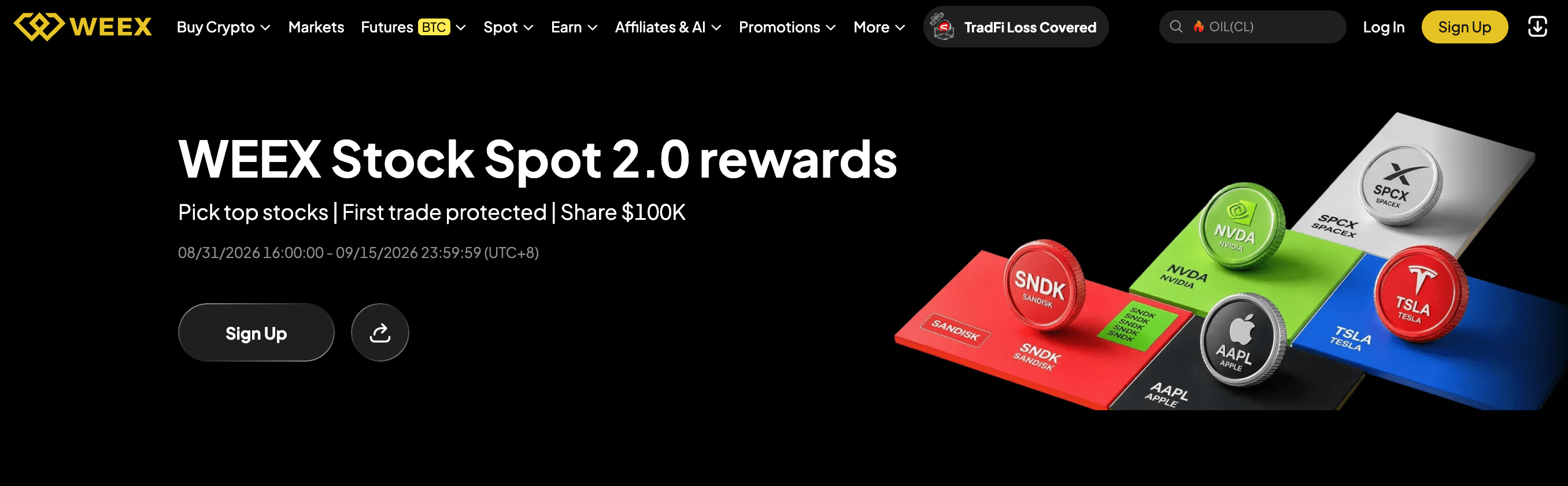
Spot stock tokens let someone gain exposure to a stock's price movement without going through the process of opening a brokerage account or holding the underlying shares directly. That sounds like a small technical difference, but it changes almost everything about what a person is actually buying, and understanding that difference is the first thing worth getting clear on before trading any spot stock token. WEEX is currently running a promotional campaign WEEX Stock Spot 2.0 for its own spot stock token product, making this a useful moment to understand exactly how the category works before trading it.
The category has grown alongside broader interest in bringing traditional financial assets onto crypto infrastructure, and several different platforms now offer some version of this product. What spot stock tokens actually are, and just as importantly what they aren't, is worth explaining on its own terms rather than assuming every product using the term works identically.
Why Stock Tokens Exist in the First Place
Buying an actual share of a publicly traded company traditionally requires a brokerage account, identity verification tied to a specific financial jurisdiction, and often a minimum deposit or fee structure that can make small positions impractical. That process works fine for people who already have access to it, but it creates real friction for anyone outside that system, whether because of geography, account minimums, or simply wanting a faster, more flexible way to trade.
Spot stock tokens are built to remove that friction by letting someone gain price exposure to a stock using crypto they already hold, typically a stablecoin like USDT, without a separate brokerage relationship. The appeal is speed and accessibility rather than a fundamentally different investment thesis: the goal is still to profit from or hedge against a stock's price movement, just through a different set of rails to get there.
How Price Tracking Actually Works
A spot stock token is a synthetic asset, meaning its price is designed to move in line with a specific stock's market price without the token itself being a claim on that company or routed through a traditional stock exchange. When someone buys a token tracking a company like Nvidia or Apple, they're buying an asset engineered to reflect that stock's price performance, not a share purchased through Nasdaq or the NYSE.
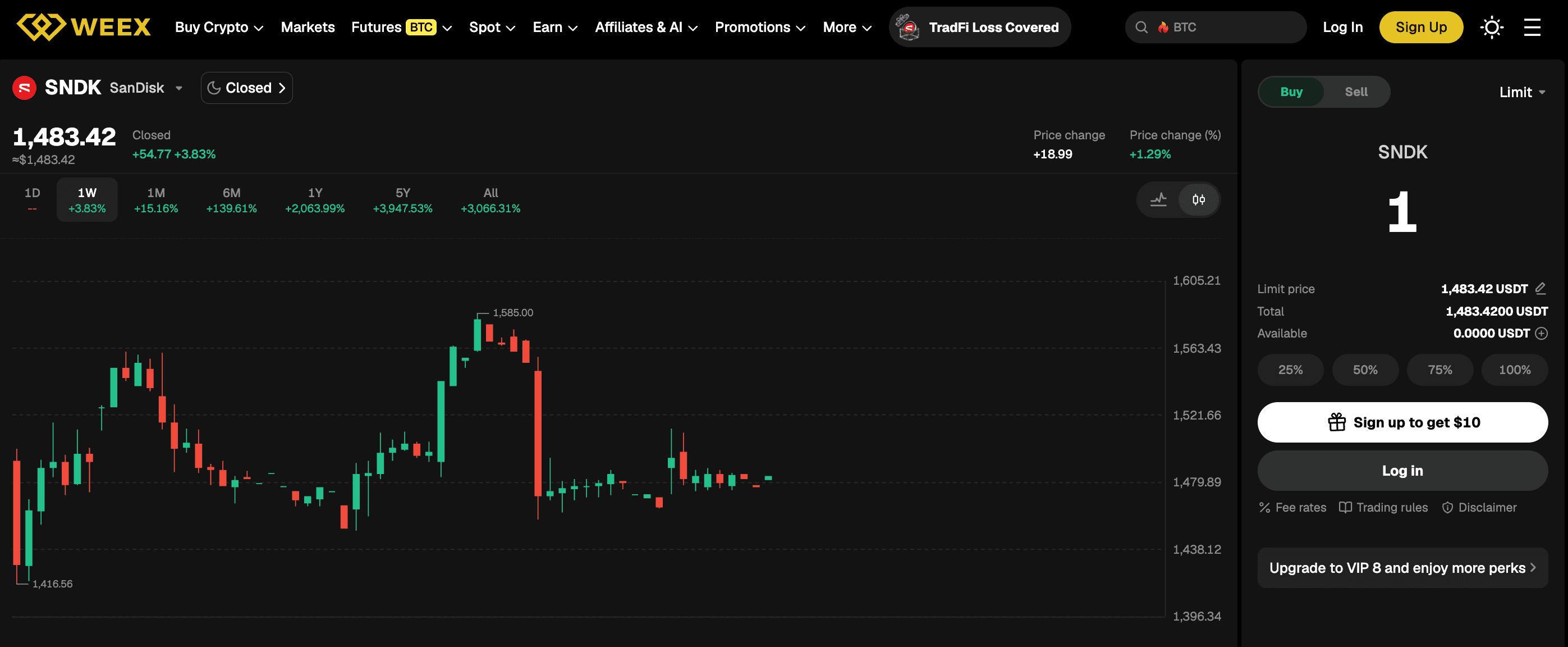
The mechanism behind that tracking varies by platform, but the general principle holds across most implementations: the token's price is designed to closely follow the underlying stock's real market price, with the platform responsible for maintaining that correlation rather than an external stock exchange executing the trade directly. This means the price a trader actually pays or receives is determined by the token's own trading pair on that specific platform, which can, in practice, diverge slightly from the underlying stock's exact real-time price depending on liquidity and market conditions on the platform itself.
Ownership vs. Price Exposure: The Core Distinction
This is the single most important concept to understand before trading a spot stock token. Price exposure means a token's value moves up or down along with the underlying stock, letting a trader profit from or lose money on that movement. Ownership means holding an actual legal claim on the company itself, with rights that come attached to that claim.
Spot stock tokens provide the first without the second. Buying a token that tracks a stock's price gives a trader exposure to that price movement, but it does not make them a shareholder of the underlying company in any legal sense. That distinction isn't a minor technicality. It determines what a token holder can and cannot do with their position, and conflating the two is the most common misunderstanding people run into when trading this category of product for the first time.
-- Price
What Shareholder Rights Actually Are and Why Tokens Don't Include Them
Owning an actual share of a company typically comes with a specific bundle of legal rights: the ability to vote on corporate matters at shareholder meetings, the right to attend and participate in those meetings, and, for dividend-paying companies, the right to receive a share of distributed profits. These rights exist because a shareholder holds a genuine ownership stake, however small, in the underlying business.
A spot stock token doesn't carry any of these rights, because the token holder isn't actually a shareholder. There's no vote to cast, no meeting to attend, and no dividend to collect, regardless of how closely the token's price tracks the underlying stock. Anyone specifically interested in exercising shareholder rights, rather than simply gaining price exposure, needs to hold the actual shares through a traditional brokerage relationship, since no synthetic token product is designed to replicate that legal ownership structure.
How Spot Stock Tokens Differ From Traditional Brokerage Accounts
Beyond the ownership question, several structural differences separate spot stock tokens from a traditional brokerage account. Orders on a spot stock token don't route to the underlying stock exchange the way a brokerage order does; instead, execution happens within the platform's own order book for that specific token, meaning the trading venue itself is fundamentally different even when the price being tracked is the same.
Funding also works differently. A traditional brokerage account typically requires a bank transfer or linked funding source in fiat currency. Spot stock tokens are usually funded directly with crypto, most often a stablecoin, which is part of what makes the category appealing to traders who already hold crypto and don't want to move funds through a separate banking relationship just to gain exposure to a stock's price.
What to Actually Check Before Trading a Stock Token
Given how much this category varies from traditional stock ownership, a few specific checks are worth doing before trading any spot stock token rather than assuming every platform's version works identically. Confirming explicitly that the product doesn't confer shareholder rights, rather than assuming it might, avoids a basic misunderstanding that can affect how someone plans a longer-term position. Checking the platform's stated mechanism for how the token's price actually tracks the underlying stock is worth doing directly, since the specifics can vary between providers even when the general category label is the same.
It's also worth checking the platform's trading hours and liquidity conditions specifically, since a synthetic asset's price can behave differently from the underlying stock during periods of thin trading activity on the platform itself, separate from how the actual stock is trading on its home exchange.
For traders looking to explore this category directly, WEEX offers spot stock token trading covering a range of major US equities and ETFs, funded directly with USDT and accessible without opening a separate brokerage account, consistent with the general structure described throughout this guide.
Conclusion
Spot stock tokens give traders a way to gain price exposure to stocks using crypto, without opening a brokerage account or holding the underlying shares directly, but they do this by tracking a stock's price rather than conferring ownership of it. That distinction, price exposure without shareholder rights like voting, meeting participation, or dividends, is the core concept anyone trading this category needs to understand clearly, since it determines both what the product can offer and what it explicitly cannot.
FAQ
1. What is a spot stock token?
A spot stock token is a synthetic asset whose price is designed to track a specific stock's market performance, allowing a trader to gain price exposure without holding the actual shares or going through a traditional brokerage account.
2. Do I own the actual company if I buy a spot stock token?
No. Spot stock tokens provide price exposure only. They do not represent legal ownership of the underlying company, regardless of how closely the token's price tracks the stock.
3. Do spot stock tokens pay dividends?
No. Since token holders aren't actual shareholders, they don't receive dividends, voting rights, or the ability to participate in shareholder meetings.
4. How is trading a spot stock token different from using a brokerage account?
Orders don't route to the underlying stock exchange. Execution happens within the platform's own trading pair for that token, and funding is typically done with crypto rather than a bank-linked fiat deposit.
5. What should I check before trading a spot stock token?
Confirm the platform doesn't claim to offer shareholder rights, understand how the token's price tracking mechanism works, and check the platform's specific trading hours and liquidity conditions before trading.
This content is provided for general informational purposes only and doesn't constitute financial, investment, legal, or tax advice. Any events, rewards, online promotions, or related information mentioned herein should not be considered a recommendation, solicitation, or invitation to purchase, sell, trade, or otherwise deal in any crypto assets. Crypto assets are highly volatile and may result in loss. The availability of WEEX services, products, and related events may vary by region. You are responsible for ensuring that your participation is in accordance with applicable local laws and regulations.
You may also like

XST Coin Price Bounced 19% Off a New Low in Hours: Is This the Bottom or Just Noise?

What Is the WEEX Mini App? A Lightweight Way to Trade Inside Telegram

XST Coin Price Crosses Into Deep Capitulation Territory: What a 90%+ Decline Actually Signals

CyberLeek Is Trending—but Why Are People Searching for CYBERLINK?
Nvidia After-Hours Stock Price: What Moved NVDA After the Earnings Report?

Bank Account Freeze Risk for Crypto Traders in Pakistan 2026
Crypto Tax in Pakistan: What FBR Rules Mean for PKR Traders
Humanity Protocol Unlocked 266 Million H Tokens Today—Where Did They Go?
DGAI Has Trading Volume but No Reported Circulating Supply—So What Is Its Real Market Cap?
MORTY After Viral Meme Rally: Overvalued or Growth Story?

Best Futures Exchange in Pakistan for 2026? What Leverage, Liquidity, and Liquidation Risk Actually Require
XST Coin Liquidity Risk: What Low DEX Depth Actually Means for Buyers Who Want to Exit

MSTR Stock Surges 12% in a Single Session: What Strategy Inc's Bitcoin Treasury Model Actually Amplifies
Is SOXL a Good Investment? What 3x Leverage Actually Does to Your Returns in Both Directions

XST Coin and Stargate: What XSolut's AI Infrastructure Narrative Has to Do With the $500 Billion OpenAI Project
XST Coin Rebounds From Its Post Peak Low: What the Recovery to a $45M Market Cap Actually Signals
Why Did Sahara AI (SAHARA) Drop? The 600M Token Transfer, Tokenomics and What Comes Next
Can XST Crypto Reach $0.10? XSolut Price Prediction 2026
USDT vs BTC Settlement for Crypto Broker Partners: Which Currency Is Better for Your Business
Before Swapping XSolut (XST): How to Check Liquidity, Price Impact, and Failed-Trade Risk 2026
How to Buy Niulai Coin: Where to Trade NIULAI and What to Check Before Buying
Lenovo Stock (0992): The German Subsidiary, the Pension Liability and the Segments That Report
SPCX Stock Closes Above Its $135 IPO Price for the First Time in Weeks: What the Recovery Actually Signals
Is AMD Stock a Buy After Falling 9% on Record Earnings? What the Setup Actually Looks Like
Is Samsung Stock a Buy After Falling 30% From Its All Time High? What the July Selloff Left Behind

KOSPI Falls 5% as Samsung and SK Hynix Each Drop 9%: What Is Happening to South Korea's Stock Market?
South Korea Apologizes for SK Hynix Leveraged ETFs: What It Means for SKHA SKHN Holders
Crypto Exchange API Key Leaked? What Attackers Can Actually Do
SPCX Stock Price Hits All Time Low After Starship Flight 13 Success: What Is Going On?
AMD Stock Falls 6% as Wedbush Raises Target to $600: What the Disconnect Means for Investors
XST Coin Price Bounced 19% Off a New Low in Hours: Is This the Bottom or Just Noise?
What Is the WEEX Mini App? A Lightweight Way to Trade Inside Telegram
XST Coin Price Crosses Into Deep Capitulation Territory: What a 90%+ Decline Actually Signals
CyberLeek Is Trending—but Why Are People Searching for CYBERLINK?
Nvidia After-Hours Stock Price: What Moved NVDA After the Earnings Report?
Bank Account Freeze Risk for Crypto Traders in Pakistan 2026
Contents
Popular coins
Latest articles


