
2025 Crypto Market Survival Guide: Is Stablecoin the Next Big Bet?




Original Article Title: After the Casino | My "Bearish" 2025 Crypto Plan
Original Article Author: poopmandefi, Researcher at IOSGVC
Original Article Translation: ChatGPT
Editor's Note: This article discusses the possible trajectory of the cryptocurrency market in 2025, particularly highlighting the potential increase in stablecoin market demand in a scenario of innovation scarcity. The author posits that in a continued bear market scenario, yield-generating stablecoin products could capture 20-30% of the stablecoin market. With the growth of the stablecoin market, more developers and new DeFi innovations may emerge. Additionally, Trump's supportive cryptocurrency policies are expected to aid in the development of the U.S. domestic crypto industry, and investors should pay attention to the potential of U.S. domestic crypto tokens.
The following is the original content (lightly restructured for readability):
This is written by a crypto enthusiast who has had success even in meme coins and is now exploring legitimate investment opportunities in 2025 to be able to explain to Dad that I am in a serious industry.
Disclaimer: This is just the author's two cents on the market.
Topics Covered in the Article:
· The 2024 Cryptocurrency Market
· What Comes After MEME Coins
· Content I Will Focus on if the Market Remains Bearish
2024, the Year of Bitcoin and Solana
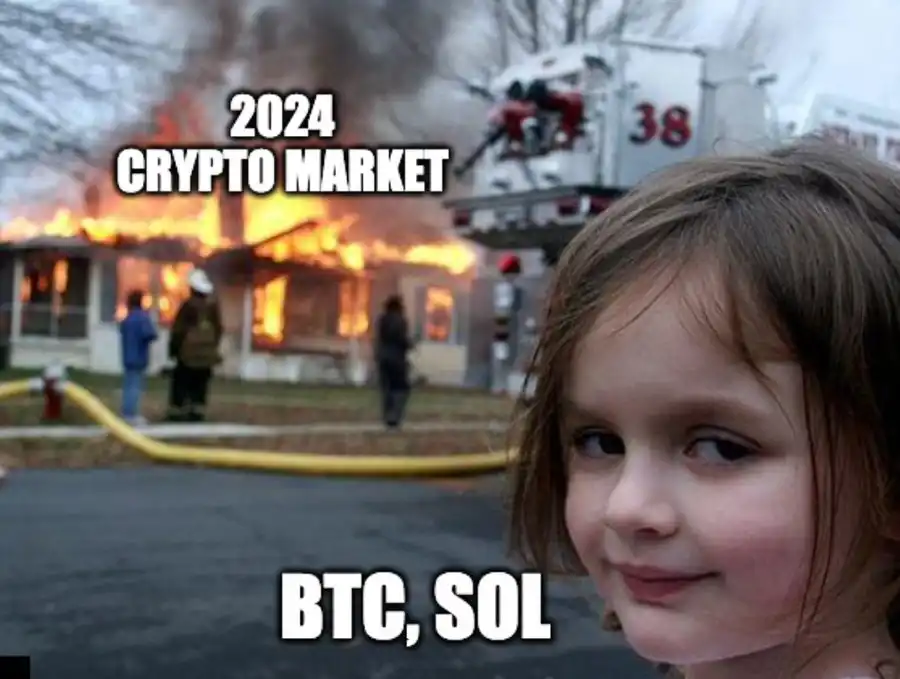
2024 was brutal unless you were a die-hard BTC supporter or a warrior fighting on the front lines. Venture capital, liquidity, diamond hands, and true believers were all decimated, and with the explosion of AI, the future of the cryptocurrency market looks even darker.
· BTC touched $100,000, ETF approvals, BTC's market dominance reached 60%, and the adoption by traditional finance accelerated. 2024 was truly the year of Bitcoin.
· Solana, the tokenization platform. At its peak, SOL's daily trading volume reached $36 billion, about 10% of NASDAQ's daily volume, which is massive for the cryptocurrency realm. The trends of MEME coins and AI coins paved the way for this.
·Hyperliquid is the BBH (Big Black Horse) in this market. They made a bold move by rejecting venture capital funding, and their post-airdrop adoption demonstrated a strong demand for non-KYC perpetual trading and "thick" platform liquidity.
·XRP, ADA, any Dino coin. Uber drivers and the U.S. government seem to like them, so I'll give them a shoutout.
Other than that, I can't think of any asset in this market that has seen a rise lasting over 2 weeks.
By 2025, from the casino to the new DeFi and U.S. cryptocurrency. Following Trump's fall, I observed that the market profits did not flow back into AI tokens. So, apart from a partial SOL position (a stupid decision), I converted everything to stablecoins.
It is becoming increasingly clear that after several months of player vs. player (PVP) battles, people have grown tired of MEME coins and AI castles in the air. The entire AI field has been wiped out, with most tokens dropping 70-80% from their peak, and the Libra event almost sealing the fate of this narrative.
In short, Pumpfun will reset to zero.
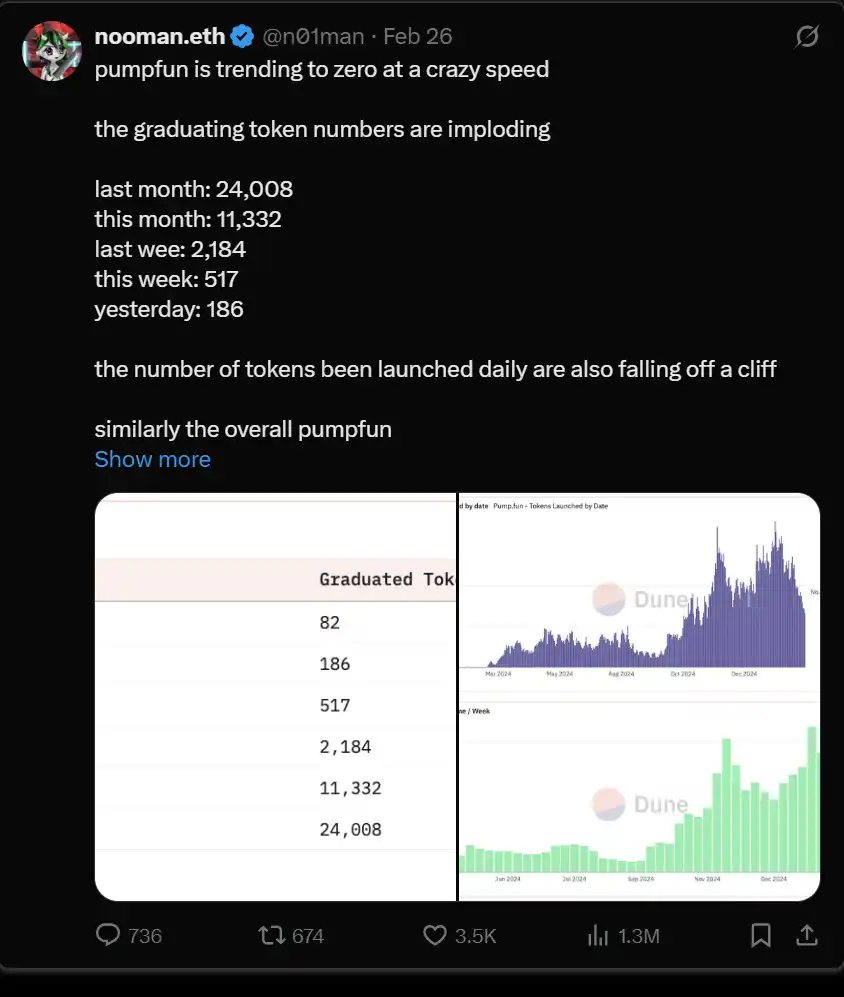
So, where did the money from MEME coins go?
In the absence of a clear catalyst for MEME coins, the wealth effect is fading, leading to a downward spiral that is driving players away from MEME coins. Meanwhile, in today's cryptocurrency market:
· There is a lack of breakthrough innovation
· Existing meme coins continue to stagnate, and ETH is also facing troubles
· Fundamentals have suddenly become unimportant
· Old MEME coins are already dead
· Newly listed tokens have a low survival rate, with only a few tokens able to last more than 2 weeks
It does sound bearish, doesn't it? In this scenario, I believe investors will be more inclined to choose a "risk-averse" investment approach, which is why I think the majority of funds will flow into fiat-backed stablecoins in 2025.
Some may want to put their assets to work by earning some passive income through stablecoins.
Therefore, stablecoins that can generate returns, such as USDe or USDS, would be very attractive to them.
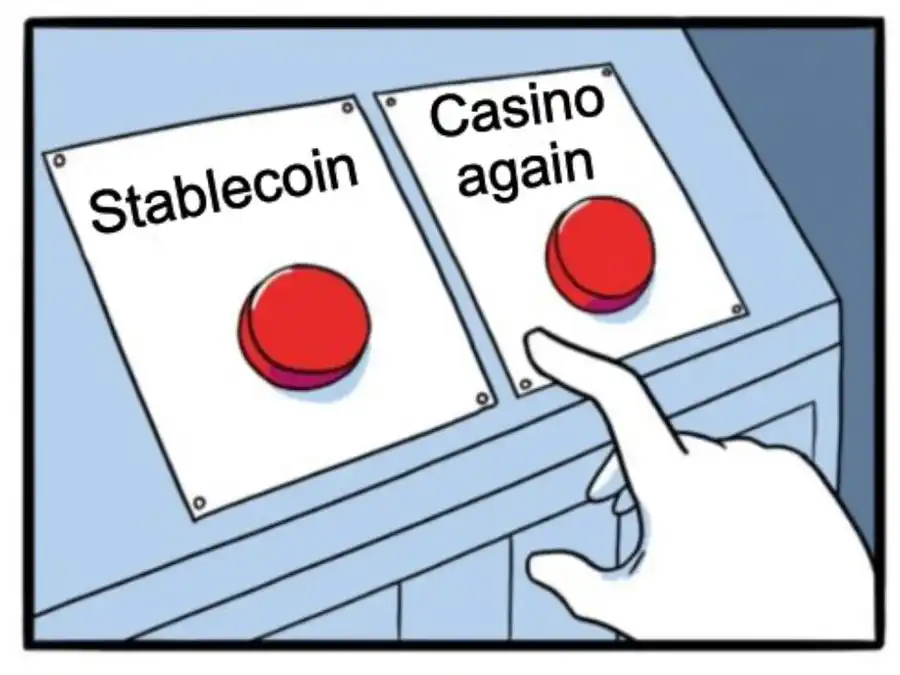
·Stablecoins are the new oil.
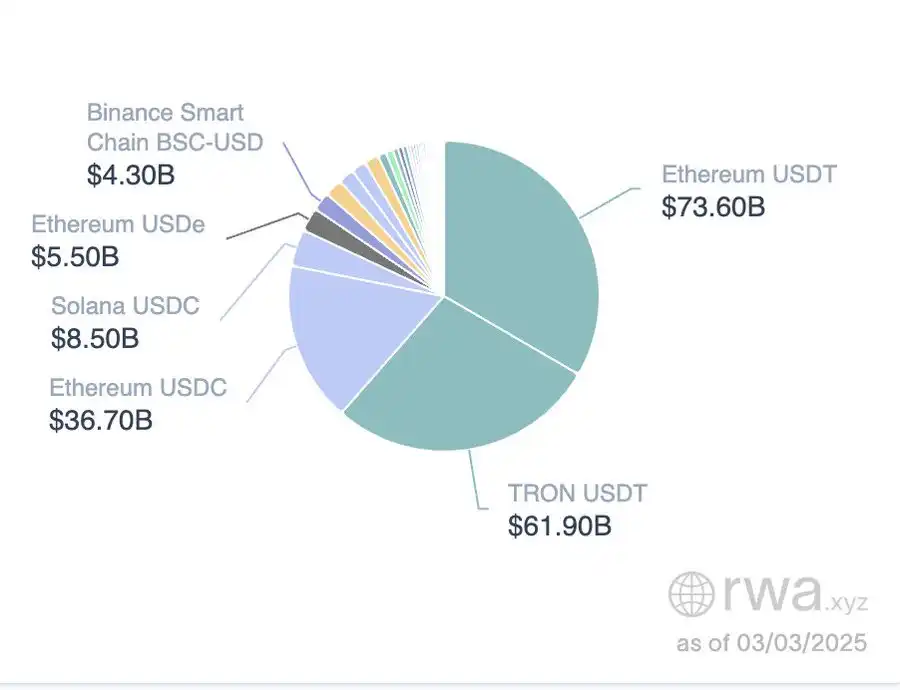
While the AI and MEME markets were being crushed, the total value of stablecoins continued to grow steadily, with a monthly growth rate of 3%. As of now, the Total Value Locked (TVL) has exceeded 220 billion US dollars.
Those looking for security and stability choose fiat-backed stablecoins. USDT and USDC maintain a 90% market dominance, nearly unshakable, thanks to their widespread adoption on various exchanges and payment platforms.
Those looking to put their stablecoins to work choose yield-generating/decentralized stablecoins. For example, USDe, USDS, DAI, USD0, etc. So far, this segment accounts for just over 10% of the market share, but they have actually had an amazing year, with total TVL growth exceeding 70%.
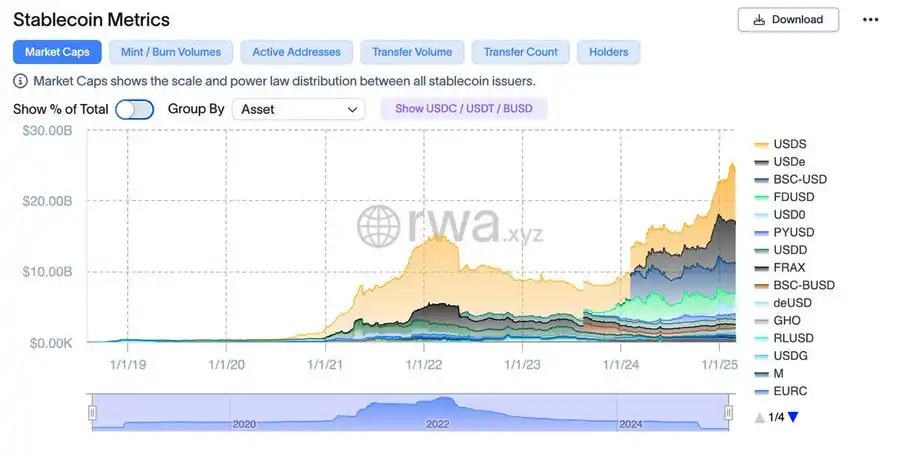
Okay, let's be straight here. The current market landscape is:
90% fiat-backed stablecoins
10% yield-generating stablecoins
I believe there is still room for growth in yield-generating stablecoins because:
1. The combination of "low volatility option" plus yield is always attractive to the crypto community.
2. Innovations may arise in new stability mechanisms and capital efficiency strategies, driving higher yields.
3. Stablecoins have found a product-market fit in the cryptocurrency space, serving as both a currency and an investment tool.
Thus, this has also shaped my 2025 cryptocurrency plan.
My 2025 "Bearish" Cryptocurrency Plan
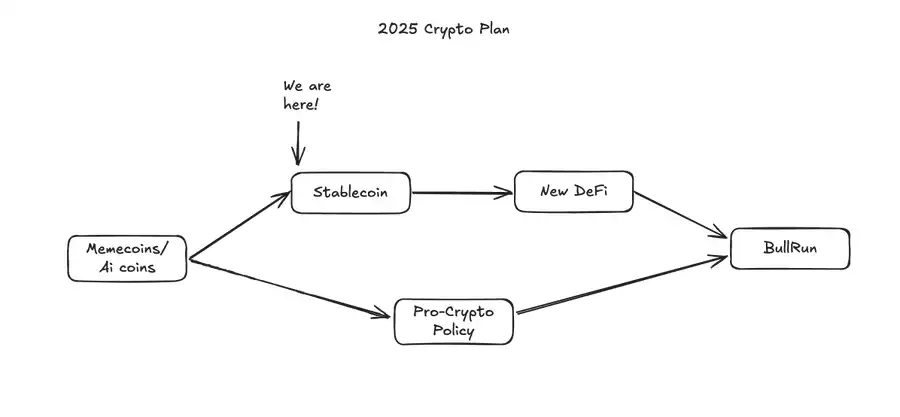
If there is no innovation or new narrative in 2025, I believe the market will move in two directions:
· New DeFi innovations driven by the growing stablecoin market
· Policy Support for Cryptocurrency Driving "Made in America" Cryptocurrency
1. Stablecoins and New DeFi Innovations
In the next 3-6 months, an increasing number of stablecoins will be launched as part of a USD-based tokenization strategy aimed at generating competitive yields through various types of collateral or strategies.
Given the composability and "price stability" of stablecoins, they can easily integrate with different DeFi protocols, creating synergies between them.
Examples of existing DeFi integrations include:
Interest rate swap-related products, such as Pendle Fi and Spectra Finance, are great designs that allow users to speculate on asset yields, effectively creating new markets for yield-generating assets (including stablecoins).
Currency markets like MorphoLabs and 0xfluid also offer leveraged yield farming, driving economic activity for stablecoins.
DEXs like Curve Finance also provide a good venue for launching stablecoin pairs' liquidity.
Among all these innovations, my favorite examples are those that create new asset classes, such as Pendle's YT-USDe, which builds a new market on top of yield "legos" and provides an additional yield layer for stablecoin enthusiasts.
In addition to yield optimization, I also hope to see some innovative CDP designs, especially those that can eliminate over-collateralization and minimize liquidation risks, ideas that can rejuvenate decentralized stablecoins.
After all, I expect to see more innovation as the stablecoin market grows, as this is where funds will flow.
2. Policy Support for Cryptocurrency Driving US Cryptocurrency
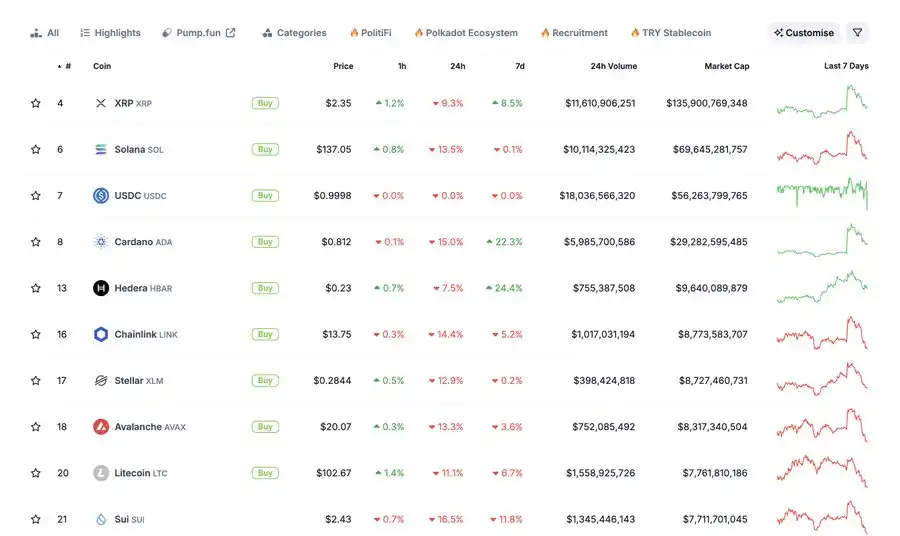
Recently, Trump announced an attempt to promote a cryptocurrency strategic reserve plan, which includes a basket of "Made in America" currencies like SOL, XRP, etc.
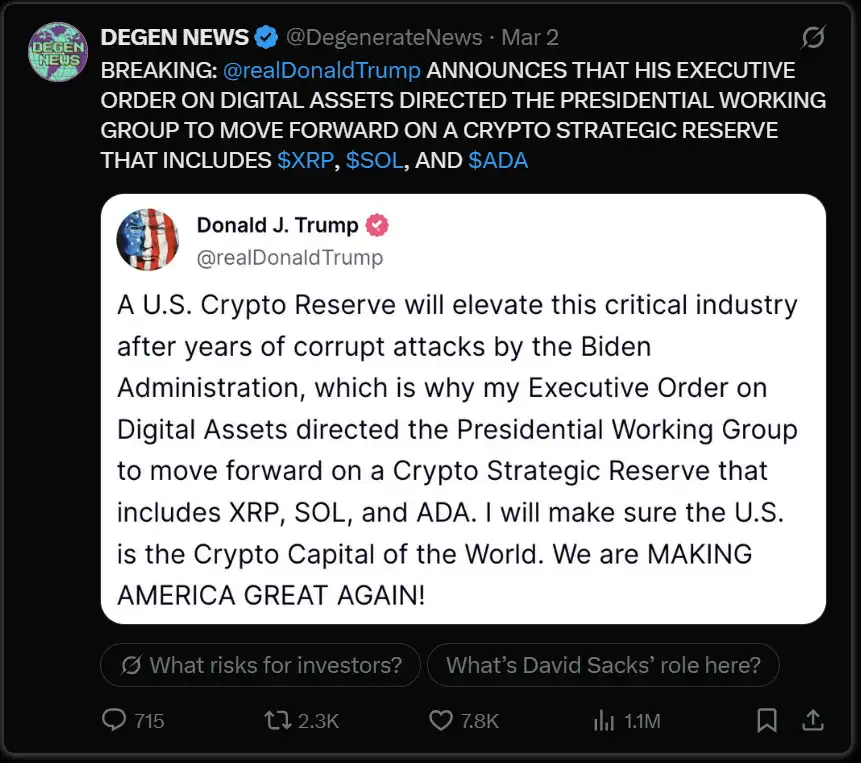
While there is still uncertainty about whether the cryptocurrency reserve will receive government approval, Trump's impact on the cryptocurrency market cannot be ignored.
Here are a few examples of Trump's support for cryptocurrency:
1. Promptly firing Gary Gensler.
2. Retain all Bitcoin confiscated by the United States to establish a "Strategic National Bitcoin Reserve" (for example, the Bitcoin from Silk Road would be one example).
3. Launch the WiFi DeFi Fund, introducing Trump Coin, which aligns well with the native properties of cryptocurrency.
4. The U.S. Securities and Exchange Commission (SEC) withdraws its charges against exchanges and crypto projects (such as Coinbase, Uniswap, Kraken, etc.).
In addition, the Trump administration is likely to support the domestic cryptocurrency industry. Therefore, we can expect more regulatory policies favorable to U.S. domestic cryptocurrency.
This is not investment advice, but I will closely monitor these tokens as Trump wields significant influence.
Summary:
As mentioned earlier, this is just a brainstorming and intuition-driven discussion, and the above points are not supported by statistical data. So please do not take it as investment advice.
Given the lack of cryptocurrency innovation and the market slump, if the market remains "bearish" in 2025, I anticipate an increase in stablecoin demand. Assuming investors want their stablecoins to generate returns, I estimate that yield-generating stablecoin products may account for 20-30% of the stablecoin market in the long term (similar to stETH).
This growing stablecoin market will attract more developers and builders, potentially giving rise to new DeFi infrastructure within the ecosystem. Trump's supportive cryptocurrency policies are expected to have a positive long-term impact on the market.
Simultaneously, his policies may favor the development of domestic cryptocurrency. Therefore, it is meaningful to pay attention to U.S. domestic cryptocurrency tokens, as some "news" has already been enough to drive token prices up.
Source: "Original Article Link"
You may also like

In the name of charity, for the benefit of the family: How the Trump family turned charity into profit?

Will Gold Break $4,500 After Tonight's Fed Decision? What XAUT and PAXG Traders Need to Know

Cursor, why did you get on Musk's spaceship?

Morning Report | DeepSeek completes over $7 billion in financing, with a valuation exceeding $50 billion; Musk's personal wealth has surpassed the total market value of Bitcoin

SharpLink CEO: How to understand that Ethereum developers have just surpassed 1 million?

Morning Report | MiCA grace period expires on July 1; Kalshi's trading volume in the first week of the World Cup breaks $5.1 billion, setting a record

The foundation of SpaceX's trillion-dollar valuation: Who is dividing Musk's annual capital expenditure of tens of billions?

How to exit after asset tokenization?

The stablecoin positioning battle escalates: When compliance is just a ticket to entry, will USD1 become the biggest winner?

A16Z: The sun bears witness, SpaceX is worth 7.5 trillion
Mergers and acquisitions in the cryptocurrency market are exceptionally active

Concerns Behind the Binance Customer Service Controversy

SpaceX Stock Prediction After the IPO: Can SPCX Reach $200 Before QQQ Inclusion?

Congratulations to Carl Moon on His Historic Ferrari Challenge Le Mans Podium Triumph
Crypto influencer and racing enthusiast Carl Moon finished third in the Ferrari Challenge Le Mans Coppa Shell class, marking his best result of the year. As his racing partner and sponsor, WEEX celebrates this remarkable achievement and continues to lead crypto’s journey beyond boundaries, uniting the innovation of digital assets with the passion of motorsport.
Can the CLARITY Act Become Law by July 4? Everything You Need to Know About the Final Battle

France vs Senegal World Cup 2026: Mbappe’s New Era Begins Against a Historic Rival
What is the connection between Huang Zheng of Pinduoduo and blockchain?

Morning Report | Prediction market platforms like Kalshi and Polymarket jointly sue Kentucky over 14.25% trading tax; Bridgewater founder discusses decision-making in the AI era: principled thinking should run parallel to AI, human insight remains irre...
In the name of charity, for the benefit of the family: How the Trump family turned charity into profit?
Will Gold Break $4,500 After Tonight's Fed Decision? What XAUT and PAXG Traders Need to Know
Cursor, why did you get on Musk's spaceship?
Morning Report | DeepSeek completes over $7 billion in financing, with a valuation exceeding $50 billion; Musk's personal wealth has surpassed the total market value of Bitcoin
SharpLink CEO: How to understand that Ethereum developers have just surpassed 1 million?
Morning Report | MiCA grace period expires on July 1; Kalshi's trading volume in the first week of the World Cup breaks $5.1 billion, setting a record


