$15K+ Profits: The 4 AI Trading Secrets WEEX Hackathon Prelim Winners Used to Dominate Volatile Crypto Markets


The WEEX AI Trading Hackathon Preliminary Round has concluded in great success. Across volatile market conditions and live trading environments, participants pushed the boundaries of strategy design, execution discipline, and machine intelligence. Their performances not only reflected technical excellence, but also the growing maturity of AI as a force in modern markets. WEEX extends its deepest appreciation to every competing team and to the sponsors and partners whose unwavering support helped turn this vision into reality.
As the Finals commence on February 9, the spotlight now shifts to the ultimate test — where the strongest strategies will face the market head-on.
At its core, the WEEX AI Trading Hackathon is more than a competition — it is a statement about the future of trading. At a time when artificial intelligence is reshaping global industries, WEEX has chosen to place AI where it matters most: in real markets, under real pressure, with real consequences. For WEEX users and market participants worldwide, the hackathon offers a rare window into how elite AI systems think, adapt, and survive in live conditions. It is within this broader vision that the top three performers of the Preliminary Round emerge — not merely as winners, but as case studies in what the next generation of trading intelligence looks like. In the following sections, we examine the strategic foundations behind their success.
$6,452 in 7 Days: How WEEX Hackathon's Top AI Trader Dominated with 20x Leverage
NeuralEdge secured 1st place on the preliminary round leaderboard with a Net Realized PnL of $6,452. By maintaining a clear short bias and executing high-conviction trades with disciplined risk control, the strategy consistently capitalized on last week’s downside-dominated market, standing out as the most stable and profitable performer among all participants.
- High-conviction directional trading, not frequency: Instead of chasing volatility, NeuralEdge limited activity to a handful of high-quality short setups. As ETH, SOL, XRP, and BNB showed repeated rejection at key resistance levels last week, the AI selectively engaged structural weakness rather than overtrading choppy intraday swings.
- Consistent short bias aligned with market structure: With 91.72% of time spent short, the system maintained a clear bearish stance throughout the week, reflecting an accurate read of lower highs, weak follow-through on bounces, and sustained downside pressure — without unnecessary flip-flopping.
- Capital deployed decisively during breakdown phases: Maintaining an average leverage of 20x, NeuralEdge scaled meaningfully into positions when downside momentum confirmed, such as ETHUSDT shorts sized at ~$19,600 notional — prioritizing conviction over gradual probing during fast-moving conditions.
- Edge = “press the downside when structure confirms”: NeuralEdge’s core strength lies in recognizing when bearish market structure is reaffirmed, deploying leverage with intent, and allowing downside momentum to play out fully — resulting in a clean, decisive, and leaderboard-ready performance during a challenging market week.
Smart Money Tracker secured 2nd place on the preliminary round leaderboard with a Net Realized PnL of $6,532.51. By maintaining a consistent short bias and executing leveraged trades with a focus on high-probability setups, the strategy effectively captured downside moves while managing risk through controlled position sizing.
- Asymmetric Short Bias Aligned with Market Conditions: The contestant maintained a clear directional tilt, with 55.66% of exposure in short positions and 43.40% in longs. This orientation aligned well with the bearish undercurrents observed across major cryptocurrencies last week, avoiding costly counter-trend trading during clear breakdown phases.
- Focus on Major Pairs and Structural Setups: Trades were concentrated in high-liquidity majors (BTC, ETH, BNB, XRP, LTC, DOGE), avoiding volatile altcoins. Entries often coincided with rejections at key resistance or breakdowns from consolidation, such as the profitable LTC short from 59.30 to 56.97 and DOGE short from 0.1051 to 0.1019.
- Risk Management Evident in Profit/Loss Profile: The contestant’s biggest win (+$943.88) significantly outweighed their biggest loss (-$507.39), indicating effective stop-loss discipline and profit-taking behavior. Several small-loss trades (e.g., -$65 on BTC, -$96 on XRP) suggest controlled risk exposure on less favorable moves.
- Edge = "Leveraged Shorts on Breakdown Confirmation": The core strength lies in identifying structural weakness in major cryptocurrencies, entering with meaningful size and leverage, and holding through the core of the move. This resulted in a series of high-profit short trades (e.g., LTC, BNB, DOGE, XRP) that drove overall profitability, demonstrating a disciplined and trend-aware approach in a challenging market environment.
One More Round secured 3rd place on the preliminary round leaderboard with a Net Realized PnL of $3,235.85. By adopting an extreme short bias and concentrating almost exclusively on high-leverage BTC/USDT trades, the strategy aggressively capitalized on Bitcoin’s corrective phases, delivering outsized returns through bold, focused positioning.
- Extreme directional conviction with near-total short exposure:
With 88.75% of time spent short and only 10.68% long, the contestant maintained one of the most consistently bearish stances on the leaderboard. This reflected a strong conviction that Bitcoin’s rally was facing exhaustion, allowing the strategy to profit repeatedly during pullbacks.
- Ultra-focused, high-leverage trading on a single asset:
The portfolio shows remarkable concentration—virtually all trades were on BTC/USDT at 20x leverage. This focus eliminated noise from altcoins and allowed the trader to deeply align with Bitcoin’s intraweek structure, particularly its failure to sustain breaks above key levels like $84k–$92k.
- Risk discipline visible despite aggressive posture:
While the biggest loss reached -$629.94, it remained well-contained relative to the biggest win, indicating the use of stops or timely exits when trades reversed. Several small losses (e.g., -$132.50) suggest the trader cut losing positions quickly rather than averaging into weakness.
- Edge = “Maximum concentration on BTC’s failure to hold highs”:
The core strength lay in identifying precise moments when Bitcoin showed rejection at local tops—such as around $77.6k, $83k, and $87k—and entering concentrated, high-leverage shorts to capture the ensuing drop. This repetitive, structure-based approach turned Bitcoin’s choppy consolidation into a series of profitable swing trades, securing a top-three finish through clarity and conviction.
How the Top 3 AI Trading Strategies Won the WEEX Hackathon Preliminary Round
The top performers in the WEEX AI Wars Hackathon Preliminary Round shared a common secret: success comes from disciplined structure, high-conviction decisions, and patient execution, rather than chasing every market move or relying on guesswork. By focusing on clear signals, aligned biases, and controlled risk, they consistently captured opportunities even in a challenging, downside-dominated market.
Lesson 1: Market structure comes before prediction None of the top strategies tried to forecast bottoms or trade every bounce. Instead, they waited for clear signals of structural weakness—lower highs, failed breakouts, and confirmed breakdowns—before acting. This reinforces a key rule for traders: align with what the market is doing, not what you hope it will do.
Lesson 2: Directional conviction beats constant activity Rather than switching directions frequently, all three systems maintained a strong short bias once bearish conditions were established. By committing to a clear market view and avoiding unnecessary flip-flopping, they reduced noise, improved consistency, and avoided death by small losses—something many retail traders struggle with.
Lesson 3: Fewer trades, higher quality The most successful strategies did not chase every price movement. They traded selectively, focusing on high-liquidity pairs and waiting for high-confidence setups. This shows that overtrading is often the enemy of performance, especially in volatile markets.
Lesson 4: Let winners work, cut losers early A consistent pattern across the top performers was patience in winning trades and decisiveness in losing ones. Small losses were accepted quickly, while profitable trades were allowed to develop. This asymmetric mindset—small losses, larger gains—is foundational to long-term success.
The WEEX Hackathon not only provides a live, real-market proving ground for AI strategies but also fosters innovation in the crypto community, offering WEEX users a unique opportunity to learn from the cutting edge of AI trading, refine their own approaches, and participate in the evolution of intelligent market strategies.
How WEEX Traders Can Apply These AI Trading Principles
The convergence of these independent AI strategies around the same principles highlights an important truth: successful trading logic is universal, whether executed by humans or machines. The WEEX Hackathon Preliminary Round served as a real-market laboratory, proving that disciplined structure-based strategies can outperform in challenging conditions.
For WEEX users, this isn’t just a competition result—it’s a roadmap. By focusing on market structure, reducing overtrading, respecting risk, and deploying capital with conviction, traders can begin to think more like the AI systems that topped the leaderboard.
How WEEX Is Shaping the Future of AI Trading Through Real-Market Hackathons
As the WEEX AI Trading Hackathon advances beyond the preliminary stage, it has already demonstrated its value as more than a competitive arena — it is an open platform for technological exploration and talent discovery in AI-driven trading. By providing real-market environments, institutional-grade infrastructure, and open access to data and tools, WEEX is actively lowering the barrier for innovation while raising the standard for what AI trading can and should be. Looking forward, WEEX is committed to continuously expanding this platform: cultivating global AI trading talent, encouraging rigorous experimentation, and transforming cutting-edge ideas into scalable, production-ready strategies.
By bridging AI trading veterans, quant experts, AI tech entrepreneurs and the global AI and crypto community, WEEX aims to not only empower the next generation of quantitative traders, but also to help define the direction of AI trading itself — setting benchmarks, shaping best practices, and leading the industry toward a more intelligent, transparent, and resilient future.
About WEEX
Founded in 2018, WEEX has developed into a global crypto exchange with over 6.2 million users across more than 150 countries. The platform emphasizes security, liquidity, and usability, providing over 1,200 spot trading pairs and offering up to 400x leverage in crypto futures trading. In addition to traditional spot and derivatives markets, WEEX is expanding rapidly in the AI era — delivering real-time AI news, empowering users with AI trading tools, and exploring innovative trade-to-earn models that make intelligent trading more accessible to everyone. Its 1,000 BTC Protection Fund further strengthens asset safety and transparency, while features such as copy trading and advanced trading tools allow users to follow professional traders and experience a more efficient, intelligent trading journey.
Follow WEEX on social media
X: @WEEX_Official
Instagram: @WEEX Exchange
TikTok: @weex_global
YouTube: @WEEX_official
Discord: WEEX Community
Telegram: WeexGlobal Group
You may also like

AI Crypto Trading in 2026: How AI Agents Use Stablecoins for Capital Management and Settlement
Learn how AI agents use stablecoins for crypto trading in 2026 — managing capital, settling transactions, and operating across exchanges and DeFi protocols.
AI Trading's Ultimate Test: Empower Your AI Strategy with Tencent Cloud to Win $1.88M & a Bentley
AI traders! Win $1.88M & a Bentley by crushing WEEX's live-market challenge. Tencent Cloud powers your AI Trading bot - can it survive the Feb 9 finals?

How a Risk-Controlled AI Crypto Trading Bot Protects Capital in Real Markets
Ritmex demonstrates how disciplined risk control and structured signals can make an AI crypto trading bot more stable and reliable on WEEX, highlighting the importance of combining execution discipline with scalable AI trading systems.

How a Structured AI Crypto Trading Bot Won at the WEEX Hackathon
Crypto_Trade shows how structured inputs and controlled adaptability can build a more stable and reliable AI crypto trading bot within the WEEX AI Trading Hackathon, highlighting a practical path toward scalable AI trading systems.

How a Fully Automated AI Trading Bot Won at WEEX Hackathon (From 0 to AI Agent)
Nick’s journey on WEEX shows that successful AI Trading isn’t just about strategy ideas—but about structured AI agents, disciplined execution, and continuous adaptation in real market conditions.
Best AI Crypto Trading Bot? Inside the AI Trading System That Ranked Top 3 on WEEX
Discover the best AI crypto trading bot on WEEX. Learn how AI trading works, how to trade automatically, and why this system stands out among top AI trading apps.

OpenClaw and AI Bots: From AI Trading to BTC Liquidations in the Crypto Gold Rush
AI crypto trading bots like OpenClaw and AI trading apps are reshaping digital markets. From BTC liquidations to crypto bubble charts, automated trading is expanding alongside free crypto airdrops, affiliate programs, LALIGA partnerships, and tokenized gold markets.

From Human Strategy to AI Trading Bot: How Shadow Trading AI Won 2nd Place in the WEEX Hackathon
Ivan’s Shadow Trading AI secured second place in the WEEX AI Trading Hackathon, demonstrating how AI trading systems built on real market expertise can perform under live market conditions.

Who Will Control AI? Why Decentralized AI May Be the Only Alternative to Government and Big Tech
AI has become critical infrastructure, and governments and corporations are competing to control it. Centralized development and regulation are entrenching existing power structures. The Web3 community is building a decentralized alternative — distributed compute, token incentives, and community governance — before that window closes.

WEEX AI Hackathon: How Did This AI Trading Winner Succeed?
A self-taught AI trading enthusiast achieved top-10 results at the WEEX AI Hackathon. Learn about the mindset, AI tools, and lessons behind this impressive performance.

Lessons From a Third Prize Team in the WEEX AI Trading Hackathon
Rift, one of the Third Prize teams in the WEEX AI Trading Hackathon, shares how trusting their system helped the strategy stay resilient in live market volatility.

Champion Crowned at WEEX AI Hackathon: Revealing Strategy That Won $600K
A trader with only 6 months of AI trading experience won $600,000 at the WEEX AI Hackathon. Discover the strategy, tools, and lessons behind this breakthrough victory.

4 AI Trading Strategy Lessons from WEEX Hackathon Finalist
Finalist Bambi shares how AI tools helped turn real trading experience into an automated strategy, why survival-first risk control shaped the system’s design, and how the approach will evolve ahead of WEEX AI Trading Hackathon Season 2.
What Is OpenClaw? How The AI Agent Could Automate Crypto Trading Through APIs
OpenClaw is a rapidly growing AI agent on GitHub that can automate tasks and even execute crypto trades through exchange APIs. Learn how OpenClaw works, how it connects to exchanges, and the risks traders should understand before using AI trading agents.
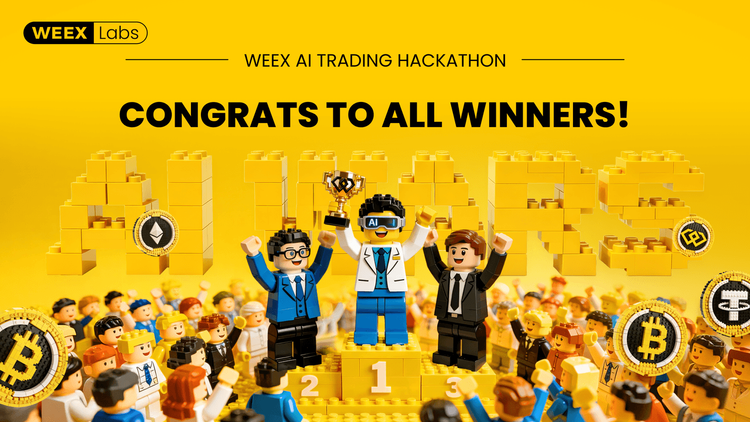
WEEX AI Hackathon Champions Crowned, Revealing Future of AI Trading
The first-ever WEEX AI Hackathon has concluded, with 10 winners emerging from over 200 global teams. Beyond its $1.8 million prize pool, the event marked a milestone—proving that the future of AI trading belongs to accessible, AI-powered innovation.

Lessons From a Top 10 AI Trading Strategy in the WEEX AI Hackathon
A Top 10 finalist in the WEEX AI Hackathon shares how a market-neutral AI trading system competed against high-leverage strategies in live crypto markets.

From 27th to 4th: The AI Trading "Survivor Strategy" Behind a WEEX Hackathon Comeback
After a logic failure dropped him to 27th place, ClubW_9Kid rebuilt his AI trading framework and finished 4th in the WEEX AI Hackathon. In this interview, he explains the lessons behind disciplined AI execution, risk control, and why survival beats complexity in algorithmic trading.
What Is Vibe Coding? How AI Is Changing Web3 & Crypto Development
What is vibe coding? Learn how AI coding tools are lowering the barrier to Web3 development and enabling anyone to build crypto applications.
AI Crypto Trading in 2026: How AI Agents Use Stablecoins for Capital Management and Settlement
Learn how AI agents use stablecoins for crypto trading in 2026 — managing capital, settling transactions, and operating across exchanges and DeFi protocols.
AI Trading's Ultimate Test: Empower Your AI Strategy with Tencent Cloud to Win $1.88M & a Bentley
AI traders! Win $1.88M & a Bentley by crushing WEEX's live-market challenge. Tencent Cloud powers your AI Trading bot - can it survive the Feb 9 finals?
How a Risk-Controlled AI Crypto Trading Bot Protects Capital in Real Markets
Ritmex demonstrates how disciplined risk control and structured signals can make an AI crypto trading bot more stable and reliable on WEEX, highlighting the importance of combining execution discipline with scalable AI trading systems.
How a Structured AI Crypto Trading Bot Won at the WEEX Hackathon
Crypto_Trade shows how structured inputs and controlled adaptability can build a more stable and reliable AI crypto trading bot within the WEEX AI Trading Hackathon, highlighting a practical path toward scalable AI trading systems.
How a Fully Automated AI Trading Bot Won at WEEX Hackathon (From 0 to AI Agent)
Nick’s journey on WEEX shows that successful AI Trading isn’t just about strategy ideas—but about structured AI agents, disciplined execution, and continuous adaptation in real market conditions.
Best AI Crypto Trading Bot? Inside the AI Trading System That Ranked Top 3 on WEEX
Discover the best AI crypto trading bot on WEEX. Learn how AI trading works, how to trade automatically, and why this system stands out among top AI trading apps.