
 Buy Crypto
- Markets
 Futures
- Spot
- Copy Trade
- Earn
- More
\$73 Billion OpenAI Aims for IPO: Drops Sora, Snubs Disney, Puts Microsoft in Risk Factors


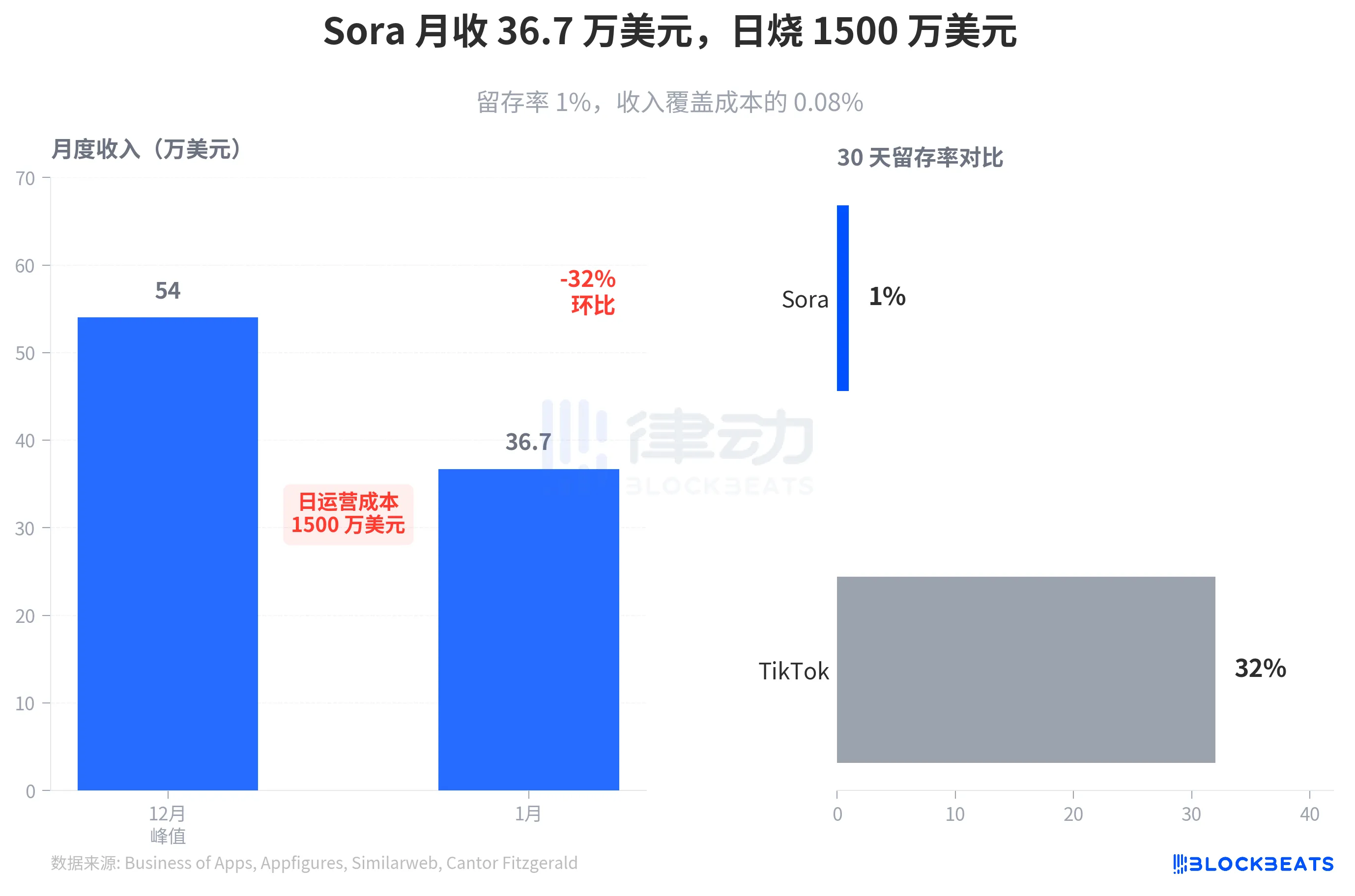
On March 24, OpenAI announced the shutdown of Sora, a video generation tool that had been online for less than half a year, and also terminated a $1 billion content licensing agreement with Disney (according to Variety and Bloomberg). According to data, Sora had a monthly revenue of $367,000 and a daily operating cost of $15 million. The revenue-to-cost ratio was 0.08%.
Just the day before, according to documents obtained by CNBC, Microsoft was identified as the number one risk factor in OpenAI's IPO preparation filing to investors. Going back three weeks, as reported by Awesome Agents, ChatGPT's built-in e-commerce feature, Instant Checkout, was quietly shut down due to a close-to-zero conversion rate.
A company valued at $730 billion, during the IPO sprint, not only failed to showcase a growth story but instead cut product lines, parted ways with partners, and set boundaries with its largest shareholder. This didn't seem like downsizing but more like a planned narrative cleanup.
Sora: Technical Marvel, Business Disaster
When Sora launched in October last year, it became a phenomenon on the App Store, with over 1 million downloads in 5 days and a total of over 3 million downloads. However, according to third-party data tracking platforms Appfigures and Similarweb, the 30-day retention rate was only about 1%, while TikTok's 30-day retention rate during the same period was 32%.
According to Appfigures data, downloads decreased by 45% month-over-month in January to about 1.2 million. The revenue in January was $367,000, a 32% decrease from the December peak of $540,000. According to Cantor Fitzgerald analyst Deepak Mathivanan's estimate, Sora peaked at generating 11.3 million videos per day, with a cost of around $1.30 per video generated, daily operating costs of about $15 million, and an annual cash burn rate of around $5.4 billion.
For OpenAI, the issue with Sora was not the technology but the unsustainable business model. Burning $5.4 billion annually to generate less than $5 million in revenue would be poison pill wording in any IPO prospectus.
The collateral damage of shutting down Sora was the nullification of Disney's $1 billion investment agreement. According to Variety, the original agreement was for a three-year term, authorizing OpenAI to use over 200 characters from Marvel, Pixar, and Star Wars to train and generate content, excluding characters associated with real-life actor likenesses and voices. Bloomberg reported that this money had actually not yet been exchanged.
Microsoftization Off: A 16-Month Systemic Engineering
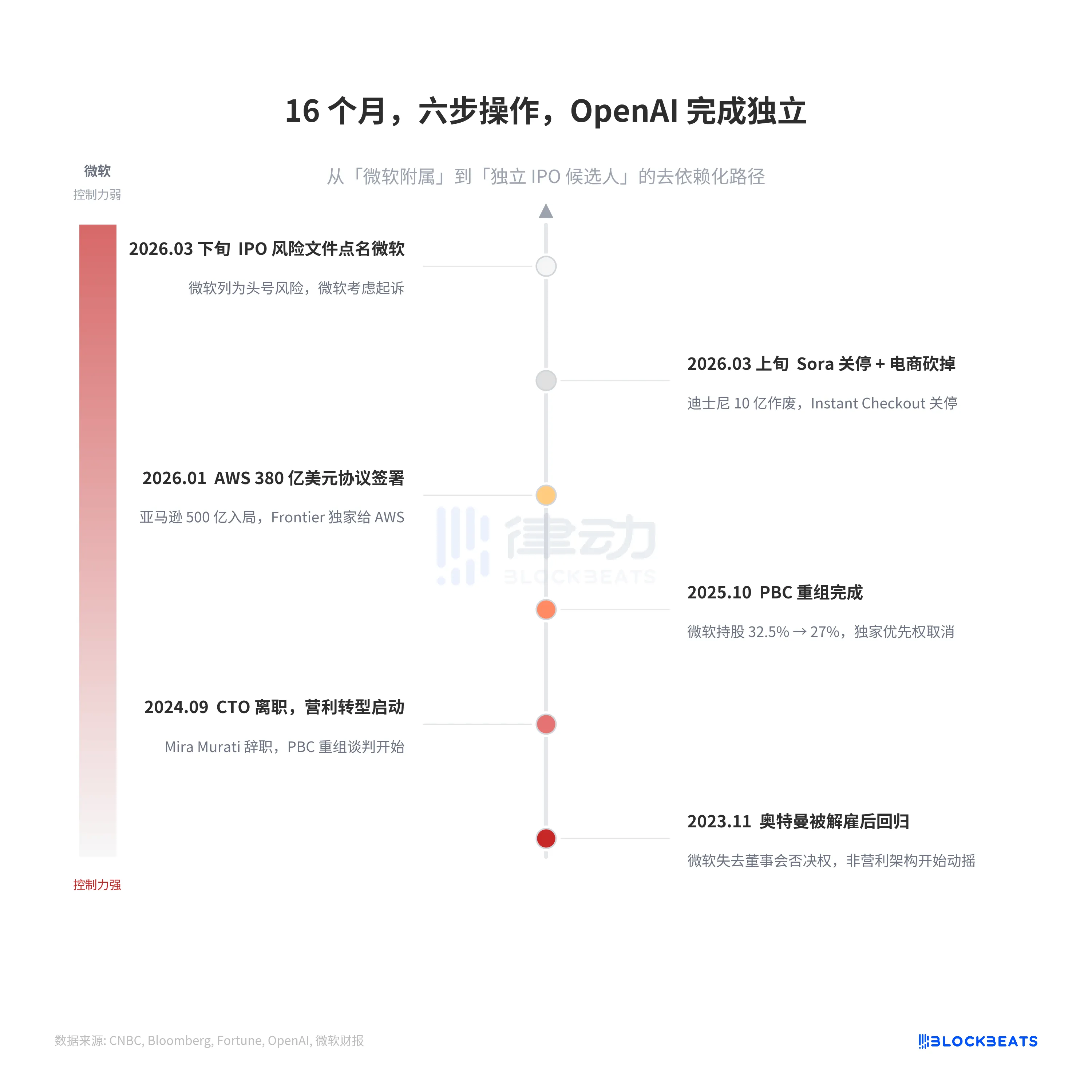
Viewing the Sora and Disney agreements as isolated events would overlook a more critical thread. Starting from Altman's dismissal and return in November 2023, OpenAI, in 16 months, completed a six-step operation to systematically demote Microsoft from a controlling entity to a minority shareholder.
The October 2025 PBC restructuring was a crucial turning point. According to Fortune, Microsoft's ownership stake was diluted from 32.5% to 27%, and its exclusive cloud priority was simultaneously revoked. Six days after the restructuring was completed, OpenAI struck a $38 billion cloud computing agreement with Amazon. As reported by ESM China, all deployment targets are expected to be met by the end of 2026. Amazon's total commitment amounts to $50 billion, with $15 billion as the initial payment, and the remaining $35 billion tied to milestones such as the IPO process.
More critically, there was a split in the cloud architecture. Microsoft's Azure retained OpenAI's stateless API calls (namely ChatGPT and API's foundational inference service), but Frontier, OpenAI's stateful enterprise-grade Agent platform, is exclusively deployed on AWS. According to Windows Central, Microsoft views this as a violation of the original exclusivity clause and is contemplating legal action.
According to Next Platform's analysis, of Microsoft's $625 billion revenue backlog, approximately $281.3 billion comes from OpenAI's Azure commitment purchases, accounting for 45%. Microsoft's FY 2026 capital expenditure is estimated at $100-125 billion, with AI revenue annualized at only about $13 billion. This sets up a counterintuitive scenario: while OpenAI is busy "Microsoftization Off," Microsoft's financial dependency on OpenAI may be deeper.
E-commerce's Zero Conversion and Narrative Focus
The shutdown of ChatGPT Instant Checkout did not attract much attention, but it points to the same logic as the Sora shutdown. This feature, launched in September last year, originally promised integration with over 1 million Shopify merchants but ended up being adopted by approximately 12. Per Awesome Agents, by the time of the shutdown, the purchase conversion rate was close to zero, and the state sales tax collection system was never established.
After the shutdown announcement, according to publicly available market data, Expedia's stock price rose by 13.69%, Booking rose by 8.46%, and Shopify rose by 3.96%. The market's interpretation is clear: OpenAI's exit from e-commerce is a positive for existing players.
Simultaneously shrinking three product lines, all pointing toward a common goal: focusing the IPO's valuation narrative on the core AI model. According to OpenAI CFO Sarah Friar's disclosure and official OpenAI data, $20 billion in annual revenue, 800 million weekly active users, and 1 million enterprise customers are sufficient to support a compelling growth story. Sora's $5.4 billion in annualized costs, e-commerce's zero conversion, legal risks from the Disney agreement, and uncertainties in the Microsoft relationship are all noise in the IPO prospectus.
Pre-IPO "Slimming Down" is not Unique to OpenAI
In 2020, Uber sold its self-driving unit, ATG, to Aurora for $4 billion, exchanging it for a 26% stake. ATG had an annual R&D expenditure of $457 million. After cutting it off, Uber achieved its first post-IPO profit. WeWork also trimmed non-core businesses before its 2019 IPO, but it was too late, leading to a valuation free fall from $47 billion to $8 billion, IPO failure, and bankruptcy in 2023.
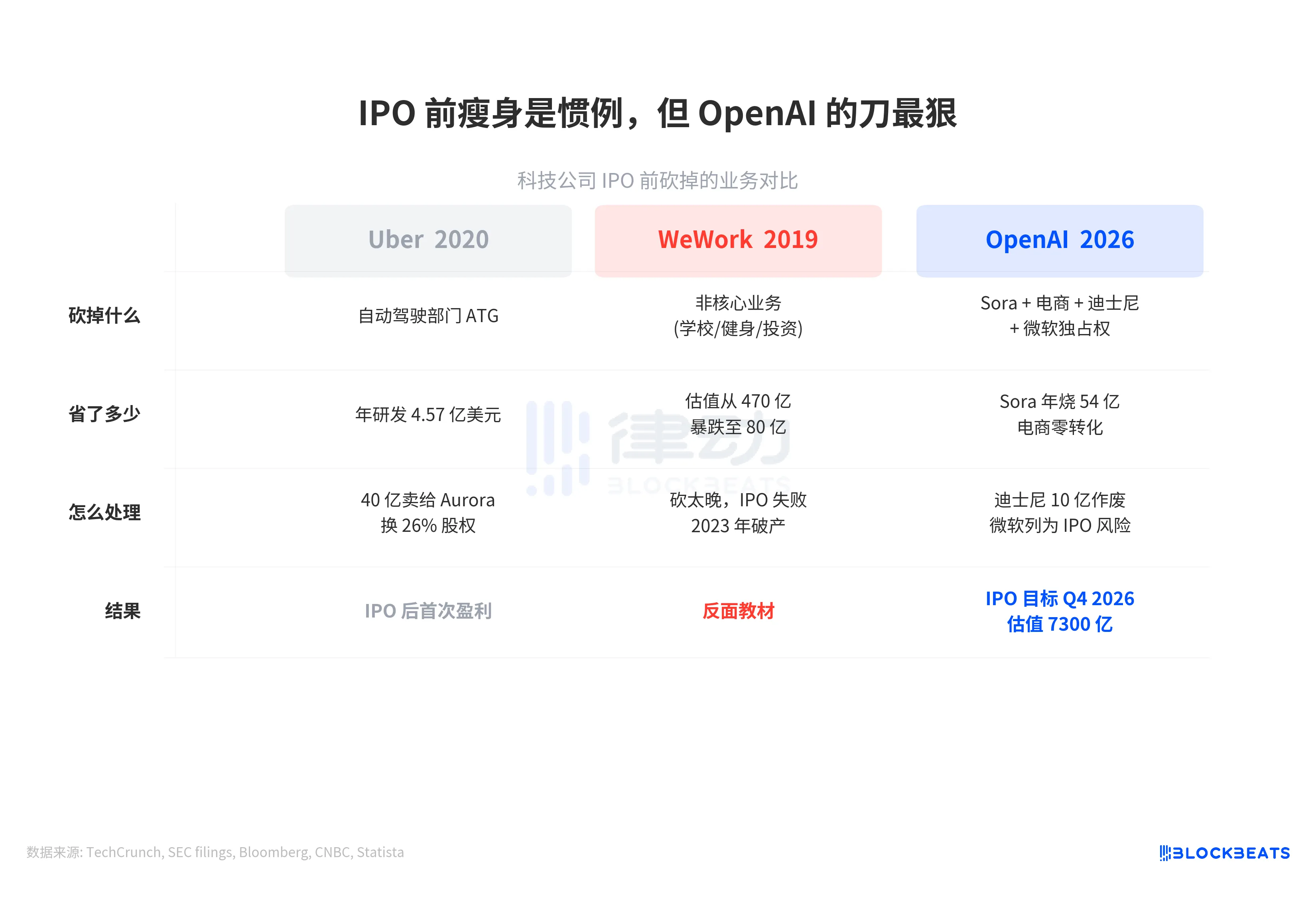
OpenAI's approach is more similar to Uber's: proactively cutting off high-cost, low-return business lines, cleaning up the financial structure before going public. The difference lies in scale. Uber cut off ATG, burning $457 million annually, while OpenAI cut off Sora, burning $5.4 billion annually, differing by an order of magnitude. Along with the $1 billion Disney write-off, the dissolution of the e-commerce team, and the public downgrade of the Microsoft relationship, OpenAI is conducting the largest-scale business line cleanup in tech history during its IPO sprint.
Altman is telling a growth story through subtraction.
You may also like

Arthur Hayes New Post: It's "No Trade" Time Now

Claude Opus 4.7 Review: Is It Worthy of the Title of Strongest Model?

DWF In-Depth Report: AI Outperforms Humans in Yield Farming Optimization in DeFi, But Complex Transactions Still Lag Behind 5x
The financial tricks of the crypto giant Kraken

When proactive market makers start to take initiative

Massive Whale Movement: Unstaking $84.96 Million in HYPE Tokens
Key Takeaways A crypto whale, known as TechnoRevenant, has unstaked approximately $84.96 million in HYPE tokens. The tokens…

ListaDAO Addresses Third-Party Contract Vulnerability Concerns
Key Takeaways GoPlus Security revealed a vulnerability in a contract resembling those of ListaDAO. ListaDAO confirmed that their…

Security Risks of Fake Ledger Nano S+ Devices Emerging Through Chinese E-Commerce
Key Takeaways Counterfeit Ledger Nano S+ devices are being sold on Chinese e-commerce platforms, posing significant risks to…

Wave of Cyber Attacks Hits DeFi Protocols Post-Drift Hack
Key Takeaways A significant $280 million attack on Drift Protocol set off a chain of security breaches across…
Tom Lee Says ‘Mini Crypto Winter’ Is Over, Sees Ether Above $60K
Key Takeaways: Tom Lee predicts Ether’s resurgence, projecting it to surpass $60,000 in the coming years. Bitmine suffered…

French Government Tackles Rising Crypto Safety Concerns
Key Takeaways: France is intensifying measures to counter the surge in crypto kidnappings and wrench attacks. Since early…
Europe’s Bitcoin Treasury Playbook Unlikely to Mirror US Strategy: PBW 2026
Key Takeaways: European firms are adapting unique Bitcoin treasury strategies due to distinct financial regulations and market dynamics…
Circle Confronts Lawsuit Over $280M Drift Protocol Hack
Key Takeaways: Circle faces a lawsuit for allegedly aiding in the transfer of $230 million in stolen USDC.…
Bitcoin Faces ‘Near-Term Selling Pressure’ Following Surge to $76K: CryptoQuant
Key Takeaways: Bitcoin reaches a multi-month high of $76,000, prompting increased deposits to exchanges. CryptoQuant identifies a peak…

Ethereum Foundation Unveils North Korean Infiltration in Web3
Key Takeaways: The Ethereum Foundation’s ETH Rangers program exposed 100 North Korean operatives infiltrating Web3 companies. The Ketman…

Crypto in Sustained Winter as CEX Volumes Drop 39% in Q1
Key Takeaways: Centralized crypto exchange trading volume fell by 39% in Q1 2026 to $2.7 trillion. March saw…

Bitcoiners Should Prepare for Quantum Computing Now, Urges Adam Back
Key Takeaways: Adam Back emphasizes immediate steps toward quantum-resistant solutions for Bitcoin. Quantum computing may disrupt blockchain security…

Cybersecurity Alert: Counterfeit Ledger Devices on Chinese Market
Key Takeaways: Scammers distribute fake Ledger devices via Chinese marketplaces, risking user crypto assets. Victims of a related…
Arthur Hayes New Post: It's "No Trade" Time Now
Claude Opus 4.7 Review: Is It Worthy of the Title of Strongest Model?
DWF In-Depth Report: AI Outperforms Humans in Yield Farming Optimization in DeFi, But Complex Transactions Still Lag Behind 5x
The financial tricks of the crypto giant Kraken
When proactive market makers start to take initiative
Massive Whale Movement: Unstaking $84.96 Million in HYPE Tokens
Key Takeaways A crypto whale, known as TechnoRevenant, has unstaked approximately $84.96 million in HYPE tokens. The tokens…



 App
App