
Afraid to Open the Pandora's Box? Anthropic's Most Powerful Model Ever Dares Not Be Disclosed

 Prefer us on Google

OpenBSD's codebase has a 27-year-old vulnerability. There is a 16-year-old vulnerability in FFmpeg, with that code segment being invoked over 5 million times before being discovered. The entities that unearthed these two things were not top researchers on any bug bounty platform, nor Google Project Zero. It was Anthropic, a model not yet publicly released, codenamed Claude Mythos Preview.
On April 7, Anthropic announced Project Glasswing. The action itself was simple: sharing Mythos Preview with a whitelist. The list included AWS, Apple, Google, Microsoft, NVIDIA, Broadcom, Cisco, CrowdStrike, JPMorgan Chase, Linux Foundation, Palo Alto Networks, along with about 40 institutions responsible for critical infrastructure. Those not on the list could not access it. Anthropic explicitly stated that they do not plan to publicly release this model in the near term.
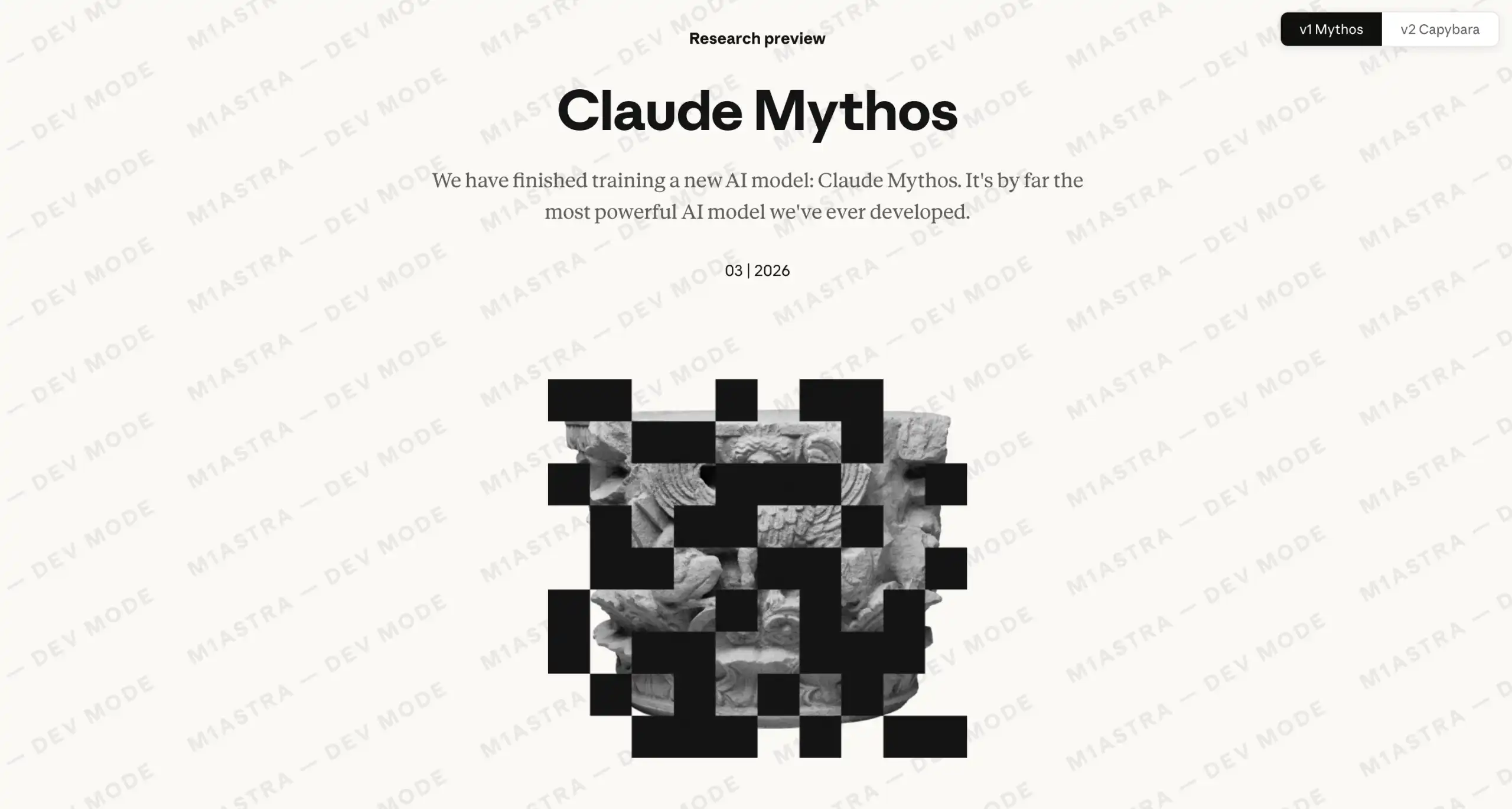
This is the first time the cutting-edge laboratory has proactively locked up its strongest asset.
Over the past two years, the release rhythm has been almost reflexive. Every generational leap of GPT, Gemini, and Claude followed a pattern of "release, observe, patch." Anthropic's own "Responsible Scaling Policy" (RSP) is essentially a commitment framework: reach a certain capability threshold, implement corresponding mitigation measures, and then continue to release. Glasswing is not the next step in this framework but the first exception. A model that Anthropic itself has deemed "unsuitable for release as per the original process" has been singled out and given only to the guardians.
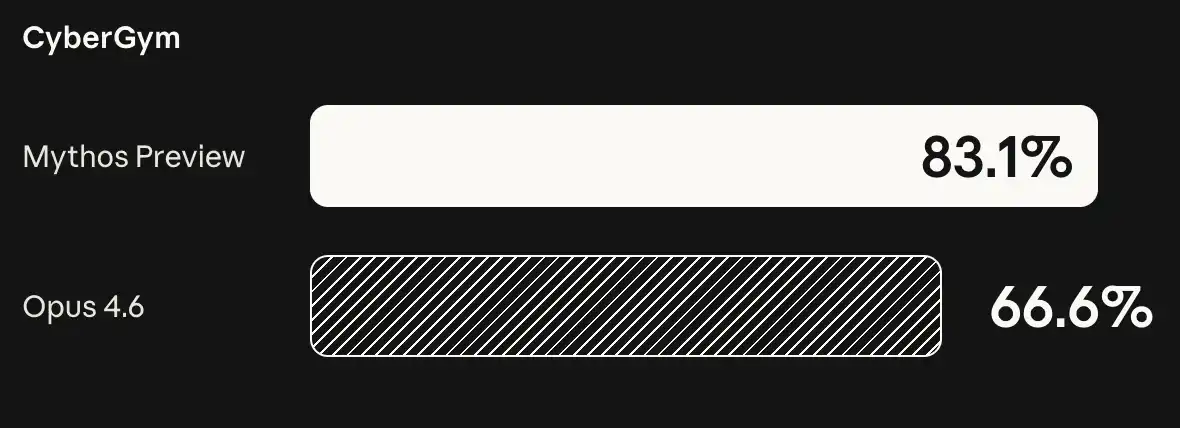
What has Mythos Preview achieved? The official statement mentions "thousands of zero-day vulnerabilities, covering every mainstream operating system and browser." More illustrative than the numbers is the breadth of capability. Claude 4.6 Opus had a success rate close to zero in tasks like independent vulnerability discovery. In other words, just six months ago, Anthropic's strongest public model couldn't do this at all. Mythos can string together multiple unrelated vulnerabilities into a complete attack chain, with a four-step browser exploit being a proven example. Moving from "almost zero" to a "four-vulnerability chain" is not an incremental generational advancement but a leap.
The maintainers have already felt it. Both Greg Kroah-Hartman of the Linux kernel and Daniel Stenberg, the author of curl, have recently stated the same thing: over the past year, AI-generated security reports have transitioned from "spam-level" to "real, high-quality, must-see" content. The number of reports received by open-source projects is increasing, as is their quality, while the manpower of maintainers remains the same. This is something the defense side has long been struggling with. Anthropic's actions have simply brought this issue from vague anxiety to the forefront.
It's worth taking a look at the whitelist itself. The list includes the three major clouds (AWS, Google, Microsoft), three hardware companies (Apple, NVIDIA, Broadcom), two networking equipment manufacturers (Cisco, Palo Alto Networks), one endpoint security company (CrowdStrike), one open-source infrastructure organization (Linux Foundation), and one bank. There is only one bank on the list, which is JPMorgan Chase.
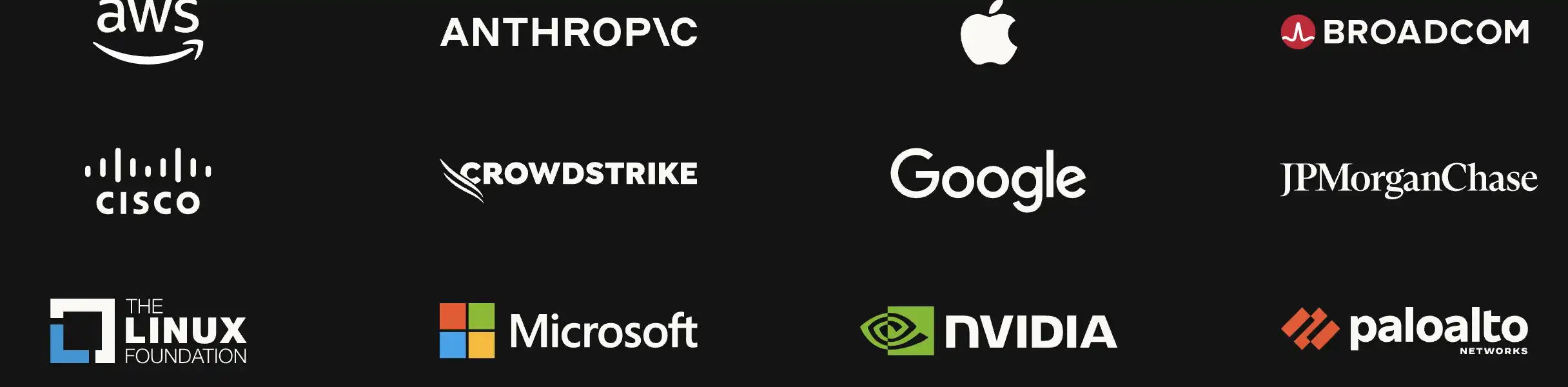
This is not a random allocation of slots. Anthropic has drawn a map of "if these fall, the sky will fall." The vast majority of the world's code runs on the stack of these companies, and the vast majority of the world's money runs through one of them. The logic behind the whitelist is not "who needs it most" but "whose fall will most immediately affect everyone." Outside the list, Anthropic has allocated an additional $4 million to open-source security organizations. The money provides manpower, the model provides capability, and together they sum up to one thing: giving maintainers a few months.
Anthropic's own wording is more direct than the whitelist. In its statement, the company writes, "Given the pace of AI development, this kind of capability will not remain in the hands of those dedicated to security deployment in the long term." Following that is a line stating, "Defending the global network infrastructure may take several years."
Putting these two sentences together, Anthropic concludes that the window of time before the model leaks or is replicated is short, while the window of time for defenders to patch vulnerabilities is long. The whole point of Glasswing lies between these two time disparities. With a controlled first move, they exchange a few months to a year of patching time.
There is also a Washington dimension to this matter. Anthropic is engaging in ongoing discussions with the U.S. government regarding the capabilities of Mythos Preview. At the same time, the company has an unresolved dispute with the U.S. Department of Defense concerning the scope of military AI usage. On one hand, the company refuses to use the model for certain military purposes, while on the other hand, it proactively shares this model with the Linux Foundation and Apple's security team. These two actions are not contradictory but are two sides of the same judgment. Anthropic is defining "what this model can be used for" rather than leaving that definition to the users.
The most unusual thing about Glasswing is not what it did, but when it did it. In the past, AI companies proved themselves through releases. Now, Anthropic chooses to prove itself through "non-release." A cutting-edge lab actively locks away its most powerful product, not because of commercial reasons, not because the alignment isn't done, not because of regulatory requirements, but because it has calculated that the open timetable can't keep up with the fix timetable.
What to watch in the coming months is not the Mythos Preview itself, but how many vulnerabilities are patched up from the 50 or so institutions in the whitelist that ran it. The next thing to watch is whether other cutting-edge labs will follow suit. If they do, an industry that operates on an "open, iterative, open" rhythm will have seen its first "lock it up and then we'll see" move. If they don't, Anthropic will be the one standing at the door. Holding the key, watching the clock.
-- Price
This content is provided for general informational purposes only and doesn't constitute financial, investment, legal, or tax advice. Any events, rewards, online promotions, or related information mentioned herein should not be considered a recommendation, solicitation, or invitation to purchase, sell, trade, or otherwise deal in any crypto assets. Crypto assets are highly volatile and may result in loss. The availability of WEEX services, products, and related events may vary by region. You are responsible for ensuring that your participation is in accordance with applicable local laws and regulations.
You may also like

Ethereum Layer 2 project Zero Network announces closure, multiple protocols cease operations consecutively

Coinbase is being sued for freezing funds related to the theft of 55 million dollars in DAI

Robin Markets completed a $475,000 angel round of financing, led by Fabric VC

Illustration of Zero Hash's 28 Web3 business partners: Connecting cryptocurrency and fiat currency settlement with compliant licenses

Cook Passes the Baton, Anthropic Gears Up | Rewire News Morning Brief

Former OpenAI employees establish a $100 million VC fund Zero Shot, focusing on AI investment direction

The TVL of the "100ETH" size pool on Tornado Cash decreased by 40% in the past week, with over 120,000 ETH being moved.

BC.GAME Community Open Letter: Launch of the 'Zero Edge Plan', Distribution of 1 Billion Platform Tokens, Game House Edge set at 100% Rebate

Hotcoin Launches MAGMA Trading with Zero Fees Initiative
Key Takeaways Hotcoin to list MAGMA on December 16, strengthening its portfolio with trending assets. New listing on…
How to Use a Trading Bot to Earn Profits on Polymarket?

WEEX Launches Contract Mining Event: Up to 30% Fee Rebate + $2 Million WXT Repurchase

0G collaborates with Nanyang Technological University, Singapore to jointly launch a $5 million decentralized AI research initiative

Boundless ZKC Token Price Dives 46% After Binance Debut Amid Airdrop Sell-Off – Latest Insights as of September 16, 2025
Imagine stepping into a bustling digital marketplace where a shiny new token bursts onto the scene, only to…
RFG Surges Over 70% in 24 Hours, Breaks $0.0019 to Hit New All-Time High
Ant Group Launches the DT Tokenization Suite to Build a One-Stop Tokenization Solution

WEEX Official Product Launch: Win LALIGA Tickets & Unlock the 3-in-1 Crypto Trading Suite
Trade crypto without downloading an app. Join the WEEX H5, API, SKILLs livestream to explore the new trading experience, win LALIGA VIP tickets, and share 420 USDT rewards.
Jane Street Records Record Increase in iShares Silver ETF Holdings in Q4, Becoming the Largest Holder
Google, Circle, Stripe Flock Together to Let AI Spend Money: Payment Giants' Joys and Worries in 2026 Q1

LALIGA Preview: Barcelona Eyes Continued Dominance While "The Lightning" Targets a Camp Nou Upset
[Match Info]
- Fixture: FC Barcelona vs. Rayo Vallecano
- Kick-off: March 22, 04:00 AM (Beijing Time)
- Venue: Estadi Olímpic Lluís Companys

Aster Chain officially launches: defining a new era of on-chain privacy and transparency
BitRing will launch the AI short drama "BitRing-Satoshi Nakamoto Block Zero."
March 6 Key Market Update You Can't Miss! | Alpha Morning Report

Zero-Fee Gold Futures and $100K Rewards: Why Traders Are Turning to WEEX for Tokenized Gold
Explore WEEX's $100,000+ gold campaign featuring, zero-fee gold contracts, and $30,000 PAXG rewards. Trade tokenized gold today.
Crypto’s Next Battle: Privacy Faces a Chicken-Egg Dilemma with Regulators
Key Takeaways The integration of cryptocurrencies into bank systems is fueling a privacy versus transparency conflict. Privacy-preserving tech…
CZ: When young, it is important to balance spending, saving, and investing, finding the optimal balance point
Crypto’s Next Challenge: Privacy and the Chicken-Egg Dilemma
Key Takeaways Privacy is becoming a central issue as cryptocurrencies move into traditional banking and state-backed systems. Regulatory…

Zerion-incubated L2 network Zero Network has relaunched and fully resumed operations

First Zero, First Revival: A Real Story from the WEEX Global AI Trading Hackathon Preliminary Round
WEEX Labs, the innovation arm of the global crypto exchange WEEX, launched the preliminary round of its flagship AI trading hackathon, AI Wars: WEEX Alpha Awakens, on January 12, 2026. Backed by world-class sponsors including AWS, the prize pool has reached $1.88 million, with a Bentley Bentayga S awaiting the champion in Dubai. Already, 788 elite teams worldwide are battling for a spot in the finals. This is more than a hackathon — it is a real-market stress test for AI trading. Registration remains open until January 18. If you want your AI to face real volatility, this is your moment.

EF Board Member: Ethereum's Future Depends on the Direct Integration of Zero-Knowledge Proofs
SafePal Launches 2026 New Year Limited Edition Mastercard Design
Ethereum Layer 2 project Zero Network announces closure, multiple protocols cease operations consecutively
Coinbase is being sued for freezing funds related to the theft of 55 million dollars in DAI
Robin Markets completed a $475,000 angel round of financing, led by Fabric VC
Illustration of Zero Hash's 28 Web3 business partners: Connecting cryptocurrency and fiat currency settlement with compliant licenses
Cook Passes the Baton, Anthropic Gears Up | Rewire News Morning Brief
Former OpenAI employees establish a $100 million VC fund Zero Shot, focusing on AI investment direction