AI Trading vs Human Crypto Traders: $10,000 Live Trading Battle Results in Munich, Germany (WEEX Hackathon 2026)

 Prefer us on Google


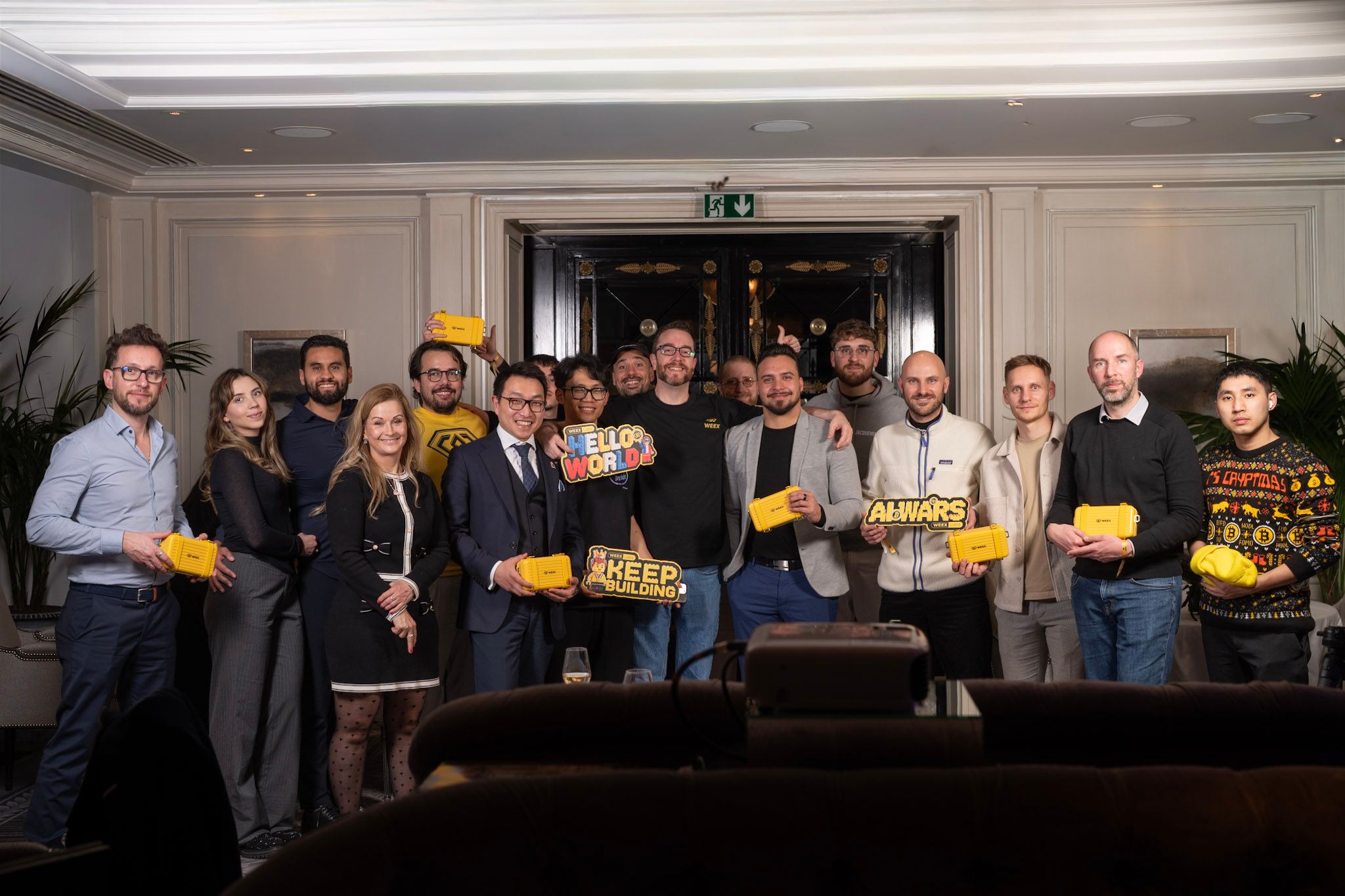
On Thursday, February 12, from 18:30 to 22:30 (GMT+1), the WEEX Global AI Trading Hackathon arrived in Munich, Germany, bringing together hundreds of European AI builders, crypto traders, and Web3 innovators for an immersive offline workshop.
As an important milestone of the ongoing WEEX Global AI Hackathon, the Munich stop came at a crucial moment — the global finals are in full swing, and competition momentum is accelerating worldwide. Why does this matter? Because the hackathon is not just a competition; it is a real-world experiment exploring how AI is reshaping crypto trading. With developers, creators, and market participants gathering under one roof, the workshop became a live laboratory where ideas met execution. When AI meets real capital, theory turns into reality.
AI Trading vs Manual Crypto Trading: How Beginners Competed Using WEEX API Automation
What made the Munich workshop different from previous stops?
Instead of professional traders, all participants were amateurs — a deliberate design choice that reflected WEEX’s vision: AI trading should not belong only to institutions or quant funds.
Two teams entered the live showdown:
- One team relied on manual trading strategies
- The other used AI-powered automated trading via the WEEX API
This format allowed audiences to witness something powerful: everyday users could access AI trading tools once reserved for professionals. Could AI truly lower the barrier to entry? The workshop answered this question in real time.
By letting beginners compete under real market pressure, WEEX demonstrated how AI trading tools can accelerate learning curves and help users participate confidently in crypto markets. Technology doesn’t replace traders — it amplifies them.
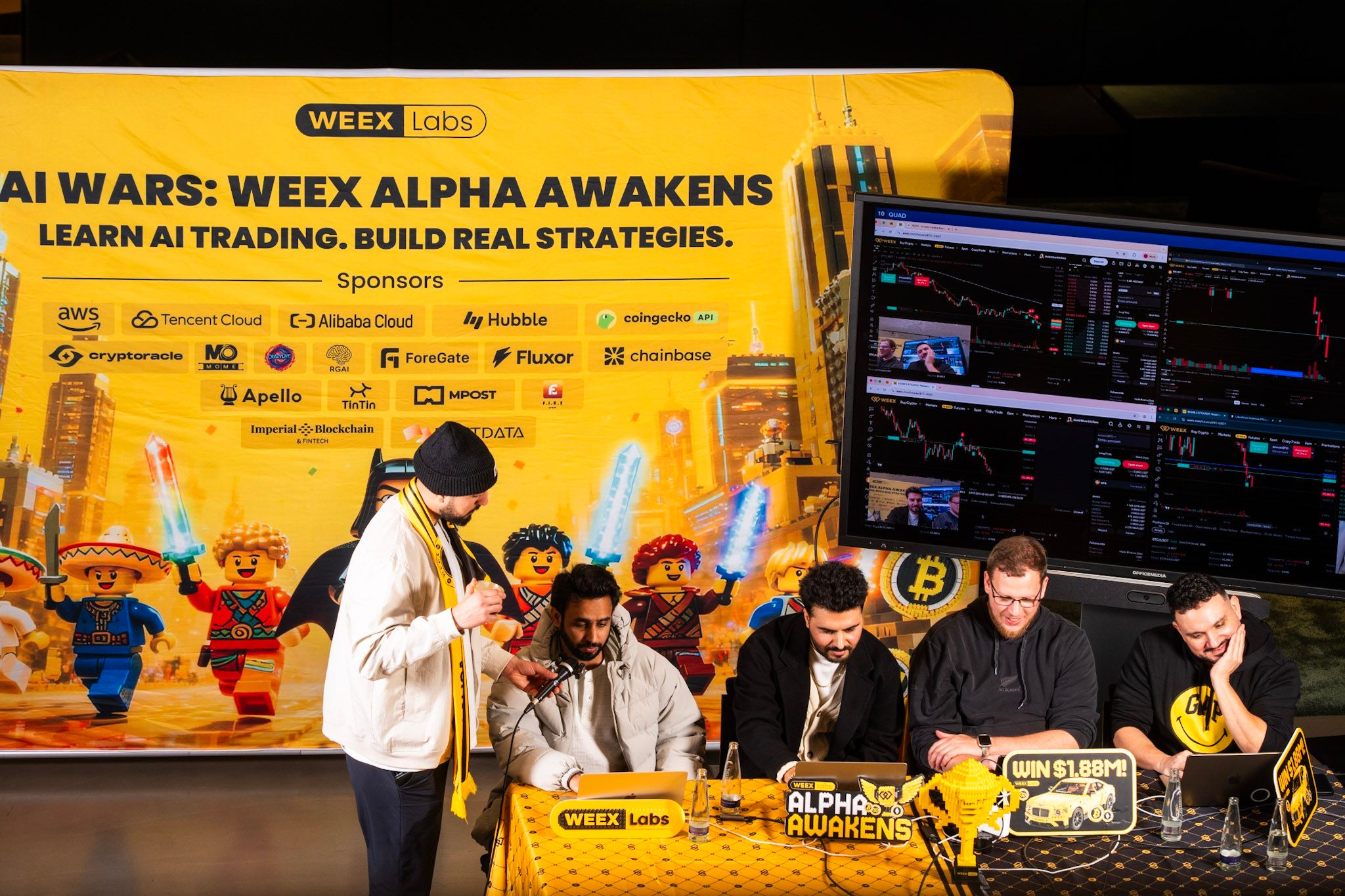
Live Crypto Trading in Munich: $10,000 Real Account Performance Under Market Volatility
The trading session unfolded across intense live rounds, with each team managing $10,000 accounts under volatile market conditions. Prices moved rapidly, forcing participants to make decisions within seconds.
Several key strategies emerged from the battlefield:
First, momentum trading vs reversal thinking became a central theme. Some traders followed market trends, riding downward momentum through short positions, while others attempted counter-trend longs after sharp drops. The results showed an important lesson: timing matters more than prediction.
Second, risk management proved decisive. Participants discussed unrealized versus realized profits, stop-loss decisions, and position sizing. One trader secured gains by closing a profitable short position early — a reminder that protecting profits can matter more than chasing bigger wins.
Third, the event revealed an interesting contrast: AI trading systems tended to trade conservatively, prioritizing capital preservation, while manual traders often increased leverage to recover losses. This highlighted a core insight: AI trades with discipline; humans trade with emotion.
This workshop became more than entertainment — it evolved into a real-time reflection on how trading decisions are made under pressure. When markets move fast, is success driven by speed, logic, or emotional control? Can instinct outperform data, or does the future belong to those who combine both? The Munich showdown left audiences with a deeper question to consider: in the next generation of trading, will humans compete against AI — or learn to trade alongside it?
Live Crypto Giveaway: 1,000 USDT Distributed During WEEX Hackathon Livestream
The excitement extended beyond the trading floor. During the livestream, WEEX introduced two rounds of real-time Crypto Gift giveaways totaling 1,000 USDT, allowing online viewers to participate alongside the competitors.
In Round 1, new users registered on WEEX and activated the Crypto Gift feature to claim a share of 500 USDT on a first-come, first-served basis. Round 2 opened participation to all logged-in users, distributing another 500 USDT to the broader community.
These live rewards transformed the workshop into an interactive global event. Viewers were not just spectators — they became part of the experience. Trading education met community celebration in real time.
-- Price
Why AI Trading Events Matter: How WEEX Expands Its AI Strategy Across Europe
The Munich workshop marked more than another event stop; it represented a strategic step in WEEX’s broader AI vision.
For the hackathon, it validated the concept of testing AI trading in real market environments rather than simulations. For WEEX’s AI strategy, it demonstrated how accessible automation tools can empower a new generation of traders. And for the European crypto ecosystem, it strengthened local community engagement by connecting builders, creators, and users through hands-on participation.
As the hackathon moves toward its global finals, one message becomes clear: AI trading is no longer a future concept — it is already here, evolving through real users and real markets. The question is no longer whether AI will change trading — but how traders will evolve alongside AI.
Watch the full recap below to ride the wave:
About WEEX
Founded in 2018, WEEX has developed into a global crypto exchange with over 6.2 million users across more than 150 countries. The platform emphasizes security, liquidity, and usability, providing over 1,200 spot trading pairs and offering up to 400x leverage in crypto futures trading. In addition to traditional spot and derivatives markets, WEEX is expanding rapidly in the AI era — delivering real-time AI news, empowering users with AI trading tools, and exploring innovative trade-to-earn models that make intelligent trading more accessible to everyone. Its 1,000 BTC Protection Fund further strengthens asset safety and transparency, while features such as copy trading and advanced trading tools allow users to follow professional traders and experience a more efficient, intelligent trading journey.
This content is provided for general informational purposes only and doesn't constitute financial, investment, legal, or tax advice. Any events, rewards, online promotions, or related information mentioned herein should not be considered a recommendation, solicitation, or invitation to purchase, sell, trade, or otherwise deal in any crypto assets. Crypto assets are highly volatile and may result in loss. The availability of WEEX services, products, and related events may vary by region. You are responsible for ensuring that your participation is in accordance with applicable local laws and regulations.
You may also like
RootData: GMT will unlock tokens worth approximately 2.43 million dollars in one week
Best Oil Trading Platform for Crypto Users in 2026

Cook Passes the Baton, Anthropic Gears Up | Rewire News Morning Brief
ChainCatcher Hong Kong Forum officially opens today, focusing on the new paradigm of the integration of cryptocurrency and smart economy
Countdown 5 days | ChainCatcher Hong Kong Forum is about to open, focusing on the new paradigm of the integration of cryptocurrency and smart economy
The ChainCatcher Hong Kong themed forum "Crypto 2026: From Cryptocurrency to Smart Economy," sponsored by Monera Digital, will be held on April 19

Trump Admin's $950 Million Bet on Oil Price Plunge Before Ceasefire Turned Crude Market into Insider Trading Heaven

ChainCatcher, in collaboration with RootData, will hold the themed forum "Crypto 2026: From Cryptocurrency to Smart Economy" in Hong Kong on April 19

24hr Spot Funding In/Out Rankings: ETH Net Inflow $113M, SOL Net Inflow $23.4M
RootData: GMT will unlock tokens worth approximately $2.43 million in one week
Virtuals Protocol's inaugural Titan project: ROBO aims to give a wallet to a robot
Pudgy Penguins Faces NFT Airdrop Snapshot as Market Interest Divides
Key Takeaways Pudgy Penguins’ current token (PENGU) is trading around $0.01001 amidst a 17% decrease in the last…
Dogecoin’s Network Activity Surges Amid Price Stability: A Detailed Analysis
Key Takeaways: Dogecoin’s price stability is paired with a significant increase in network activity, hinting at potential market…
S&P 500 and Nasdaq 100 Futures have had no trading data since 11:44.
On Polymarket, the probability of the "Stablecoin Issuing a Token This Year" has risen to 97%.

Coinbase will delist trading pairs such as MASK-USDT, MINA-USDT, GMT-USDT.

BTC "V-Reversal" Bull Market Trend Continues? | Trader Observation
Luigi Skyrockets 500x, APPLE Whales In with 40M, and Solana Sees Another Gold Dog on-chain | What Memes Are Hot Today?
RootData: GMT will unlock tokens worth approximately 2.43 million dollars in one week
Best Oil Trading Platform for Crypto Users in 2026
Cook Passes the Baton, Anthropic Gears Up | Rewire News Morning Brief
ChainCatcher Hong Kong Forum officially opens today, focusing on the new paradigm of the integration of cryptocurrency and smart economy
Countdown 5 days | ChainCatcher Hong Kong Forum is about to open, focusing on the new paradigm of the integration of cryptocurrency and smart economy
The ChainCatcher Hong Kong themed forum "Crypto 2026: From Cryptocurrency to Smart Economy," sponsored by Monera Digital, will be held on April 19