
Binance Wallet IDO Survival Report: 10 Projects' Real Data Proves Narrative is More Important Than Traffic?





Original Title: "Real Data from 10 Projects: Binance Wallet IDO Project Survival Report"
Original Source: Klein Labs
In the current phase of Web3's adjustment period, the Initial Token Generation Event (TGE) is no longer just a simple fundraising method but has become a battleground for projects and the market. Especially in the current environment of liquidity contraction and investor confidence crisis, how to launch and in what manner to launch has become a topic that project teams must carefully consider.
IDO is a common form of TGE. From early platforms like Coinlist, many top-tier projects have been born through IDOs. However, as the number of projects has increased, the wealth effect of IDOs has diminished. Every move by Binance also constantly stirs the market's nerves. Since 2025, the Binance Wallet IDO has become the choice for many projects to launch. Its characteristics of "low barriers, high heat, strong traffic" quickly became the market focus, attracting a large number of startups and community attention. But it has also exposed a series of fundamental changes in the new coin market structure, valuation system, and project logic.
However, is this model truly suitable for every project? Which projects can quickly amplify their narrative and complete a cold start through it, and which projects may encounter the dilemma of "opening high and falling low" after the market noise? The Klein Labs Research team conducted systematic data research and structured analysis of 10 Binance Wallet IDO projects that have gone live, attempting to help project teams make smarter decisions from a strategic perspective.
1. Background: What kind of market cycle are we in?
We have clearly observed the evolution of market investment preferences over the past few months:
· Early preference: High valuation + low circulation model (VC-led, short-term speculation)
· Mid-term frenzy: Fully circulating Meme Coin model (zero-threshold hype)
· Current turning point: The market is returning to a focus on strong fundamental and sustainable projects
At the same time, the structure of the TGE model is also undergoing three stages of evolution:
· Early model: Low valuation issuance + market value discovery mechanism (narrative-driven)
· Mid-term Mode: High Valuation Issuance + Insider Arbitrage (Through OTC or Immediate Sell Post Unlock)
· Current Status: Reverting to Low Valuation Opening (Lack of Buying Interest, No One Willing to "Catch the Falling Knife")
This market state is most intuitively reflected in what we see in the Binance Wallet IDO project's low valuation launch. The project must exchange a modicum of market attention for an extremely low valuation and unlock ratio. Behind this is an important logic:
The TGE valuation is not a reflection of "project future value," but a current comprehensive mapping of market liquidity, listing expectations, narrative intensity, and market-making system.
II. Binance Wallet IDO's Traffic Effect Is Still Strong, but Rhythm Control Is Key
From the data perspective, Binance Wallet IDO has brought significant market attention and brand exposure to projects:
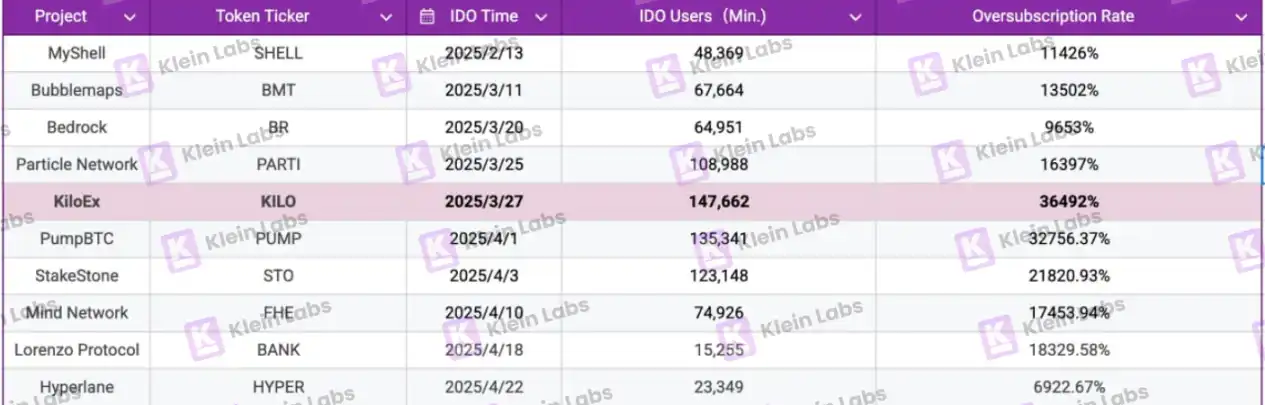
· Average number of participants is 80,965 people;
· Single fundraising ranges from 60,000 to 443,000 BNB;
· Over-subscription rates range from 6,900% to 36,500%.
Among them, KiloEx reached an over-subscription rate of 36,492%.
Binance Wallet IDO easily leverages the attention of hundreds of thousands of users, even in a generally cold market, still attracting tens of millions of dollars' worth of assets. Although with mechanism optimization, the user participation threshold has increased, it can effectively filter out high-quality users with more long-term value and stickiness, bringing a healthier user structure and community foundation to the project team, aiding in subsequent community operations and user conversion.
With the support of the Binance Wallet's light touch mechanism, project teams can still gain strong cold-start momentum, significantly compressing the user acquisition path and cold-start costs.
III. TGE Models Are Being Decentralized, Wallet IDO Projects Are Generally Launching at Low Valuations
Through data analysis, we found that the Binance Wallet IDO projects exhibit a clear commonality in tokenomics:
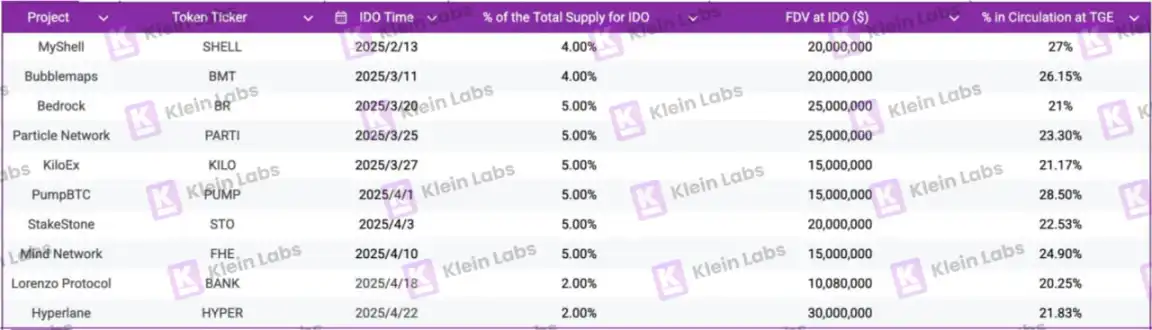
· IDO stage token release ratios are generally low, ranging from 2% to 5% of total supply, averaging 4.44%;
· The Initial Circulating Supply Ratio during the Token Generation Event (TGE) phase is usually between 20% and 30%, ensuring that the initial market liquidity is not excessively diluted;
· The Fully Diluted Valuation (FDV) corresponding to the IDO phase is between $10 million and $30 million. Overall, this range falls within a relatively reasonable or slightly low valuation range.
During this phase, the project team is still willing to conduct the TGE through a Binance Wallet IDO, considering the following:
· The product is already developed and there is a need to issue tokens to access usage scenarios/incentive systems/settlement systems;
· There is a need to attract community attention and trading support cost-effectively, equivalent to conducting a large-scale marketing campaign to establish liquidity;
· Upholding a long-term vision, accepting a low valuation, low token release, and slow-paced growth.
Projects participating in the current stage of Binance Wallet IDO have to endure the pressure of low valuation due to the market's lack of confidence. However, this situation can also reserve more room for market capitalization growth for excellent projects.
IV. Exchange Performance: Binance Wallet IDO is a Gateway to Binance, Not the Final Destination
In the imagination of many teams, the Wallet IDO signifies "listing on Binance." However, the reality is far from this:
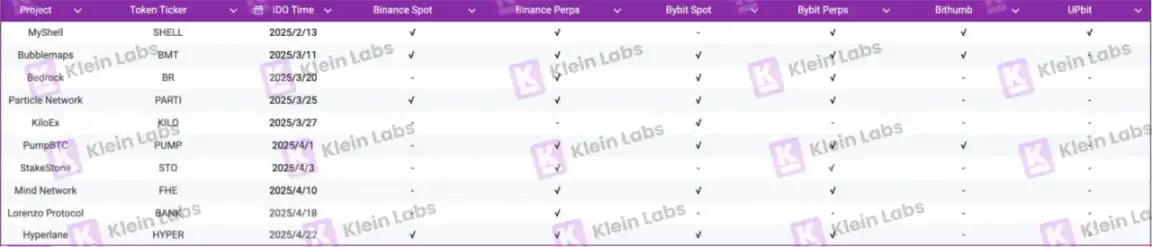
· Binance's spot listing rate is 40% (SHELL, BMT, PARTI, HYPER);
· Approximately 90% of projects land on the Binance Futures market;
· Bybit has a 70% spot listing rate and an 80% contract listing rate;
· The current listing rate on Korean exchanges is relatively low and non-standard.
Binance Wallet IDO does not equate to listing on Binance. The Binance Wallet IDO provides more like a trial ticket to enter Binance's traffic ecosystem. Whether a project can officially enter the spot market depends on the post-listing data performance, user feedback, and Binance's internal evaluation by the trading team. Project teams should consider it as a "pre-show before the main stage" and prepare adequately for listing and secondary liquidity support.
V. Price Trend: Strong Start, Long-term Performance Depends on Operations and Market Strategy
Based on the current data, most Binance Wallet IDO projects have performed well on the first day, with a generally impressive Return on Investment (ROI):
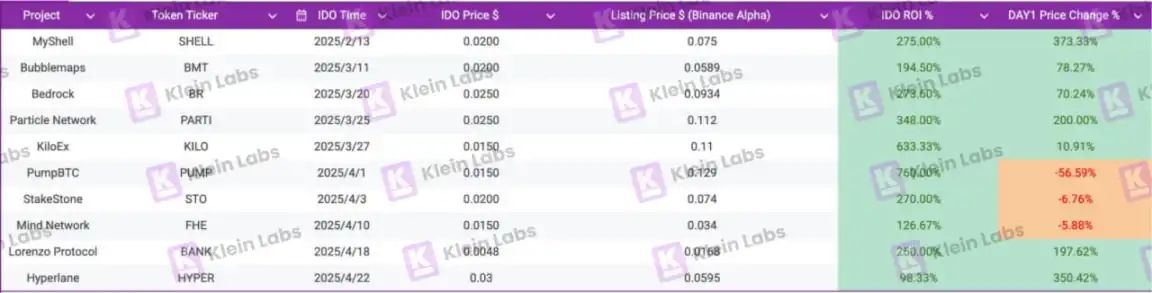
· PumpBTC saw a first-day price increase of up to 760%, and KiloEx's ROI performance was similarly remarkable.
· Although there was significant price volatility on the first day, the project's medium- to long-term performance depends more on continuous operational capability, market management strategy, and a clear long-term development plan.
· It is worth noting that some projects (such as MyShell, Bubblemaps, PumpBTC) have chosen to actively expand into the Korean market post-IDO to drive future growth.
While Binance Wallet IDO projects often experience initial hype, if the project lacks long-term planning, it will struggle to withstand the multiple challenges present in the current market environment—such as weak buying pressure, investors no longer chasing short-term liquidity, insufficient medium- to long-term fundamental support, and premature depletion of narrative value. Against this backdrop, there has been a gradual divergence in the market performance of different projects.
Short-term hype may be easy to come by, but what truly determines whether a project can go the distance is still continuous operational capability and market management strategy. Project teams need to plan the control rhythm of the secondary market and investor relations management in advance to avoid rapid price drops and achieve the steady release of long-term value.
VI. Trading Heat Performance: A True Reflection of Market Attention and Capital Momentum
The market performance of Binance Wallet IDO projects varies by project, but overall, the trading heat is generally high:
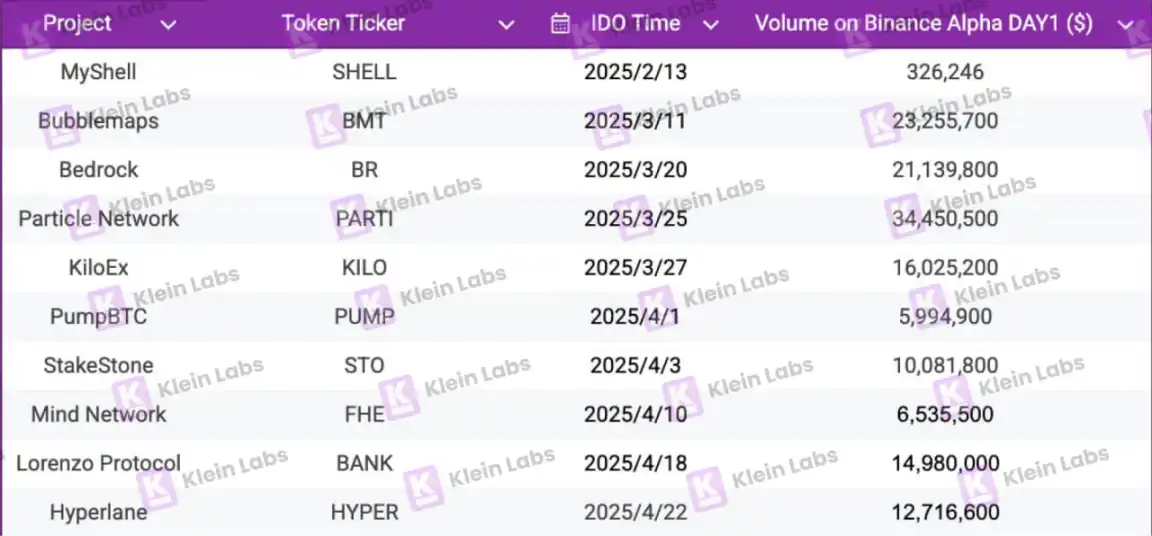
Projects like PARTI, BMT, and BR have stood out, with first-day trading volumes exceeding $20 million each
The high trading volume is not only related to initial traffic but also closely linked to the project's narrative strength, tokenomics design, and market expectation management;
IDO is just the "ignition point" of hype, and whether it can maintain the hype and ignite the secondary market depends on the project's overall execution and operational rhythm control. Many underperforming projects quickly fell silent post-TGE, either due to a lack of sustained content output to maintain topic relevance or due to out-of-control market management leading to rapid confidence decline.
Conclusion: Binance Wallet IDO is a "value filter" and a narrative validation
Binance Wallet IDO is a structured, high-leverage cold start method that is currently used by Web3 projects to kickstart their narrative, build consensus, and amplify attention. It provides project teams with a playbook for leveraging a large volume of noise at a low cost, but it also places a strong emphasis on the team's execution, operational planning, and marketing management capabilities.
The data performance of Binance Wallet IDO reflects a profound evolution in the market's valuation logic and issuance model. It is not the end point, nor is it a pass, but rather a window through which a product vision can be validated at low cost and market mechanisms can be trialed.
It is precisely because the market is currently in the late stage of low confidence, low liquidity, and high caution that there is a greater need for projects that are truly committed to long-term development to come forward and use the Binance Wallet IDO to showcase their product value, narrative pace, and operational capabilities.
It is not suitable for everyone, but for those teams with a clear story, defined pace, and long-term development intentions, it is an important springboard to enter the Binance ecosystem and mainstream market visibility. In the window of time when the bubble bursts, the market returns to the essence of value. This is actually a positive signal for teams that truly want to make things happen and have long-term vision.
Like all platform-based IDOs, after the brief joy, how can the feast continue? This is also a question that Binance Wallet needs to consider. Simply put, if Binance Wallet IDO can continue to be the preferred launch platform for quality assets, then its lifecycle can be extended as much as possible. Behind this is the understanding of "quality assets." What projects does the industry really need? Which projects are suitable for development in this world? Each and every one of us needs to think deeply about this.
This article is contributed content and does not represent the views of BlockBeats.
You may also like

Morning Report | Secret Network loses $4.67 million due to cross-chain vulnerability; Michael Saylor releases Bitcoin Tracker information again, may disclose increased holdings data next week

Kalshi's biggest competitor is not Polymarket

The second half of the computing power battle: Intel CEO Pat Gelsinger reveals how AI is reshaping the global semiconductor supply chain
B.AI partners with MiniMax to launch a limited-time free experience of M3, enabling zero-threshold implementation of Agentic productivity through full-stack infrastructure

A company that was on the verge of bankruptcy has just surpassed Bitcoin in market value

The two giants are racing in "credit": loan balances of 9.9 billion vs 14.6 billion USD, Brazil has become the main battlefield

Rented Belief: How Much of the Bitcoin ETF Fund Flow is Real Money

On-chain finance: On-chain IPOs and on-chain ICOs, a new frontier in the trillion-dollar market

WEEX Live mode: Monitor 20 trading pairs at once and trade like a pro

WEEX Makes Affiliate Access Easier on the Web and in the App

Customize Your Spot Trading Page: Drag Modules and Move the Order Panel Where You Want It

Perp DEX: The Next Generation Exchange "War"

10 Counterintuitive Insights on Latin American Payments

The AI gamble of mining companies: Valuations enter a phase of differentiation, and it's hard to turn the tide
A letter from Alliance to entrepreneurs: Written on the occasion of Cursor selling for 60 billion dollars
Stablecoins Finally Find Real Returns: On-Chain Reinsurance Re Explained | Interview with Re Founder Karan Saroya

The impossible triangle is simply a pseudo problem

Will MicroStrategy fall into a death spiral? What will the macro trend be in the second half of the year?
Morning Report | Secret Network loses $4.67 million due to cross-chain vulnerability; Michael Saylor releases Bitcoin Tracker information again, may disclose increased holdings data next week
Kalshi's biggest competitor is not Polymarket
The second half of the computing power battle: Intel CEO Pat Gelsinger reveals how AI is reshaping the global semiconductor supply chain
B.AI partners with MiniMax to launch a limited-time free experience of M3, enabling zero-threshold implementation of Agentic productivity through full-stack infrastructure
A company that was on the verge of bankruptcy has just surpassed Bitcoin in market value
The two giants are racing in "credit": loan balances of 9.9 billion vs 14.6 billion USD, Brazil has become the main battlefield


