
 Buy Crypto
- Markets
 Futures
- Spot
- Copy Trade
- Earn
- More
Bloomberg: Aid Turkey Freeze $1 Billion Assets, Tether Remakes Compliance Boundary


Original Article Title: Crypto Giant Tether Aided Turkey in Billion Dollar Crackdown
Original Article Authors: Ryan Weeks, Todd Gillespie, Taylan Bilgic, Bloomberg
Original Article Translation: Luffy, Foresight News
On January 30, Turkish authorities announced the freezing of assets worth over $500 million belonging to Veysel Sahin, who is accused of operating an illegal gambling platform and money laundering. The Istanbul Chief Prosecutor revealed that an unnamed cryptocurrency company carried out this freezing operation at the request of the Turkish government.
This company is none other than Tether Holdings SA, the issuer of the $185 billion market cap stablecoin USDT. Recently, the company has actively assisted various governments worldwide in cracking down on various cryptocurrency-related criminal activities, including money laundering, drug trafficking, and sanctions evasion.
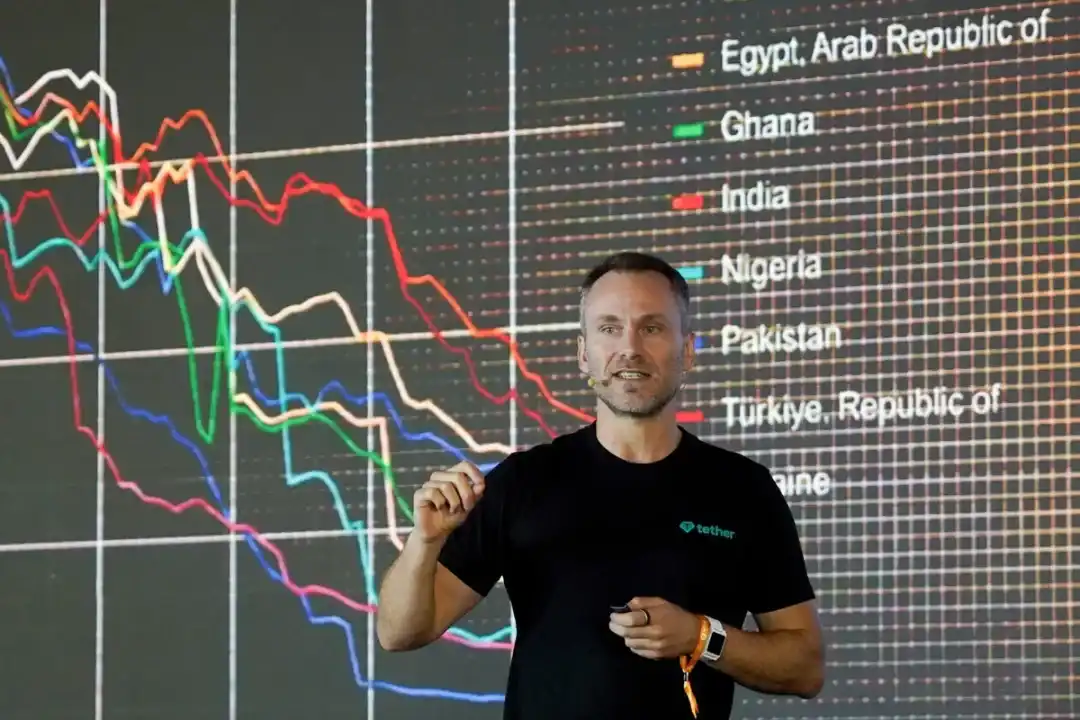
Tether CEO Paolo Ardoino stated in a recent interview with Bloomberg News, "Law enforcement reached out to us, provided relevant information, and after we verified the information, we took action in accordance with the laws of the relevant jurisdiction. We follow this process when cooperating with U.S. Department of Justice, FBI, and other agencies."
Tether did not provide further comment on the case. Bloomberg's attempts to contact Sahin were unsuccessful. A Turkish official also refused to disclose the name of the company mentioned in the prosecutor's statement.
The €460 million (approximately $544 million) in assets frozen in this operation is part of a large-scale law enforcement action in Turkey, where the total frozen assets related to the case now exceed $1 billion. According to Turkish TV channel NTV, a few days after the announcement of Sahin's asset freeze, another individual is under investigation for alleged money laundering and illegal gambling, with $500 million worth of cryptocurrency assets under their name also frozen. It is currently unclear whether this asset freeze involves tokens issued by Tether.
A Turkish official, who spoke on condition of anonymity to Bloomberg regarding sensitive legal matters, revealed that authorities, by tracing fund flows and analyzing cryptocurrency assets, discovered the "financial traces" of this suspected illicit income. They further stated that similar asset freeze actions will be taken in the future against individuals involved in illegal gambling and payment systems.
For Tether, this freezing action is just one of its increasingly frequent fund freezing operations, highlighting the cryptocurrency giant's ongoing efforts to enhance collaboration with global law enforcement agencies.
A report released by the analytics firm Elliptic in January showed that by the end of 2025, Tether and its competitor Circle Internet Group Inc. had blacklisted approximately 5700 wallets, involving around $25 billion in assets, a stark contrast to almost none two years ago. At the time of freezing, three-quarters of these wallets held USDT.
Arda Akartuna, Head of Cryptocurrency Threat Intelligence for the Asia-Pacific region at Elliptic, stated, "As legitimate cryptocurrency use and global payment integration accelerate, illicit activities are also on the rise, prompting stablecoin issuers to more actively intervene."
Tether often touts its efforts to combat criminal activities, including in its communications to attract potential investors, as the company seeks to raise funding at a valuation of up to $500 billion. According to its official website, Tether has assisted law enforcement agencies in 62 countries in handling over 1800 cases, freezing $3.4 billion worth of USDT associated with suspected illegal activities.
Nathan McCauley, Co-founder and CEO of Tether's partner Anchorage Digital Bank, said in an interview, "Their (Tether's) cooperative attitude is extremely positive, and among stablecoin issuers, the company has the 'best-known reputation' within law enforcement agencies."
Anchorage is the issuer of Tether's compliant USD stablecoin USAT, which was launched in late January, marking Tether's return to the U.S. market.
This represents a significant shift compared to a few years ago when Tether had a tense relationship with U.S. regulatory agencies. After a conflict with regulators in 2018, Tether largely exited the U.S. market and reached a $41 million settlement in 2021 over allegations of misrepresenting its reserve holdings.
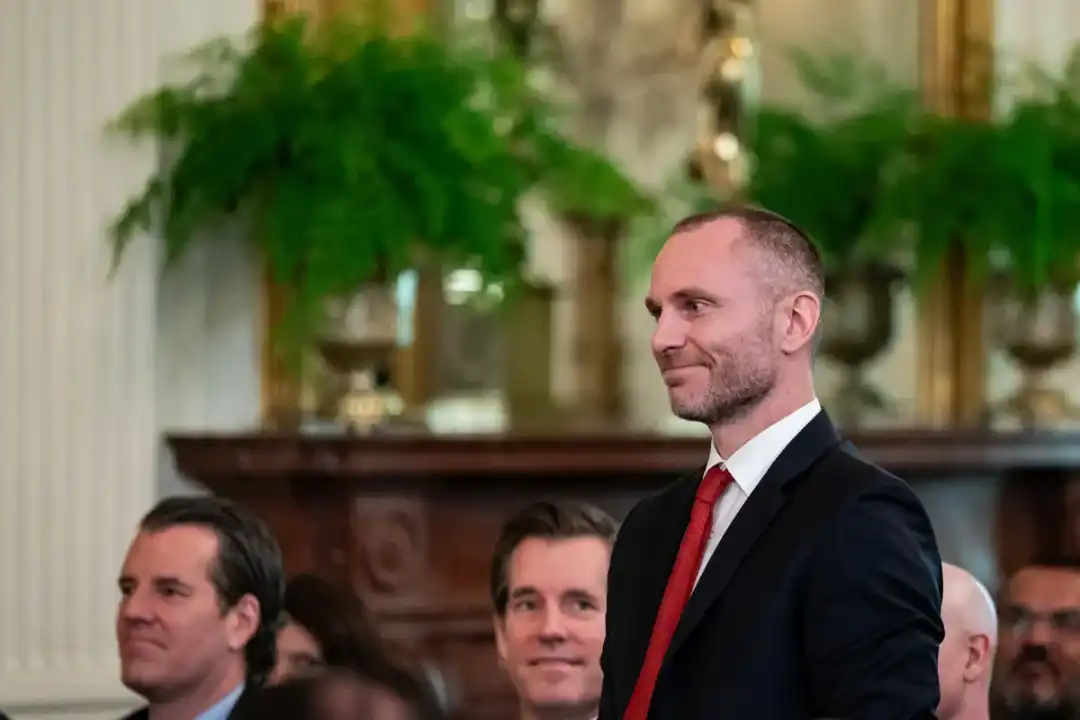
However, the second Trump administration welcomed the cryptocurrency industry. Last year, Ardoino, along with several other executives, attended the signing ceremony where President Trump signed a stablecoin regulation bill.
Nevertheless, Tether's USDT continues to face regulatory scrutiny due to its widespread use by criminal elements.
On January 9, the U.S. Eastern District Federal Prosecutor's Office announced charges against a Venezuelan citizen for laundering $1 billion using USDT. A recent report by Elliptic revealed that the Central Bank of Iran had purchased over $500 million worth of USDT to alleviate a currency crisis and circumvent U.S. sanctions.
Turkish fugitive Sahin has been accused of leading an organization that laundered money for an illegal online gambling platform. According to local media, Sahin was sentenced to 10 years in prison in 2017, released in 2023, then sentenced to another 21 years a month later. Currently, his whereabouts are unknown, but Turkey's state-run news agency Anadolu Agency reported on January 30 that "relevant authorities are advancing the legal process to extradite him to Turkey."
You may also like

56% Spike in Memecoin Trading Volume, Yet Shiba Inu (SHIB) Remains Static With 0 Netflow
Key Takeaways: Recent memecoin market saw a volume increase of 56%, highlighting a shift in investor interest towards…

American Airlines Praises Ripple, Surprising XRP Community
Key Takeaways: American Airlines reports exceptional results from Ripple Treasury usage. Ripple Treasury aids treasury efficiency without needing…

USDT Supply Surges to $188B as Tether Solidifies Stablecoin Dominance
Key Takeaways: Tether’s USDT supply reaches an all-time high of $188 billion, maintaining its dominance in the stablecoin…

North Korea’s $500M DeFi Heist Unveils New Cyber Warfare Tactics
Key Takeaways: North Korean operatives have obtained over $500 million from DeFi platforms in under three weeks. The…

How Crypto Futures Markets Are Fueling ‘Scam Coin’ Insider Schemes
Key Takeaways: RAVE’s market cap skyrocketed to $6.7 billion before plummeting by 95% due to insider control and…

XRP Price Prediction: Wall Street Giants Eye Ripple – Should You?
Key Takeaways: Wall Street players like Mastercard and BlackRock are adopting bullish XRP positions. XRP Ledger sees a…
WOJAK Crypto Meme Coin Pumps 87% as MAXI Targets $5M: Unveiling the Trading Insights of 2026
Key Takeaways: WOJAK crypto surged 87% in 24 hours, driven by aggressive accumulation, signaling renewed interest in meme…

XRP Price Prediction: Wall Street Giants Back Ripple’s Future – Should You?
Key Takeaways: Leading Wall Street firms are showing bullish interest in XRP’s price potential. At the Digital Assets…

XRP Price Prediction: Wall Street Giants Shift Focus to Ripple
Key Takeaways: XRP Ledger is seeing massive institutional interest from giants like Mastercard and BlackRock, aligning with overall…

Protect Your Crypto: Practical Steps to Avoid Scams
Key Takeaways: Recognize red flags early by knowing scams like phishing and rug pulls. Secure your assets with…

How Much Is Blueface Worth? Latest Net Worth Revealed (2026)
Key Takeaways: Blueface’s net worth in 2026 ranges from $4 million to $7 million, reflecting both his musical…

Google’s Quantum AI Sparks Ripple’s 2-Year Plan for XRP: What’s the Impact on Holders?
Key Takeaways: Ripple’s multi-phase plan targets quantum cryptography readiness for XRP Ledger by 2028 due to Google Quantum…
Eightco Holdings (NASDAQ: ORBS) Reveals $336M in Digital Assets and Equity Investments
Key Takeaways: Eightco’s treasury includes $90M in OpenAI, $25M in Beast Industries, 11,068 ETH, and $283 million WLD…

DeFi Losses Top $600 Million Amid Kelp DAO Exploit and TVL Decline
Key Takeaways: Total DeFi losses have skyrocketed to approximately $1 billion recently, with $600M+ linked directly to the…

SEC’s “Innovation Exemption” Sets New Rails for Tokenized Securities
Key Takeaways: SEC Chair Paul Atkins introduces an “innovation exemption” to regulate tokenized securities. A five-category token framework…

Ripple Sets 2028 Deadline for Quantum-Ready XRPL
Key Takeaways: Ripple commits to a 2028 deadline for XRPL’s quantum-readiness, focusing on quantum-resistant cryptographic systems. Google’s research…

Key NFT Projects to Watch in 2026
Key Takeaways: Successful NFT investing in 2026 revolves around real-world utility, team credibility, and regulatory compliance. Top picks…
How Syncro Sender Optimizes Solana Transactions for High-Stakes Teams
Key Takeaways: Syncro Sender uses multi-path delivery and staked validator connections to enhance Solana transaction efficiency. It significantly…
56% Spike in Memecoin Trading Volume, Yet Shiba Inu (SHIB) Remains Static With 0 Netflow
Key Takeaways: Recent memecoin market saw a volume increase of 56%, highlighting a shift in investor interest towards…
American Airlines Praises Ripple, Surprising XRP Community
Key Takeaways: American Airlines reports exceptional results from Ripple Treasury usage. Ripple Treasury aids treasury efficiency without needing…
USDT Supply Surges to $188B as Tether Solidifies Stablecoin Dominance
Key Takeaways: Tether’s USDT supply reaches an all-time high of $188 billion, maintaining its dominance in the stablecoin…
North Korea’s $500M DeFi Heist Unveils New Cyber Warfare Tactics
Key Takeaways: North Korean operatives have obtained over $500 million from DeFi platforms in under three weeks. The…
How Crypto Futures Markets Are Fueling ‘Scam Coin’ Insider Schemes
Key Takeaways: RAVE’s market cap skyrocketed to $6.7 billion before plummeting by 95% due to insider control and…
XRP Price Prediction: Wall Street Giants Eye Ripple – Should You?
Key Takeaways: Wall Street players like Mastercard and BlackRock are adopting bullish XRP positions. XRP Ledger sees a…


 App
App