
Does the US Intentionally "Want" a Recession?


Original Author: The Kobeissi Letter
Original Translation: Deep Tide TechFlow
Is the U.S. Government Expecting an Economic Recession?
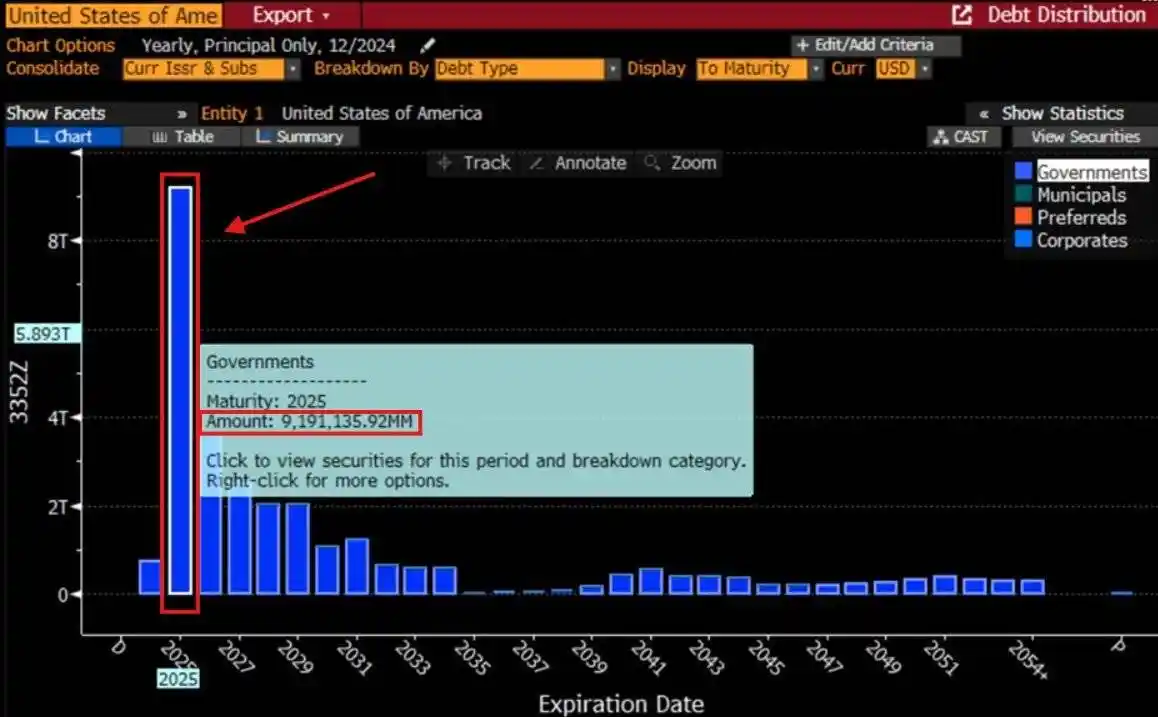
By 2025, the U.S. will have $92 trillion in debt maturing or needing to be refinanced. Faced with this massive refinancing, the quickest way to lower rates may be to induce an economic recession.
But can the U.S. benefit from a market crash?
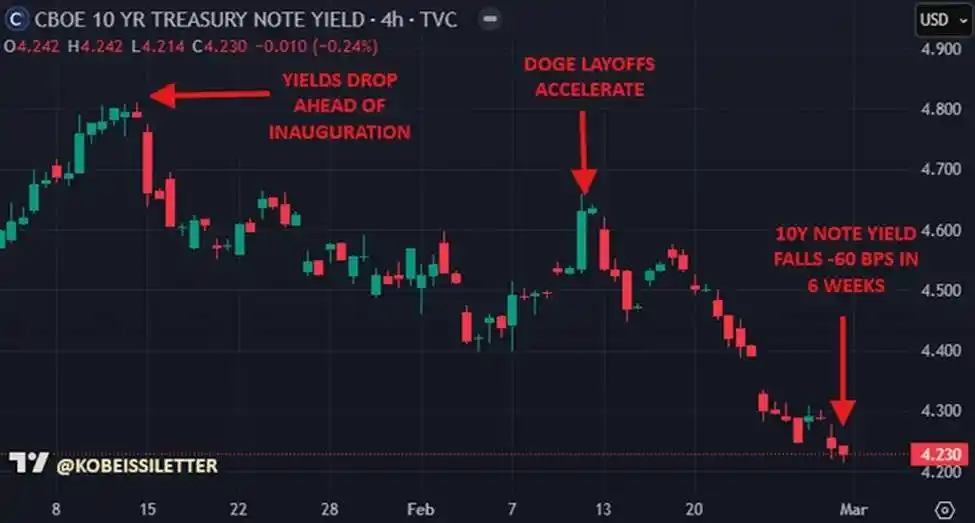
Over the past two months, the 10-year treasury yield has dropped by around 60 basis points. This is partly due to market expectations of cuts to the government's discretionary sector spending. However, it is also tied to increased uncertainty and the rising possibility of a U.S. economic recession.
An economic recession almost guarantees a rate cut.
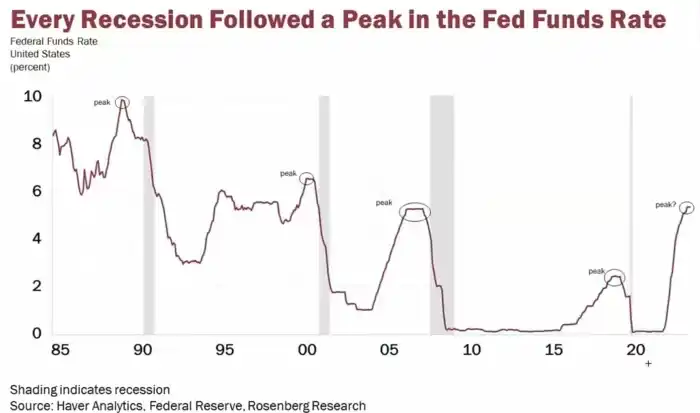
But why does an economic recession signify a rate cut?
Since the 1980s, every U.S. economic recession has occurred after the federal funds rate has peaked. When economic growth stalls, the Fed acts to "stimulate" the economy. This means lowering rates to reduce the cost of capital and encourage spending.
Since the start of the trade war, U.S. economic growth expectations have plummeted significantly. Meanwhile, oil prices have hit a new 6-month low. Interestingly, President Trump has repeatedly expressed his desire to lower oil prices to alleviate inflationary pressures.
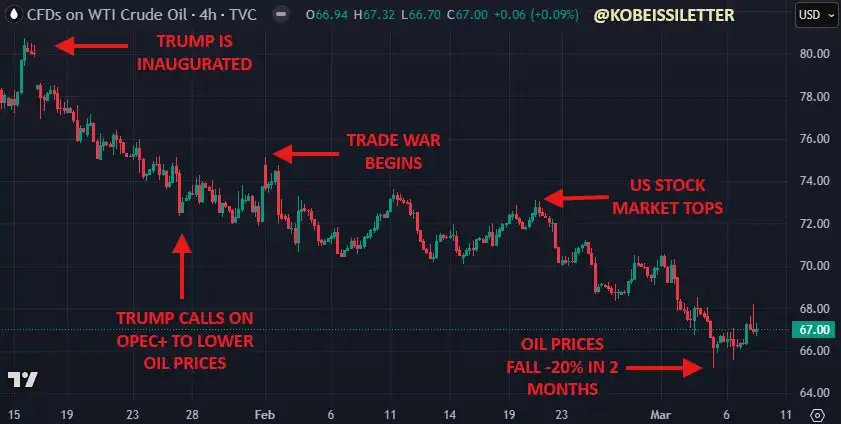
On January 25, President Trump claimed he has a solution to the Fed's more than 3-year fight against inflation. He called on the Organization of the Petroleum Exporting Countries (OPEC) to lower oil prices and urged a global rate cut.
However, the quickest way to lower oil prices is most likely through a demand-reducing economic recession.
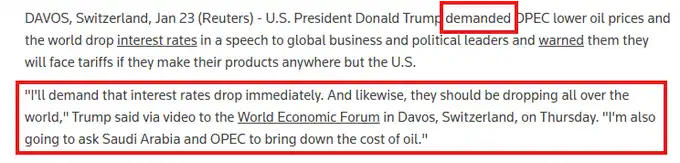
In a recent interview with Fox News, President Trump mentioned that he would prioritize lowering rates.
He said, "Rates are coming down... and I hope they do because I love the country and I'd like to see the country thrive." This quote is from @amitisinvesting's report.
Next, let's take a look at the inflation data.
American consumers believe that the inflation rate for the next 12 months will rise to +6.0%, the highest level since May 2023. This marks the third consecutive month of rising inflation expectations.
Inflation is on the rise, rate cuts are postponed, yet interest rates are declining.
The market is pricing in an economic recession.
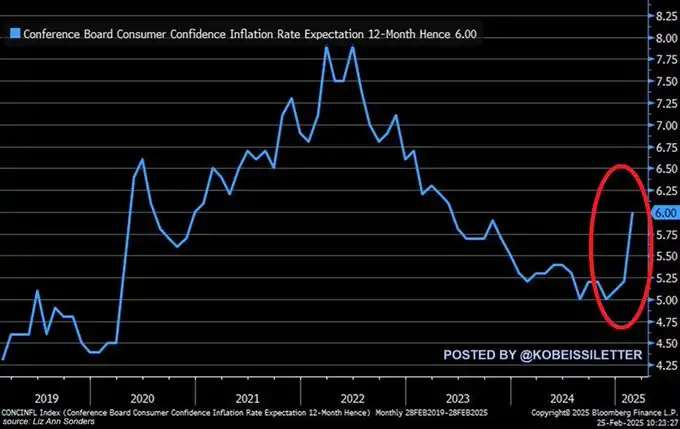
In the escalating trade war of soaring inflation, a sharp rate cut is almost inevitably a precursor to an economic recession. Furthermore, on March 6, President Trump stated that he doesn't even pay attention to the stock market. The reality, however, is that, just as we saw in his first term, Trump has always been watching the market.
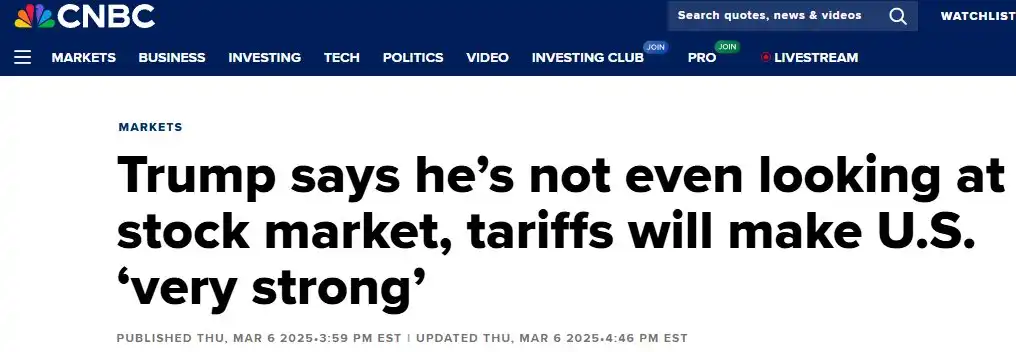
President Trump's statement of "not paying attention to the market" is significant.
In a scenario where he clearly does pay attention to the market, this is actually a signal he is sending to Wall Street, indicating his willingness to lower interest rates and reduce the trade deficit at all costs, even if it means potentially triggering an economic recession.
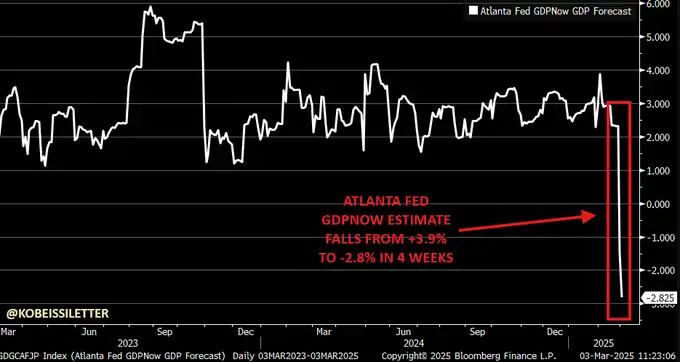
In the chaos of the trade war, we see a significant downward revision in economic growth expectations. The Atlanta Fed last week lowered its GDP growth forecast for the first quarter of 2025 to as low as -2.8%. Therefore, we see a sharp increase in market expectations for rate cuts last week.
Is this intentional?
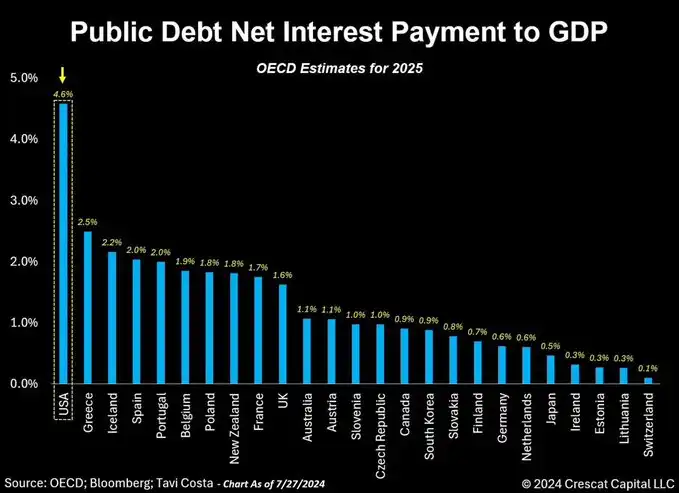
High-interest rates are the biggest challenge facing the U.S. government.
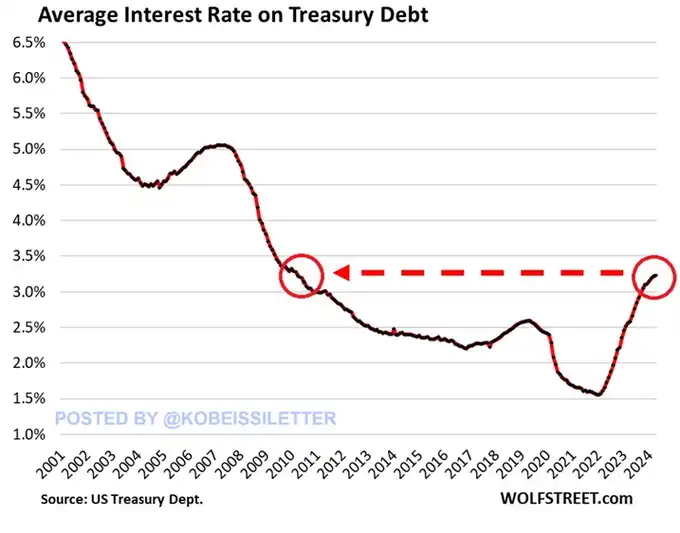
As interest rates soar, the cost of debt interest payments increases significantly. Currently, the average interest rate on the U.S.'s $36.2 trillion national debt is 3.2%, hitting the highest level since 2010. The U.S. government needs a rate cut more than anyone.
Furthermore, a rate cut is imminent:
The U.S.'s $9.2 trillion debt maturity is heavily concentrated in the first half of 2025, with 70% of the debt needing refinancing from January to June 2025.
The average interest rate on this debt is expected to rise by about 1 percentage point.
Moreover, efforts to reduce deficit spending in the U.S. will not happen overnight.
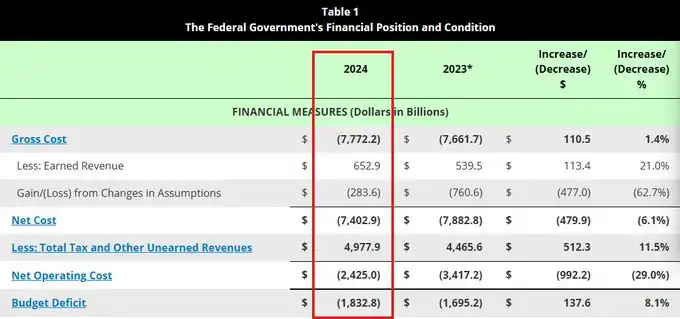
In the 2024 fiscal year, the United States had expenditures of up to $7.8 trillion, while income was only about $5.0 trillion. This means that for every $1 of income generated, there was $1.56 in costs. The shadow of a debt crisis will loom over the United States for a long time to come.
These significant changes in the macroeconomic landscape will have a broad impact on the entire market, and we are currently and will continue to seize opportunities from them.
Interested in how we trade the market? Click the link below to subscribe to our premium analysis and alert service: https://www.thekobeissiletter.com/pricing
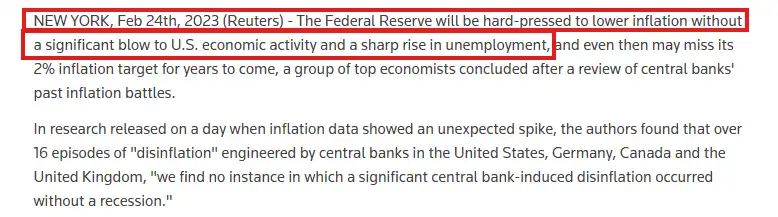
Finally, let's go back to 2023 when the Federal Reserve was on the verge of calling for an economic recession to curb inflation.
In February 2023, many studies indicated that an economic recession might be the only solution. Subsequently, the Fed shifted to the narrative of a "soft landing," but this strategy has so far failed to lower interest rates.
The reality is that the U.S. debt crisis is currently the most severe yet most neglected crisis. While President Trump has acknowledged this, it may be too late. An economic recession may be the only solution to lower interest rates.
Follow us @KobeissiLetter for real-time analysis updates.
You may also like

Morning Report | Illinois signs the strictest digital asset tax law in the U.S.; RWA tokenization market size surpasses $43 billion, institutions accelerate the migration of on-chain assets
Morning Report | DeepSeek completes over $7 billion in financing, with a valuation exceeding $50 billion; Musk's personal wealth has surpassed the total market value of Bitcoin

Cursor, why did you get on Musk's spaceship?

In the name of charity, for the benefit of the family: How the Trump family turned charity into profit?

Will Gold Break $4,500 After Tonight's Fed Decision? What XAUT and PAXG Traders Need to Know

SharpLink CEO: How to understand that Ethereum developers have just surpassed 1 million?

Morning Report | MiCA grace period expires on July 1; Kalshi's trading volume in the first week of the World Cup breaks $5.1 billion, setting a record

The foundation of SpaceX's trillion-dollar valuation: Who is dividing Musk's annual capital expenditure of tens of billions?
How to exit after asset tokenization?

The stablecoin positioning battle escalates: When compliance is just a ticket to entry, will USD1 become the biggest winner?

A16Z: The sun bears witness, SpaceX is worth 7.5 trillion

Mergers and acquisitions in the cryptocurrency market are exceptionally active

Concerns Behind the Binance Customer Service Controversy

SpaceX Stock Prediction After the IPO: Can SPCX Reach $200 Before QQQ Inclusion?

Congratulations to Carl Moon on His Historic Ferrari Challenge Le Mans Podium Triumph
Crypto influencer and racing enthusiast Carl Moon finished third in the Ferrari Challenge Le Mans Coppa Shell class, marking his best result of the year. As his racing partner and sponsor, WEEX celebrates this remarkable achievement and continues to lead crypto’s journey beyond boundaries, uniting the innovation of digital assets with the passion of motorsport.
Can the CLARITY Act Become Law by July 4? Everything You Need to Know About the Final Battle

France vs Senegal World Cup 2026: Mbappe’s New Era Begins Against a Historic Rival
What is the connection between Huang Zheng of Pinduoduo and blockchain?
Morning Report | Illinois signs the strictest digital asset tax law in the U.S.; RWA tokenization market size surpasses $43 billion, institutions accelerate the migration of on-chain assets
Morning Report | DeepSeek completes over $7 billion in financing, with a valuation exceeding $50 billion; Musk's personal wealth has surpassed the total market value of Bitcoin
Cursor, why did you get on Musk's spaceship?
In the name of charity, for the benefit of the family: How the Trump family turned charity into profit?
Will Gold Break $4,500 After Tonight's Fed Decision? What XAUT and PAXG Traders Need to Know
SharpLink CEO: How to understand that Ethereum developers have just surpassed 1 million?


