
 Buy Crypto
- Markets
 Futures
- Spot
- Copy Trade
- Earn
- More
Federal Reserve's 'Taper Tantrum 2.0' Ends, Bank Relaxation on Cryptocurrency Market - What Does It Mean?

On April 25, the Federal Reserve announced a major decision: to revoke the 2022 regulatory guidance on bank cryptocurrency and USD stablecoin activities, repeal the 2023 related "Supervisory Guidance on Stablecoin Activities" program, and withdraw from the prior joint statement with the Federal Deposit Insurance Corporation (FDIC) and the Office of the Comptroller of the Currency (OCC) regarding the risks associated with cryptocurrency activities.
Choke Point 2.0: The Suffocation of the Marginalized Crypto Industry
"Choke Point 2.0" is the crypto industry's term for a series of banking regulatory policies during the Biden administration. This term is derived from the Obama era's "Operation Choke Point," which referred to using pressure on banks to cut off financial services to specific industries to achieve regulatory goals.
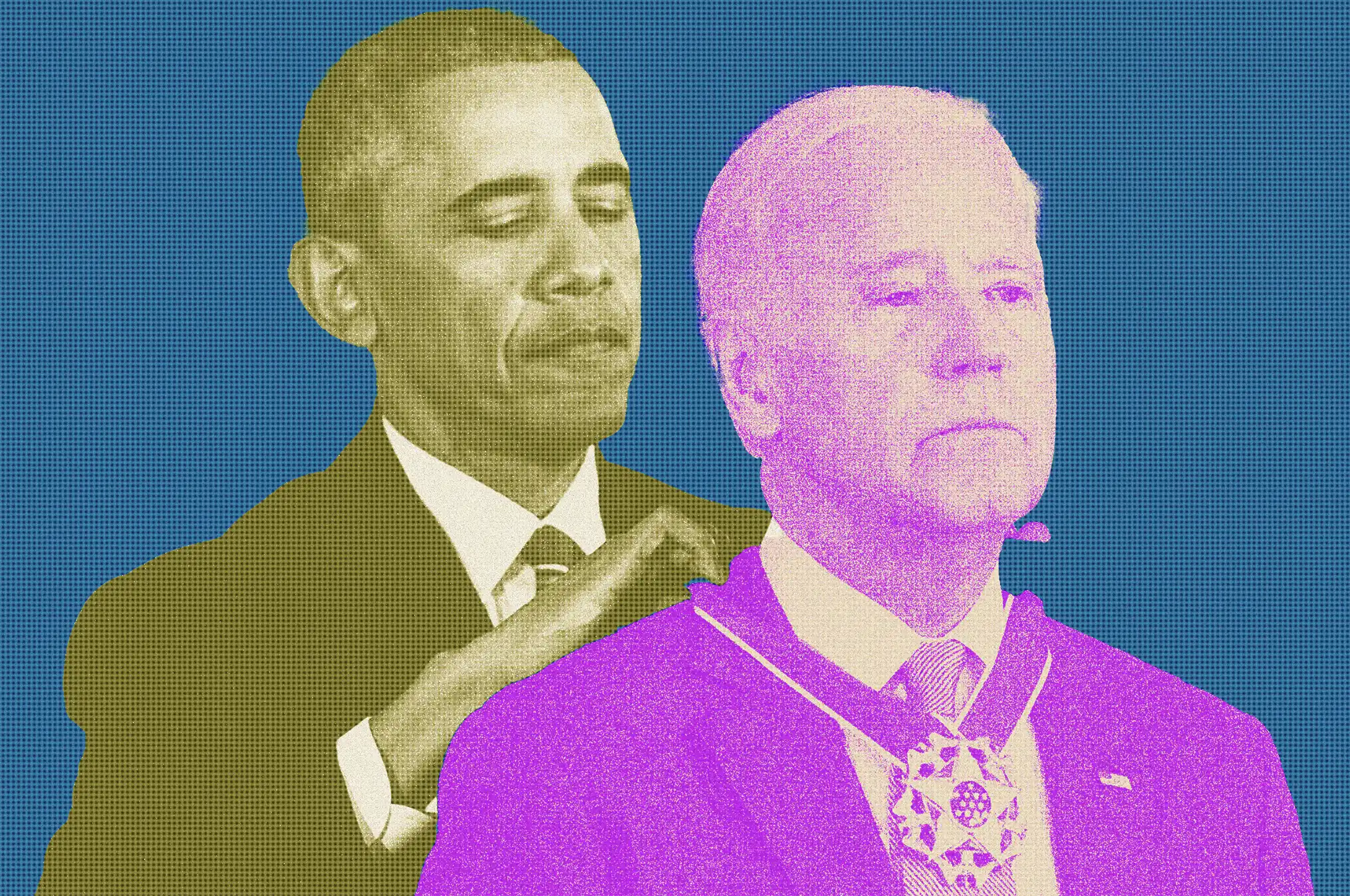
In the crypto market, Choke Point 2.0 generally refers to the period from 2022 to 2023 when the major U.S. financial regulatory agencies — the Federal Reserve, FDIC, and OCC — strongly discouraged banks from engaging in cryptocurrency-related activities through a series of guidance and policy statements, indirectly limiting the connection between crypto companies and the traditional banking system.
It all began in 2022 when the Federal Reserve issued a regulatory letter requiring state member banks to provide prior notice before engaging in cryptocurrency activities. While this may seem like a procedural requirement, it significantly raised the barrier for banks to enter the crypto space.
By early 2023, the regulatory pressure escalated further. The Federal Reserve, FDIC, and OCC jointly issued a statement explicitly stating that issuing or holding cryptocurrency on public, decentralized networks "is highly likely inconsistent with safe and sound banking practices." That same year, the regulatory agencies also mandated that banks seeking to engage in USD stablecoin activities must obtain prior approval through a "no objection" process from regulators. This process was not only complex and time-consuming but also granted regulators veto power.
As a result, many have referred to this wave of regulatory pressure as "Choke Point 2.0." Formerly of Fidelity Investments and the first crypto asset analyst, Nic Carter, in a deep dive analysis, described this series of actions as "a precise and broad-based assault on the crypto industry through the banking system."
He pointed out that the regulators' goal was to make it harder for banks to serve the crypto industry, severing the connection between crypto businesses and the fiat system. This not only restricted crypto companies' account opening and payment channels but also severely impacted the fiat on/off ramps for stablecoin issuers and exchanges. Some crypto companies even faced the risk of "losing banking services altogether," threatening stablecoin liquidity and exchange operations.
Related Reading: "In-Depth Analysis of 'Debanking': The Triple Game of Compliance, Risk, and Politics"
、"US Launches 'Deplatforming Action'? Plans to Marginalize the Crypto Industry"
FTX Collapse: The Catalyst of Regulatory Pressure
The Deplatforming Action 2.0 and the November 2022 FTX Exchange collapse are inseparable. The FTX collapse resulted in customers losing billions of dollars, causing market confidence to hit rock bottom. The cryptocurrency credit crisis of 2022 did not have a significant impact on traditional finance, but regulatory authorities clearly wanted to take preemptive action. As a result, the regulatory system restricted the interaction between banks and the crypto industry to prevent risks from affecting the banking system.
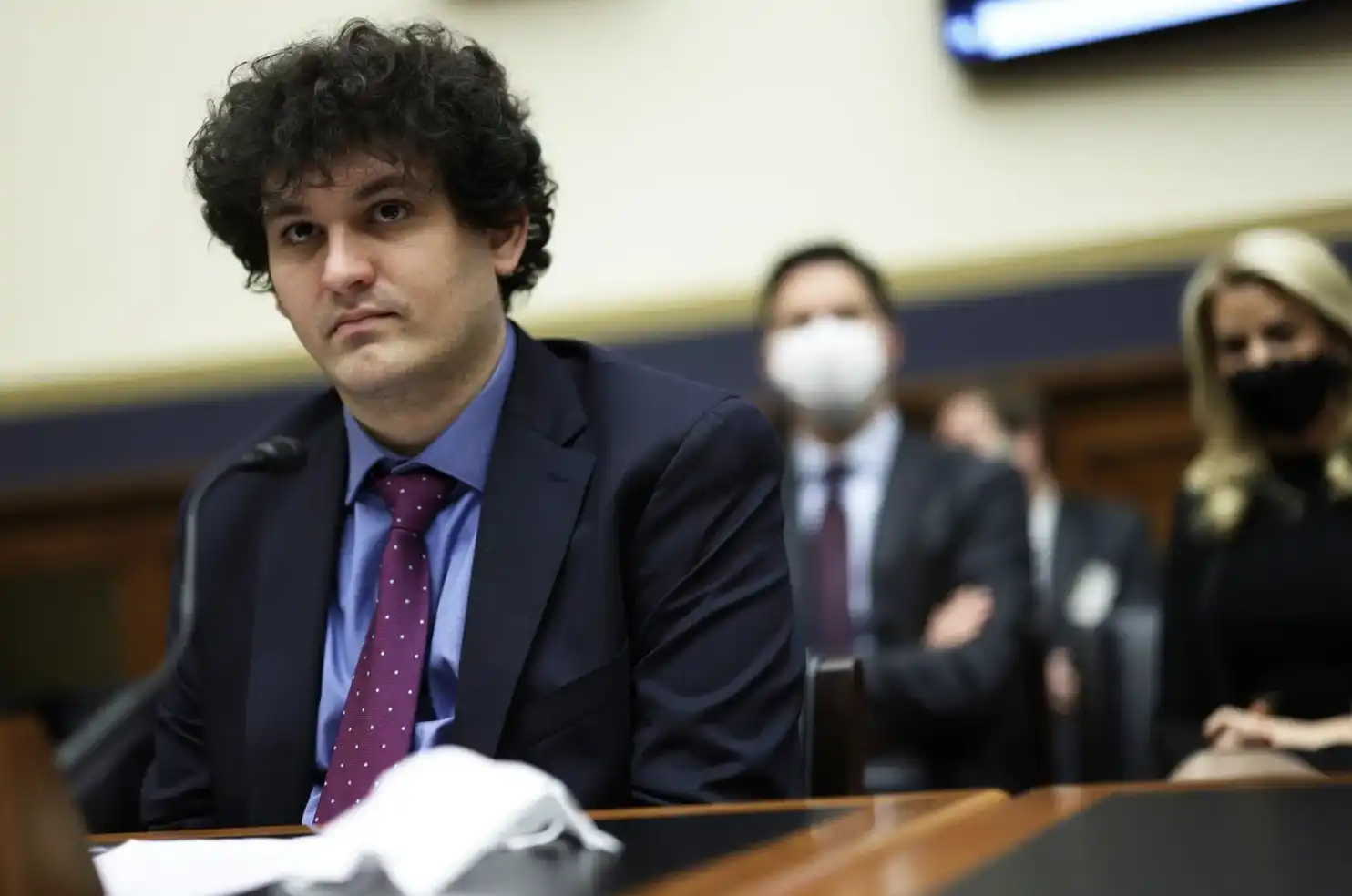
Crypto-friendly banks naturally became the primary targets of regulation. Silvergate and Signature were among the few banks willing to serve crypto customers, and they faced immense pressure. In December 2022, Senators Elizabeth Warren, John Kennedy, and Roger Marshall jointly wrote to Silvergate, criticizing its failure to detect suspicious activities related to FTX and its affiliate company Alameda Research.
Subsequently, Silvergate experienced a run on the bank following the FTX collapse, with its stock price plummeting from a high of $160 in March 2022 to $11.55 in January 2023. Signature announced a reduction of its crypto deposits from $23 billion to $10 billion and a complete exit from the stablecoin business. Another bank serving crypto customers, Metropolitan Commercial, also announced the closure of its crypto operations in January 2023.

Trump Administration's Shift in Banking Regulation Direction
By 2025, as Trump returned to the White House, a significant change occurred in the U.S. crypto regulatory environment. On March 7, the White House held its first cryptocurrency summit, and the U.S. Office of the Comptroller of the Currency (OCC) released a series of interpretive letters, allowing national banks to offer cryptocurrency custody, stablecoin reserves, blockchain node participation, and other services without requiring special approval. This overturned the restrictive guidance from the Biden administration, revoking Interpretive Letter 1179 from 2021.
OCC Acting Comptroller Hood stated, "Digital assets should and must also become part of the U.S. economy." The new policy permits banks to securely store private keys for customers, hold stablecoin reserves pegged 1:1 to the U.S. dollar, and participate as nodes in validating blockchain transactions, providing flexibility for banks to deeply engage in the digital asset space.

The OCC's shift may be closely tied to Trump's commitment. During this year's White House cryptocurrency summit, Trump stated, "Some people are suffering greatly, and what they're doing is ridiculous... It will all end very soon." He criticized Operation Choke Point 2.0 for "forcing banks to shut down cryptocurrency business accounts, weaponizing the government against the entire industry."
On April 17, Powell further clarified the direction of regulatory relaxation during a speech at the Economic Club of Chicago, believing that there is "room for relaxation" in the current cryptocurrency regulatory policies for banking institutions. He acknowledged the recent mainstream trend of cryptocurrency, noting that regulatory agencies were cautious due to "a series of fraud and scam events," but the market has fundamentally changed, necessitating a clear regulatory framework for stablecoins and sending a signal supporting innovation.
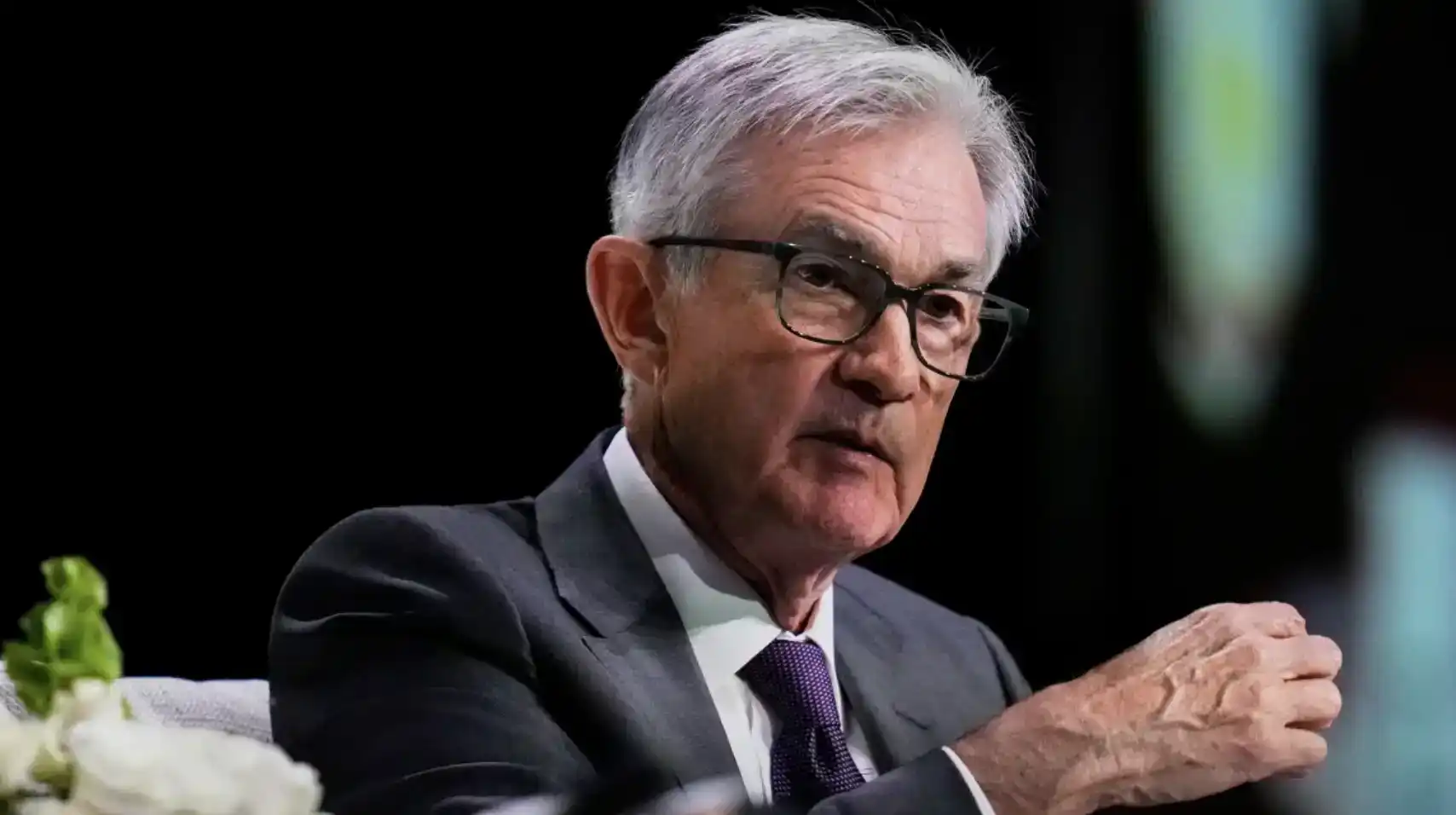
Related Reading: "Fed Chair Powell Discusses Cryptocurrency – What Positive Signals Did He Send to the Industry?"
Today, the Federal Reserve officially rescinded the guidelines related to Operation Choke Point 2.0. Banks no longer need to report cryptocurrency-related businesses, and such activities will be monitored through regular supervisory processes. In alignment with the Trump administration's pledge to abolish the "exclusion of cryptocurrency companies from banking services" policy, investigations by the House Oversight Committee and disclosures from the FDIC have also promoted policy transparency.
The Next Regulatory Boost for the Crypto Market?
Since 2025, there has been a continuous stream of bullish news for the crypto market. Following the SEC's approval of a slew of altcoin ETF applications, the return of traditional crypto market makers, the repeal of the DeFi broker rule, the dismissal of a series of crypto-related lawsuits, and Trump's personal appointment of a new pro-crypto SEC chair, the market has now received positive news on the banking regulatory front. The Federal Reserve's announcement of the repeal of Operation Choke Point 2.0 signifies the end of a three-year era of high-pressure regulation on banking interactions with the crypto market.
The most direct impact of this positive development is a significant reduction in the barriers for banks to serve the crypto industry, a substantial decrease in legal risks, and the potential for more banks to offer accounts, payment, and custodial services to crypto businesses. Additionally, fiat channels for stablecoin issuers and exchanges are expected to become more seamless as a result.
More importantly, the Trump administration has prioritized crypto-friendly policies, and Powell's affirmation of a stablecoin regulatory framework has injected clear expectations into the market. These intensive bullish signals may further attract more traditional financial institutions into the market, boosting market liquidity and bolstering investor confidence.
You may also like

Consumer-grade Crypto Global Survey: Users, Revenue, and Track Distribution

Prediction Markets Under Bias

Stolen: $290 million, Three Parties Refusing to Acknowledge, Who Should Foot the Bill for the KelpDAO Incident Resolution?

ASTEROID Pumped 10,000x in Three Days, Is Meme Season Back on Ethereum?

ChainCatcher Hong Kong Themed Forum Highlights: Decoding the Growth Engine Under the Integration of Crypto Assets and Smart Economy

Why can this institution still grow by 150% when the scale of leading crypto VCs has shrunk significantly?

Anthropic's $1 trillion, compared to DeepSeek's $100 billion

Geopolitical Risk Persists, Is Bitcoin Becoming a Key Barometer?

Annualized 11.5%, Wall Street Buzzing: Is MicroStrategy's STRC Bitcoin's Savior or Destroyer?

An Obscure Open Source AI Tool Alerted on Kelp DAO's $292 million Bug 12 Days Ago

Mixin has launched USTD-margined perpetual contracts, bringing derivative trading into the chat scene.
The privacy-focused crypto wallet Mixin announced today the launch of its U-based perpetual contract (a derivative priced in USDT). Unlike traditional exchanges, Mixin has taken a new approach by "liberating" derivative trading from isolated matching engines and embedding it into the instant messaging environment.
Users can directly open positions within the app with leverage of up to 200x, while sharing positions, discussing strategies, and copy trading within private communities. Trading, social interaction, and asset management are integrated into the same interface.
Based on its non-custodial architecture, Mixin has eliminated friction from the traditional onboarding process, allowing users to participate in perpetual contract trading without identity verification.
The trading process has been streamlined into five steps:
· Choose the trading asset
· Select long or short
· Input position size and leverage
· Confirm order details
· Confirm and open the position
The interface provides real-time visualization of price, position, and profit and loss (PnL), allowing users to complete trades without switching between multiple modules.
Mixin has directly integrated social features into the derivative trading environment. Users can create private trading communities and interact around real-time positions:
· End-to-end encrypted private groups supporting up to 1024 members
· End-to-end encrypted voice communication
· One-click position sharing
· One-click trade copying
On the execution side, Mixin aggregates liquidity from multiple sources and accesses decentralized protocol and external market liquidity through a unified trading interface.
By combining social interaction with trade execution, Mixin enables users to collaborate, share, and execute trading strategies instantly within the same environment.
Mixin has also introduced a referral incentive system based on trading behavior:
· Users can join with an invite code
· Up to 60% of trading fees as referral rewards
· Incentive mechanism designed for long-term, sustainable earnings
This model aims to drive user-driven network expansion and organic growth.
Mixin's derivative transactions are built on top of its existing self-custody wallet infrastructure, with core features including:
· Separation of transaction account and asset storage
· User full control over assets
· Platform does not custody user funds
· Built-in privacy mechanisms to reduce data exposure
The system aims to strike a balance between transaction efficiency, asset security, and privacy protection.
Against the background of perpetual contracts becoming a mainstream trading tool, Mixin is exploring a different development direction by lowering barriers, enhancing social and privacy attributes.
The platform does not only view transactions as execution actions but positions them as a networked activity: transactions have social attributes, strategies can be shared, and relationships between individuals also become part of the financial system.
Mixin's design is based on a user-initiated, user-controlled model. The platform neither custodies assets nor executes transactions on behalf of users.
This model aligns with a statement issued by the U.S. Securities and Exchange Commission (SEC) on April 13, 2026, titled "Staff Statement on Whether Partial User Interface Used in Preparing Cryptocurrency Securities Transactions May Require Broker-Dealer Registration."
The statement indicates that, under the premise where transactions are entirely initiated and controlled by users, non-custodial service providers that offer neutral interfaces may not need to register as broker-dealers or exchanges.
Mixin is a decentralized, self-custodial privacy wallet designed to provide secure and efficient digital asset management services.
Its core capabilities include:
· Aggregation: integrating multi-chain assets and routing between different transaction paths to simplify user operations
· High liquidity access: connecting to various liquidity sources, including decentralized protocols and external markets
· Decentralization: achieving full user control over assets without relying on custodial intermediaries
· Privacy protection: safeguarding assets and data through MPC, CryptoNote, and end-to-end encrypted communication
Mixin has been in operation for over 8 years, supporting over 40 blockchains and more than 10,000 assets, with a global user base exceeding 10 million and an on-chain self-custodied asset scale of over $1 billion.

$600 million stolen in 20 days, ushering in the era of AI hackers in the crypto world
Vitalik's 2026 Hong Kong Web3 Summit Speech: Ethereum's Ultimate Vision as the "World Computer" and Future Roadmap
On the same day Aave introduced rsETH, why did Spark decide to exit?
Full Post-Mortem of the KelpDAO Incident: Why Did Aave, Which Was Not Compromised, End Up in Crisis Situation?

After a $290 million DeFi liquidation, is the security promise still there?
ZachXBT's post ignites RAVE nearing zero, what is the truth behind the insider control?




 App
App