
Frame-by-Frame Analysis of the White House Crypto Summit: What Market Whisperings Have Gone Unnoticed?


Original Author: @TechLeviathan, Blockchain Developer
Original Translation: zhouzhou, BlockBeats
Editor's Note: The cryptocurrency summit hosted by Donald Trump marks the United States' leadership in the digital finance sector. The summit discussed cryptocurrency regulation and policies, with the government emphasizing the importance of Bitcoin as a strategic asset and announcing the establishment of a Bitcoin reserve. Despite the introduction of a long-term regulatory strategy, the market was disappointed by the lack of clear regulatory measures and the uncertainty surrounding altcoins.
Below is the original content (rearranged for ease of reading comprehension):
Donald Trump fooled the entire cryptocurrency community, the US cryptocurrency reserve was canceled, taxes still exist, I analyzed the full cryptocurrency summit, and here is everything you need to know and the future of cryptocurrency
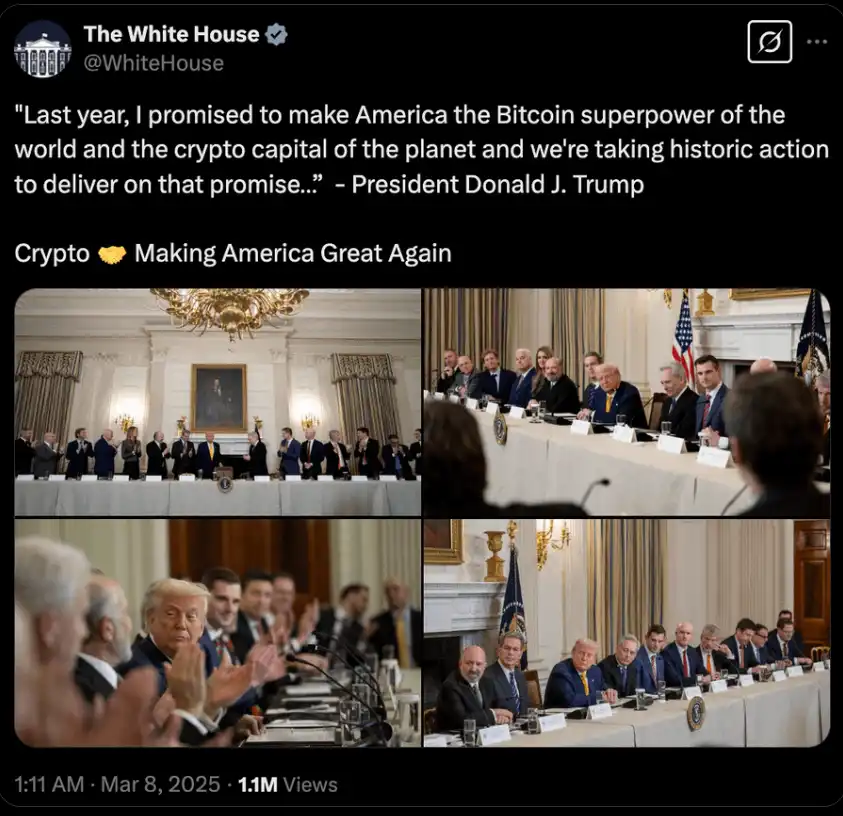
On March 7, 2025, the cryptocurrency summit hosted by President Donald Trump became a milestone event for the industry.
· This was the first summit in the US entirely dedicated to shaping cryptocurrency regulation and future policy.
· The government has increasingly shown support for Bitcoin, highlighting Bitcoin's strategic role in maintaining US digital economic dominance.
· The event was live-streamed through social media, attracting widespread attention from investors and the public.
· However, the market reaction was quite negative, with a significant drop in Bitcoin and other altcoins.
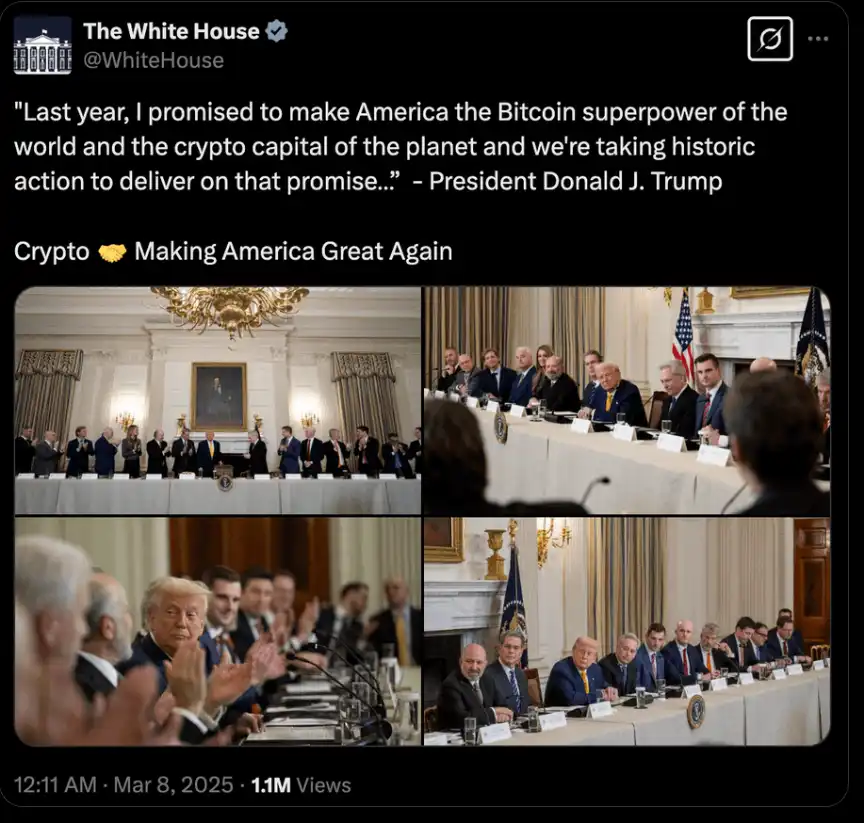
Summit Purpose
· The summit discussed the future of cryptocurrency regulation and its impact on the US financial industry
· The government reaffirmed its commitment to keeping the US a leading force in digital finance
· Bitcoin and digital assets were deeply discussed in terms of economic policy and financial stability
· The goal was to establish a sustainable and innovation-friendly regulatory environment for the cryptocurrency industry
Donald Trump presided over the summit, representing the US government's position in the cryptocurrency field
· David Sachs, serving as the White House cryptocurrency and artificial intelligence advisor, led high-level discussions with industry leaders
· Beau Haynes, head of the Digital Assets Working Group, played a key role in shaping strategic policies
·White House senior officials participated in the dialogue, advocating for the government's interest in the crypto space
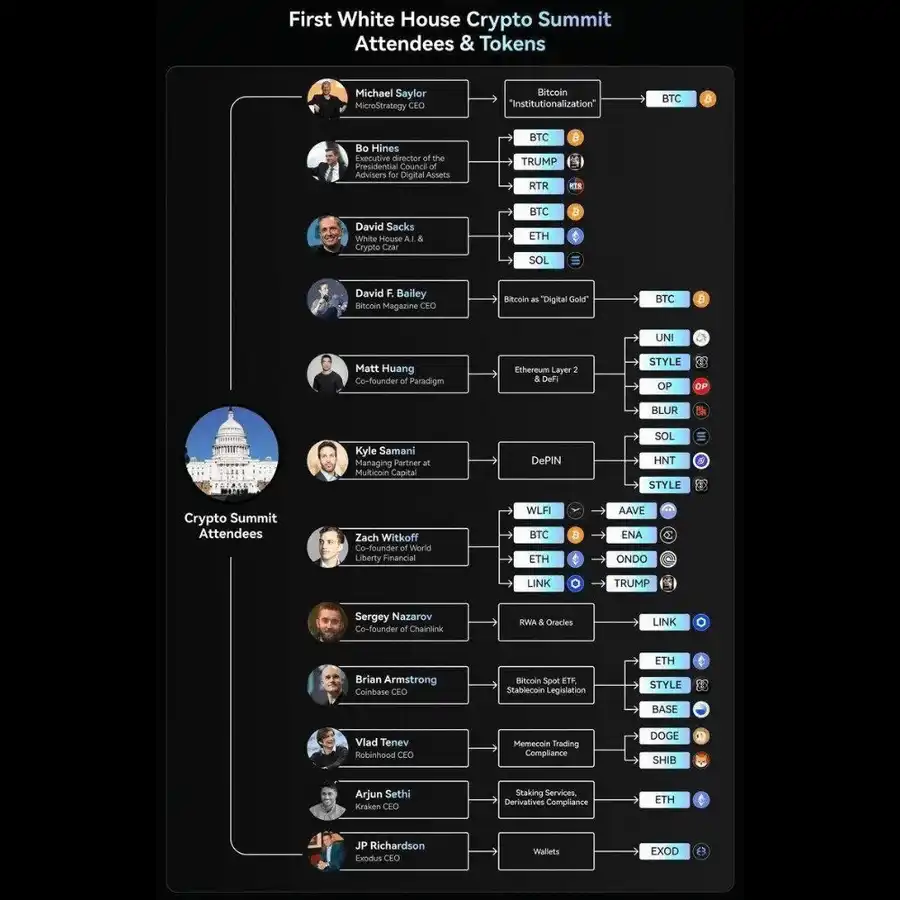
·Michael Saylor, Founder of MicroStrategy, lobbied for supportive Bitcoin policies and engaged in direct conversations with U.S. officials.
·Brian Armstrong, CEO of Coinbase, expressed concerns about cryptocurrency regulation, representing the exchange industry's voice.
·Cameron and Tyler Winklevoss, Founders of Gemini, shared their investment views, emphasizing market growth and innovation.
·Anthony Scaramucci, representing Ripple Labs, advocated for XRP and its role in the global financial system.
·Executives from Ethereum, Solana, and other blockchain networks discussed the evolving role of altcoins in the economy.
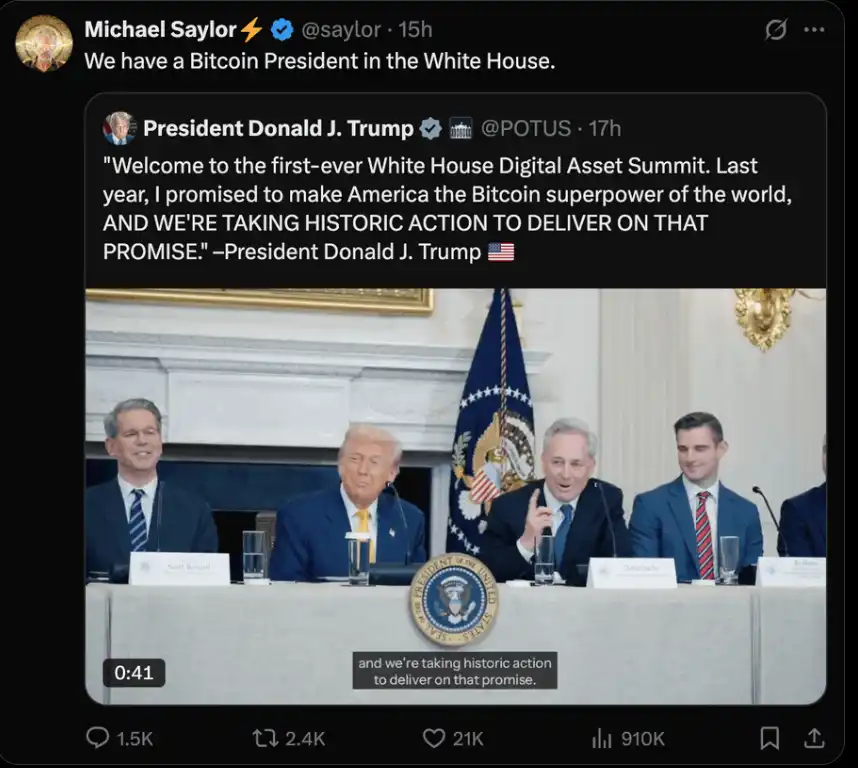
The summit marked a significant turning point, formally integrating cryptocurrency into U.S. financial discussions; however, market sentiment shifted to the negative as no substantive regulatory measures were announced. Expectations for transformative policy changes went unmet, leaving investors disillusioned. Despite the introduction of long-term strategies, short-term market volatility persists.
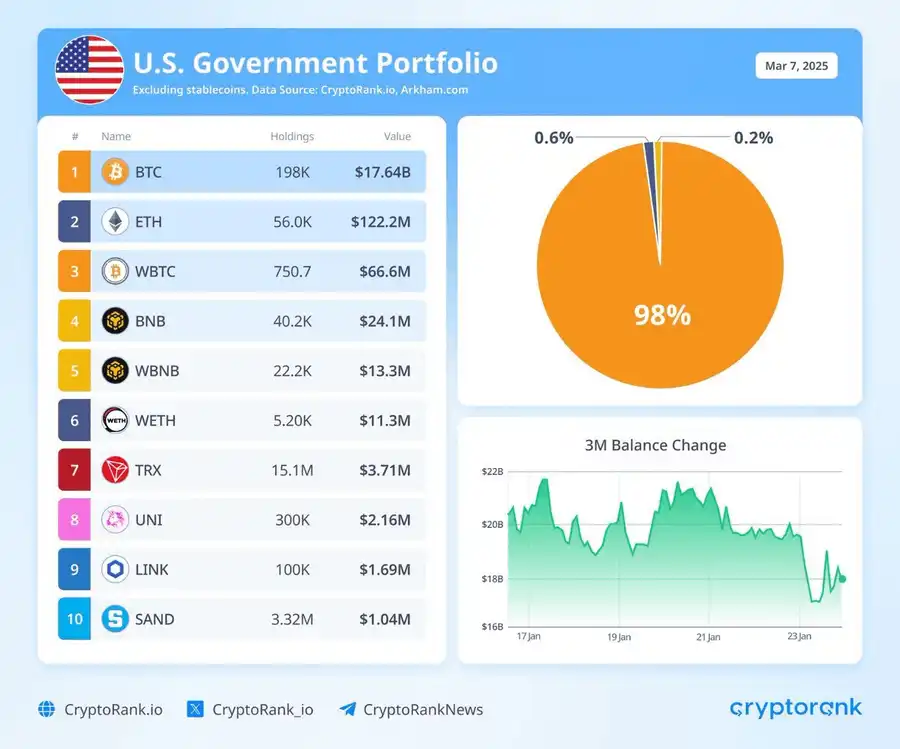
The U.S. government established a Bitcoin reserve consisting of 200,000 seized bitcoins. The Treasury Department will oversee this reserve without imposing additional burdens on taxpayers. There are no plans to acquire more bitcoins, leading to uncertainty in the market. Bitcoin has been formally classified as a strategic asset, akin to gold's status in the U.S. financial reserves.
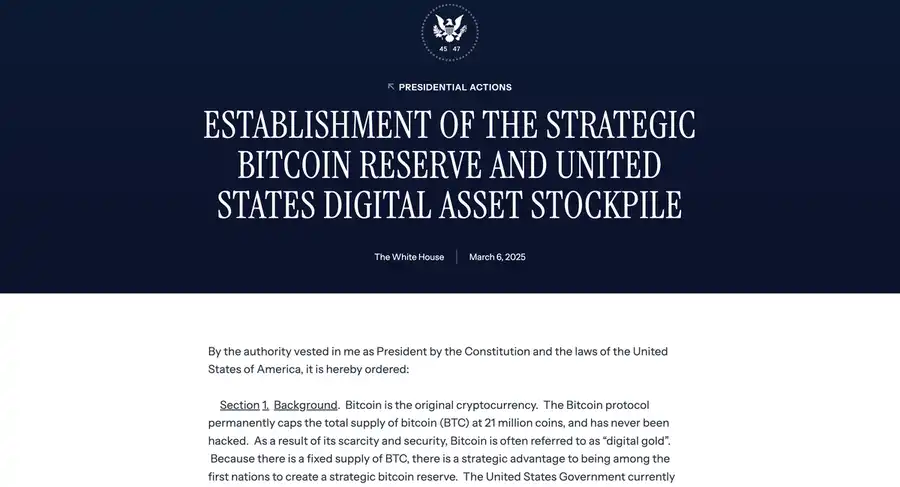
The U.S. plans to enact federal stablecoin regulation by August 2025. The proposed framework aims to enhance oversight and stability for major stablecoins, including USDT and USDC. One key objective is to strengthen the U.S. dollar's role as the dominant global reserve currency. This legislation will prohibit the issuance and circulation of stablecoins pegged to foreign fiat currencies.
The U.S. government has designated Bitcoin as a strategic asset, distinguishing it from other cryptocurrencies. Ethereum, XRP, and Solana face ongoing regulatory uncertainty with no clear guidelines. There is mention of potentially establishing a separate fund for altcoins, but details remain vague.
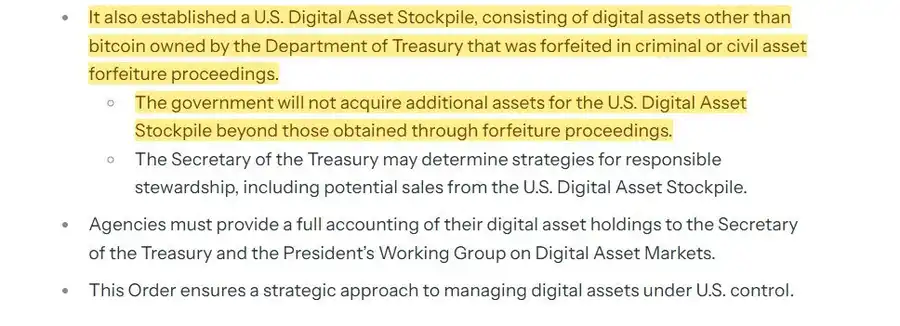
The current lack of clarity on altcoins has led to market speculation and instability. David Sachs has announced that alongside the Bitcoin Act, a digital asset reserve will be created. This reserve will be composed of non-Bitcoin crypto assets obtained through legal seizures, with the legislation strictly prohibiting the government from acquiring any asset beyond the scope of a seizure case.
An analysis of the U.S. government's crypto asset portfolio indicates that certain altcoins may be included in the digital asset reserve. Potential assets include $ETH, $BNB, $TRX, $UNI, $LINK, and $SAND.
- Brian Armstrong views this summit as a milestone event but notes the lack of tax incentives for cryptocurrency investors.
- Cameron and Tyler Winklevoss praise the summit's significance while expressing concerns about unclear altcoin regulations.
- Anthony Scaramucci supports a focus on stablecoins but emphasizes the urgent need for regulatory clarity on XRP.
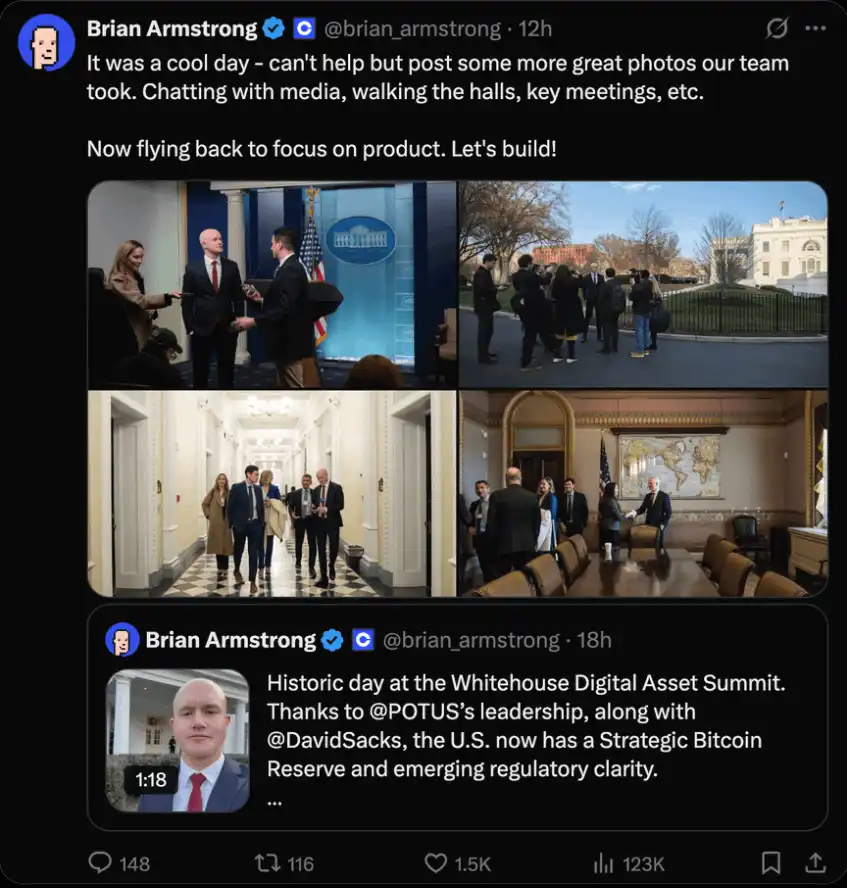
The White House emphasizes that this summit has solidified the U.S.'s position as a leader in the digital finance space. Government officials assure that the Bitcoin reserve will not incur any additional costs for taxpayers. The event highlighted the long-term goals of crypto regulation and industry development.
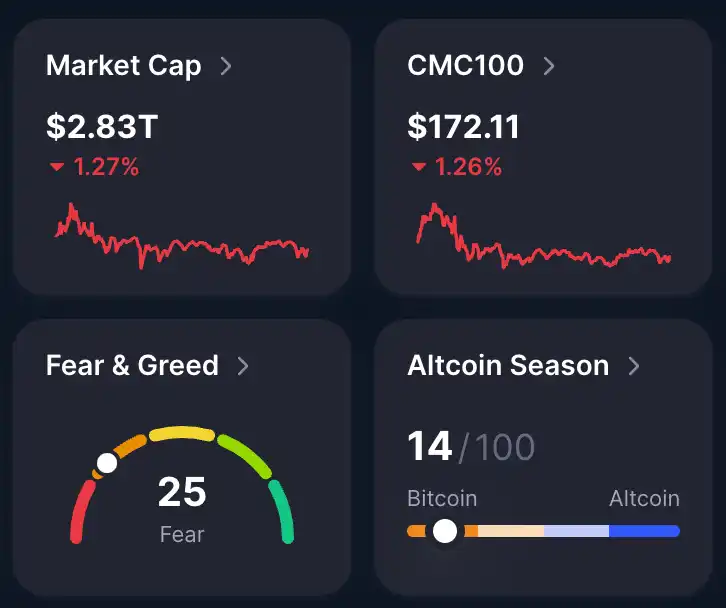
The aftermath of the summit has brought uncertainty to the crypto market, with Bitcoin dropping to $85,000, leading to widespread losses in altcoins. Short-term volatility persists as investors react to the lack of decisive policy action. Market recovery may occur if the government implements favorable measures.
Many expected the U.S. government to heavily acquire Bitcoin, but this has not been confirmed. Tax incentives were the main expectation for investors but were entirely absent from the discussions. Trump's speech failed to provide clear information, exacerbating market skepticism. The market's overbought condition has made it vulnerable to a sharp post-summit correction.
Although the summit has laid the groundwork for future growth, the short-term market response has been negative. Unless the government takes decisive action, market volatility is expected to continue. Regulatory uncertainty further intensifies investor doubts and hesitancy.
By 2025, stablecoin regulation and the introduction of Bitcoin reserves could support long-term market growth, with the recovery of Bitcoin and altcoins depending on the implementation of committed regulatory measures. Tracking stablecoin policies and reserve management is crucial, and the future of the U.S. crypto industry continues to be heavily influenced by government policy changes.
The future of cryptocurrency depends on regulation and institutional adoption. Clear policies can boost growth, while uncertainty can exacerbate volatility. Bitcoin still holds a dominant position, but DeFi and stablecoins are expanding. Mass adoption is inevitable, but the path will be tumultuous.
You may also like

Morning Report | DeepSeek completes over $7 billion in financing, with a valuation exceeding $50 billion; Musk's personal wealth has surpassed the total market value of Bitcoin

Cursor, why did you get on Musk's spaceship?

In the name of charity, for the benefit of the family: How the Trump family turned charity into profit?

Will Gold Break $4,500 After Tonight's Fed Decision? What XAUT and PAXG Traders Need to Know

SharpLink CEO: How to understand that Ethereum developers have just surpassed 1 million?

Morning Report | MiCA grace period expires on July 1; Kalshi's trading volume in the first week of the World Cup breaks $5.1 billion, setting a record

The foundation of SpaceX's trillion-dollar valuation: Who is dividing Musk's annual capital expenditure of tens of billions?
How to exit after asset tokenization?

The stablecoin positioning battle escalates: When compliance is just a ticket to entry, will USD1 become the biggest winner?

A16Z: The sun bears witness, SpaceX is worth 7.5 trillion

Mergers and acquisitions in the cryptocurrency market are exceptionally active

Concerns Behind the Binance Customer Service Controversy

SpaceX Stock Prediction After the IPO: Can SPCX Reach $200 Before QQQ Inclusion?

Congratulations to Carl Moon on His Historic Ferrari Challenge Le Mans Podium Triumph
Crypto influencer and racing enthusiast Carl Moon finished third in the Ferrari Challenge Le Mans Coppa Shell class, marking his best result of the year. As his racing partner and sponsor, WEEX celebrates this remarkable achievement and continues to lead crypto’s journey beyond boundaries, uniting the innovation of digital assets with the passion of motorsport.
Can the CLARITY Act Become Law by July 4? Everything You Need to Know About the Final Battle

France vs Senegal World Cup 2026: Mbappe’s New Era Begins Against a Historic Rival
What is the connection between Huang Zheng of Pinduoduo and blockchain?

Morning Report | Prediction market platforms like Kalshi and Polymarket jointly sue Kentucky over 14.25% trading tax; Bridgewater founder discusses decision-making in the AI era: principled thinking should run parallel to AI, human insight remains irre...
Morning Report | DeepSeek completes over $7 billion in financing, with a valuation exceeding $50 billion; Musk's personal wealth has surpassed the total market value of Bitcoin
Cursor, why did you get on Musk's spaceship?
In the name of charity, for the benefit of the family: How the Trump family turned charity into profit?
Will Gold Break $4,500 After Tonight's Fed Decision? What XAUT and PAXG Traders Need to Know
SharpLink CEO: How to understand that Ethereum developers have just surpassed 1 million?
Morning Report | MiCA grace period expires on July 1; Kalshi's trading volume in the first week of the World Cup breaks $5.1 billion, setting a record


