
Iran Ceasefire Oil Prices: Why Crude Fell in April 2026


The connection between Iran ceasefire oil prices and global markets became impossible to ignore on April 8, 2026. After weeks of military escalation and mounting fear over a supply shock in the Gulf, oil dropped sharply once the United States and Iran agreed to a temporary two-week ceasefire. The selloff was dramatic, but it was also logical: traders were suddenly able to remove part of the war premium that had been built into crude.
That first reaction matters because oil is never priced on current supply alone. It is also priced on what the market fears might happen next. During the conflict, traders had to account for the possibility that the Strait of Hormuz could remain disrupted, tanker traffic could be delayed, and global energy flows could tighten further. Once a ceasefire created even a short diplomatic off-ramp, that worst-case pricing began to unwind.
This is the real story behind Iran ceasefire oil prices. The market was not declaring peace. It was repricing risk.
Why the Ceasefire Sent Oil Lower So Quickly
The easiest way to understand the move is through a simple market formula:
Oil Price = Physical Supply and Demand + Geopolitical Risk Premium
When the conflict intensified, the second part of that equation expanded fast. Traders priced in the threat of blocked shipping lanes, higher insurance costs, refinery stress, and tighter export flows from the Gulf. Once the ceasefire was announced, part of that premium came out just as quickly.
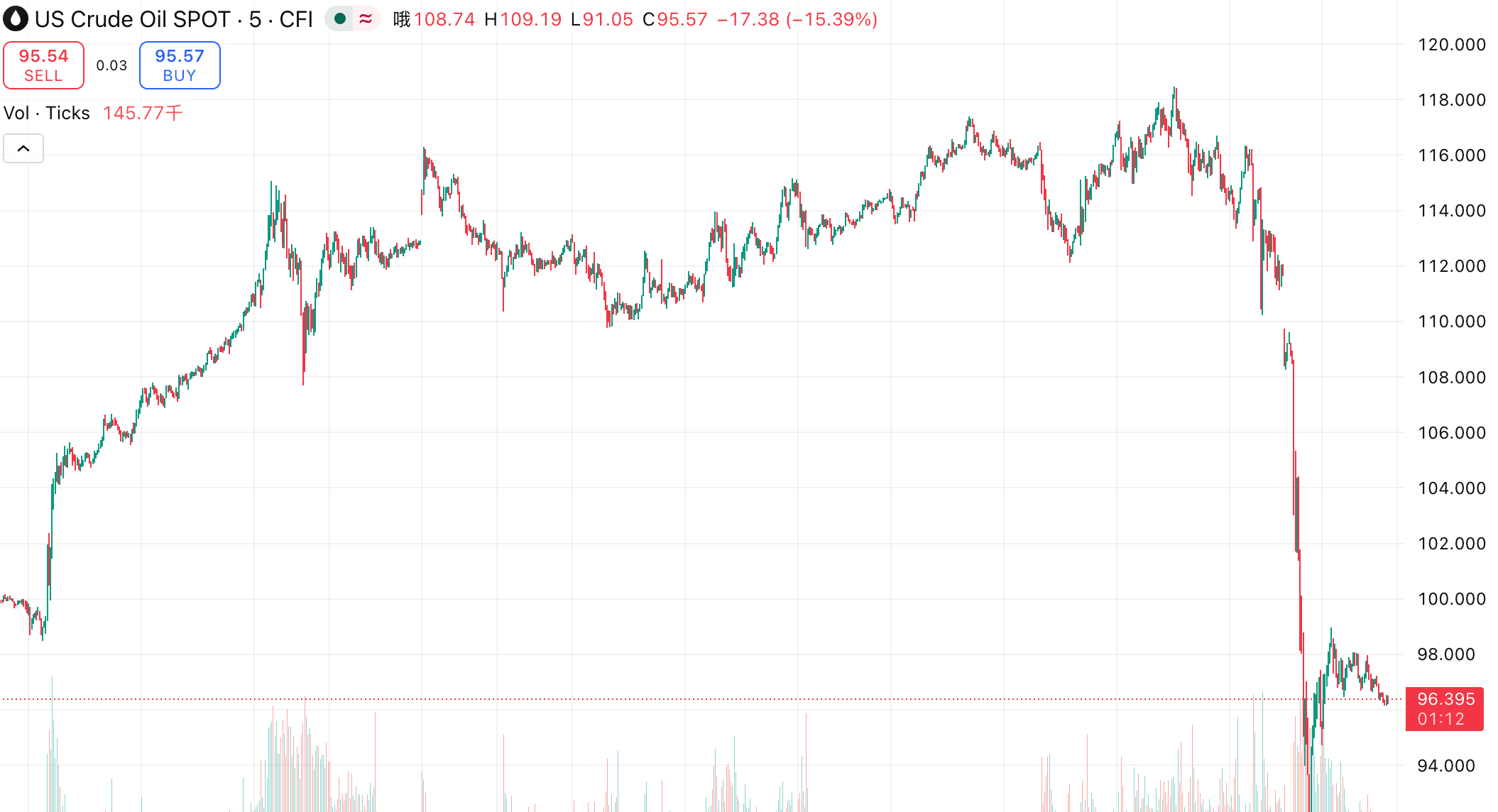
That is why crude can fall sharply even when the political backdrop is still unstable. Markets do not wait for certainty. They respond the moment the probability of a severe disruption changes.
Associated Press reporting on April 8, 2026 described the agreement as a two-week ceasefire between the US and Iran, with markets reacting immediately as the perceived odds of a wider oil shock declined. Oil prices fell and broader risk sentiment improved as investors moved away from the most extreme supply-disruption scenario.
In plain English, the first leg lower in crude was a relief trade.
Core Market Data From April 7-8, 2026
The market reaction was not just psychological. It showed up clearly in benchmark pricing. Based on the research brief and pricing snapshot you provided, both WTI and Brent fell sharply after the ceasefire announcement, while the war-driven risk premium dropped by roughly $10 per barrel.
| Indicator | Before Ceasefire (Apr. 7, 2026) | After Ceasefire (Apr. 8, 2026) | Change |
|---|---|---|---|
| WTI Crude | $112.95 | $95.85 | -17.1% |
| Brent Crude | $109.27 | $103.42 | -6.0% |
| Estimated Oil Risk Premium | ~$14.00 | ~$4.00-$6.00 | Down about $10.00 |
These figures explain why Iran ceasefire oil prices became such a dominant macro story. WTI reacted more aggressively than Brent, which suggests a faster unwind in the most panic-driven part of the pricing structure. Brent also fell, but in a more measured way, reflecting the fact that global benchmarks still retained some risk premium even after the truce was announced.
A concise way to frame it is:
Post-ceasefire crude move = Price before truce - War premium unwind
The ceasefire did not remove all risk. It simply cut the market’s estimate of immediate danger.
Why the Strait of Hormuz Still Controls the Narrative
At the center of the entire story is the Strait of Hormuz. It remains one of the most important oil chokepoints in the world, and any threat to traffic there can reprice global crude in hours.
The transmission mechanism is straightforward:
Transit risk rises -> shipping costs climb -> supply expectations tighten -> oil prices move higher
That is why the market cared so much about a ceasefire tied to a reopening or stabilization of Hormuz transit. The issue was never only diplomatic symbolism. It was whether one of the world’s most sensitive energy arteries would remain at risk.
This is also why traders are unlikely to declare the situation fully resolved after one ceasefire headline. Even if military pressure eases, the physical system still needs time to recover. Shipping routes need to normalize. Marine insurers need to reassess risk. Refiners need more confidence in delivery schedules. Inventory planning needs to stabilize.
The US Energy Information Administration has made a similar point in its latest outlook: even when a disruption begins to ease, elevated transport and logistics costs can continue to pressure fuel markets for some time.
So the first move in Iran ceasefire oil prices was about relief. The next move depends on execution.
Why Oil May Stay Volatile Even After the Truce
A temporary ceasefire is not the same thing as a durable settlement. As of April 8, 2026, the agreement was a short-term pause, not a final peace framework. That distinction matters for every participant in the oil market.
First, diplomacy remains fragile. If follow-up talks stall or the truce weakens, the geopolitical premium can come back fast.
Second, energy logistics do not reset overnight. Even if the immediate threat around Hormuz fades, tanker routing, freight contracts, insurance pricing, and refinery scheduling all take time to normalize.
Third, retail fuel prices often lag crude. Even when WTI and Brent fall sharply, consumers may not see the same relief at the pump right away because refining, storage, transport, and retail pricing all create delays.
That means the market can be directionally right about falling crude while still underestimating how sticky some downstream price effects will be. For ordinary readers, this is an important distinction: lower headline crude does not instantly mean normal energy conditions.
What Investors Should Watch Next
If you want to understand where oil goes from here, the next phase is less about the headline and more about the follow-through.
Watch these signals closely:
Whether the ceasefire lasts beyond the initial two-week window
Whether traffic through the Strait of Hormuz remains stable
Whether marine insurance and freight costs begin to ease
Whether Brent and WTI continue to give back their earlier war gains
Whether formal talks produce a broader framework instead of another temporary pause
This is the practical reading of the Iran ceasefire oil prices story. The market has already reacted to reduced immediate danger. What matters next is whether the supply-chain threat actually fades or simply pauses.
Why This Story Matters Beyond One Day’s Price Move
The importance of Iran ceasefire oil prices goes beyond a single selloff in crude. It reveals how dependent global energy pricing still is on narrow geopolitical chokepoints and how quickly markets move when those risks change.
The conflict did not need to remove every barrel from the market to send oil higher. It only needed to make traders believe that flows could become harder, slower, or more expensive to move. In the same way, the ceasefire did not need to solve every political problem to send oil lower. It only needed to make the worst-case outcome less likely.
That is why this story matters for investors, businesses, policymakers, and ordinary readers alike. Oil remains deeply political, and even a temporary change in military risk can reshape pricing long before long-term peace is secured.
Conclusion
The sharp move in Iran ceasefire oil prices in April 8, 2026 was a classic relief reaction. Once the ceasefire reduced the immediate risk of a broader Gulf supply shock, traders quickly removed part of the geopolitical premium from crude. That explains why WTI and Brent fell so fast, and why the market’s first instinct was to unwind fear rather than wait for perfect clarity.
But the bigger story is not just that oil fell. It is that the next move will depend on whether the ceasefire holds, whether shipping conditions through the Strait of Hormuz stay stable, and whether diplomacy turns a short pause into something more durable. If you want to understand what comes next for Iran ceasefire oil prices, keep watching transit security, freight costs, and the durability of the diplomatic framework rather than focusing on one day’s drop alone.
Keep watching the Strait of Hormuz, ceasefire negotiations, and the Brent-WTI spread for the next real signal in oil.
FAQ
Why did oil prices fall after the Iran ceasefire?
Oil fell because traders removed part of the geopolitical risk premium that had built up during the conflict.
What does the ceasefire mean for WTI and Brent crude?
It lowers the immediate odds of a severe Gulf supply shock, which can pressure both benchmarks lower, though not necessarily by the same amount.
Why is the Strait of Hormuz so important to oil prices?
It is one of the world’s most important energy transit routes, so disruption there can quickly tighten supply expectations and raise crude prices.
Will oil keep falling after the ceasefire?
Not necessarily. Prices could rise again if the truce weakens, shipping risk returns, or formal negotiations fail.
Why don’t gasoline prices fall immediately when crude drops?
Because refining, storage, transport, insurance, and retail pricing all create a lag between crude prices and consumer fuel costs.
You may also like

How Traders Keep Profits When PEPE WLD and FET Start Moving Fast Again

Behind NEAR's Doubling: 3 Major Trends Becoming the Engine of Coin Prices

Visa and Stripe are both working on stablecoins, but their focus is not on payments

It's easy to conquer a city, but difficult to govern it: Polymarket wants to establish a presence globally but still has to bow down everywhere

Ten Thousand Characters Breakdown of On-Chain Vaults: Eight Major Tracks, Who is Rising and Who is Declining?

Insiders betting on Musk are reaping "historic returns."

Morning Report | Binance launches DYOR research tool; YZi Labs launches recruitment platform YZi Talent; Vitalik states that the Ethereum Foundation will "downsize" and reduce the amount of ETH sold

Morning News | Michael Saylor stated that this week he bought bonds instead of Bitcoin; StablR was attacked and lost about 2.8 million dollars; the U.S. Congress is pushing the Bitcoin Reserve Act again

SuperEx's Mars exploration dream: Digital currency is the key to unlocking economic exchanges in the interstellar era

Key Takeaways: Full Text of Google Chief Scientist Shanahan's Speech
Agentic Design Patterns: A book that made me rethink "What exactly is an Agent?"

The richest chairman of the Federal Reserve in 112 years has arrived: Kevin Warsh is rewriting the rules

Vitalik talks about the future of the Ethereum Foundation: a smaller, more distinctive, yet more enduring ship

New Types of Information Laundering in Prediction Markets: How Secrets Integrate into Investment Signals

Vitalik emphasized in a post that Ethereum must be "amazing," but the foundation is not the center
DeFi has reached its most dangerous moment: the real vulnerabilities are not in the code

WEEX Bitcoin Pizza Day: Zero Fees, BTC Cashback & 150,000 USDT to Honor Crypto History

a16z: 7 Images to Understand How Tokenization Changes the Nature of Assets
How Traders Keep Profits When PEPE WLD and FET Start Moving Fast Again
Behind NEAR's Doubling: 3 Major Trends Becoming the Engine of Coin Prices
Visa and Stripe are both working on stablecoins, but their focus is not on payments
It's easy to conquer a city, but difficult to govern it: Polymarket wants to establish a presence globally but still has to bow down everywhere
Ten Thousand Characters Breakdown of On-Chain Vaults: Eight Major Tracks, Who is Rising and Who is Declining?
Insiders betting on Musk are reaping "historic returns."