
Monopoly Game "Boomer" Trump Enters the Metaverse, Making Another Move in the Crypto Race





Original Article Title: "Monopoly Fan Trump Makes a Move into Blockchain Games, Making Another Move in the Crypto Track"
Original Article Author: Zen, PANews
Known for his "businessman mindset," U.S. President Donald Trump has had a career spanning real estate, reality TV, vodka, mortgages, the NFL, airline industry, bottled water, steaks, and even board games. His business empire has also been continuously expanding into the cryptocurrency industry—after making moves in the NFT, DeFi, stablecoin, memecoin, and crypto mining sectors, Trump has now extended his reach into the blockchain gaming field.
According to Fortune magazine citing two insiders, Trump is partnering with businessman Bill Zanker to prepare a real estate-themed crypto game centered around his brand, similar to "Monopoly Go!" For this "veteran enthusiast" who released a similar Monopoly-like board game thirty years ago, with the support of blockchain and cryptocurrency, launching a digital version of Monopoly was both unexpected and somewhat expected, but indeed brought a wave of excitement to the long-dormant blockchain gaming track.
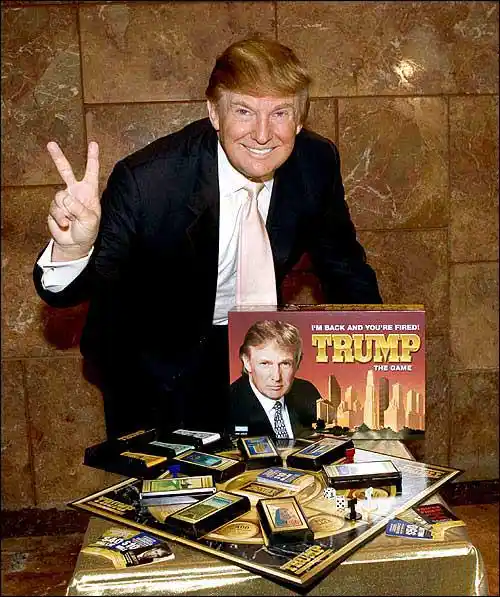
Real Estate Tycoon Trump: A Monopoly Game "Loyal Fan"
In May 1989, Donald Trump collaborated with the traditional board game company Milton Bradley to release the board game "Trump: The Game," inspired by Monopoly and Trump's own real estate tycoon career. Milton Bradley's then-President Milton Bradley stated that the game was based on high-stakes gambles, trades, and Trump's bestselling book from 1987, "The Art of the Deal." Trump also shot TV commercials for the game and used the slogan "It's not whether you win or lose, it's whether you win!"
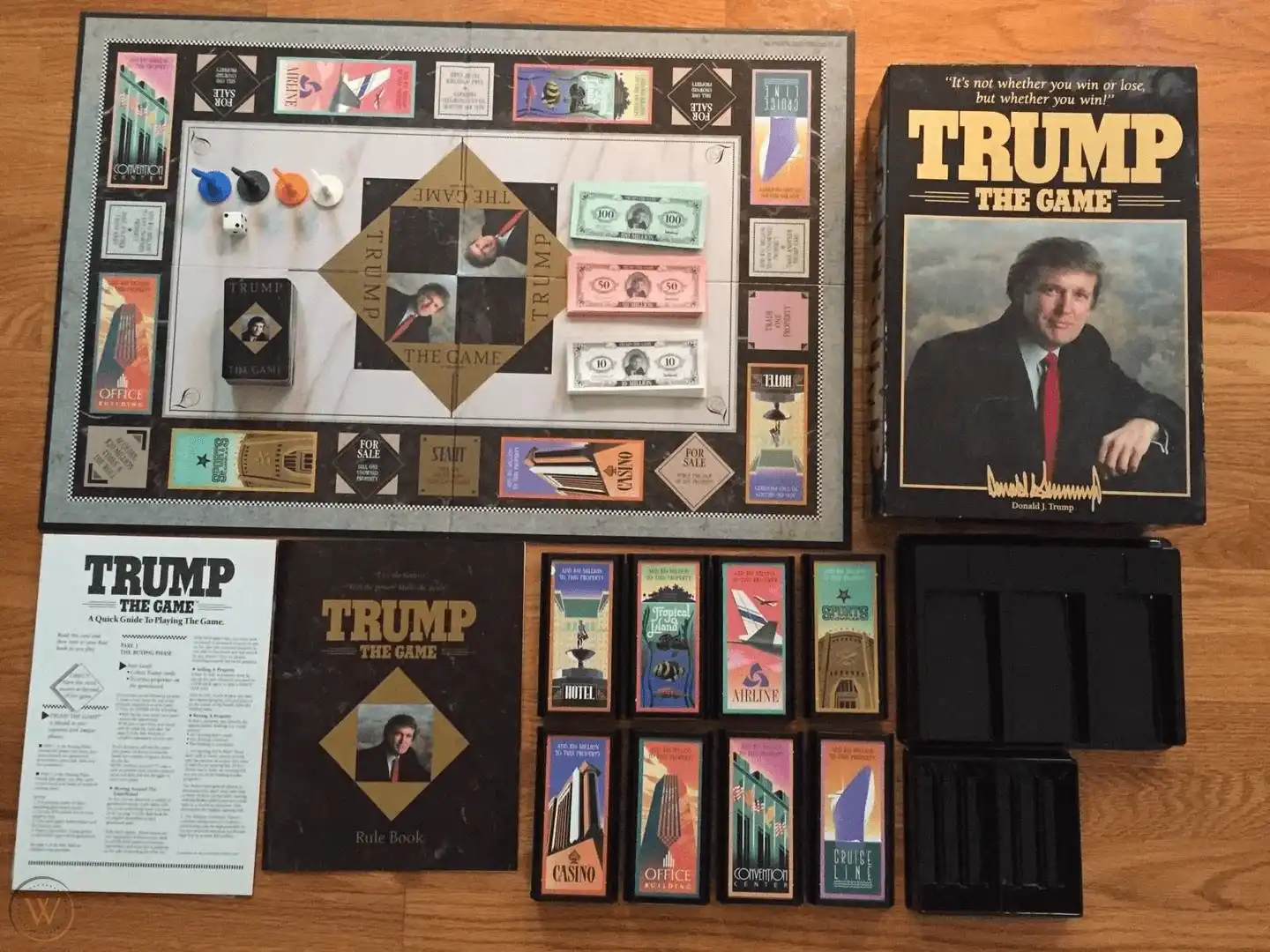
During a promotion event before the official release of "Trump: The Game," Trump stated that he would donate an undisclosed portion of the game's revenue to charity for cerebral palsy and AIDS research, as well as helping the homeless. Priced at $25, this board game, before its official launch, saw Trump and Milton Bradley ambitious, believing it would sell two million copies. However, it ended up selling only 800,000 copies, far below expectations.
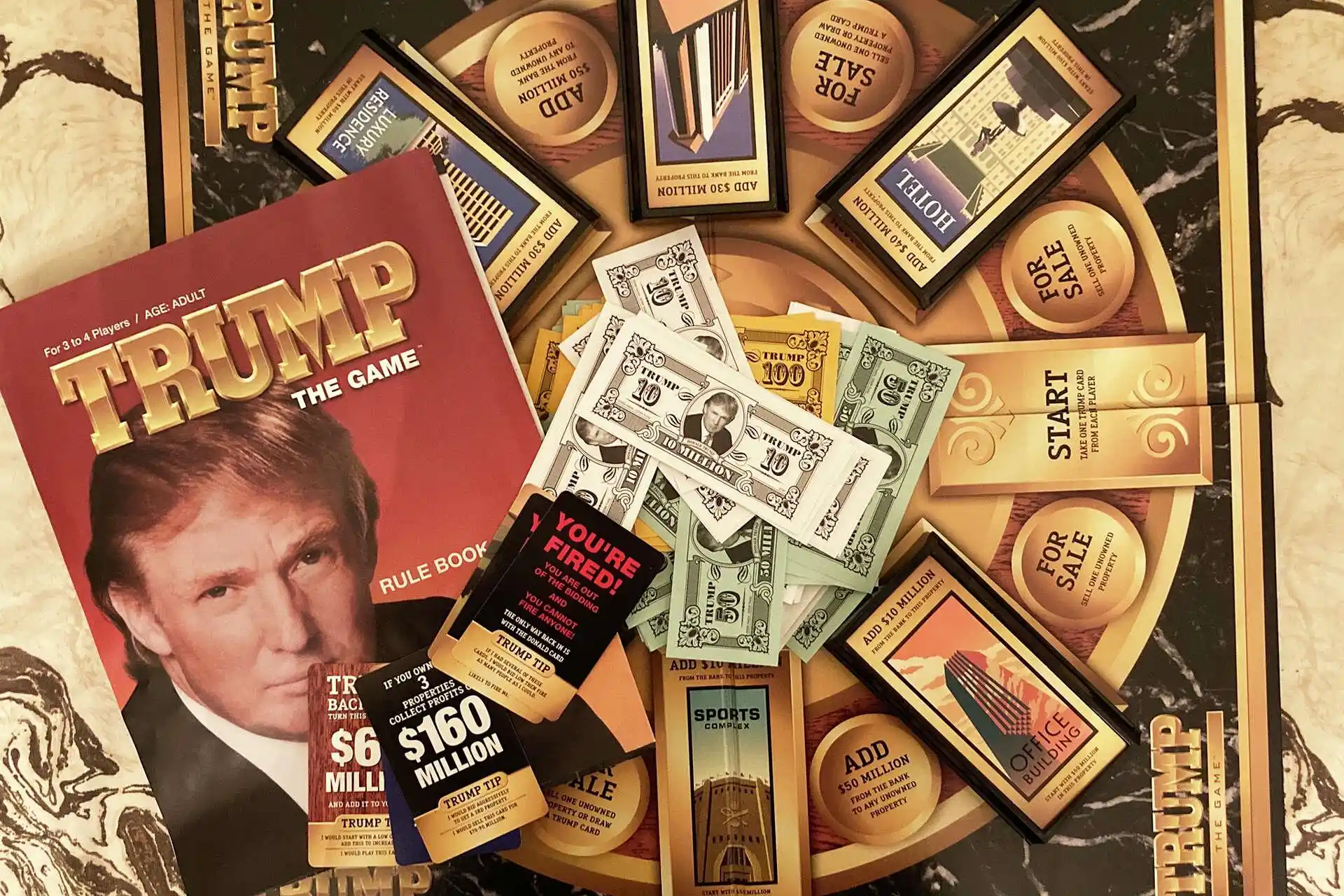
The reasons behind this included the fact that the game was directly associated with Trump's name, making it susceptible to being seen as a tool for the wealthy to make money, with the public unaware of a portion of the proceeds going to charity. Additionally, misleading marketing led people to perceive it as a knockoff version of Monopoly. Trump believed the main reason was that the game itself was too complex, with a rulebook exceeding 12 pages, lacking mass appeal.
Despite subsequent ads specifically stating, "Mr. Trump's earnings from 'Trump: The Game' will be donated to charity," the game's sales remained sluggish. Furthermore, a 2016 Huffington Post article reported that Trump's previous claim of donating board game proceeds to charity could not be verified, with Trump and related entities refusing to comment on the matter.
In 2004, following the success of Trump's reality TV show The Apprentice, the Parker Brothers re-released 'Trump: The Game.' The new version incorporated Trump's classic catchphrase from The Apprentice: "You're fired!" and featured the slogan, "Making a million is required smarts, making a billion is Trump." However, despite the Trump celebrity effect, this revamped game of old wine in a new bottle ultimately received a lukewarm response.
It is worth noting that Milton Bradley was acquired by the toy and entertainment giant Hasbro in 1984 and merged with another Hasbro subsidiary, Parker Brothers, in 1998. The brand was later abandoned in 2009 in favor of using the parent company's name and eventually rebranded as Hasbro Gaming. Therefore, the IP of this Trump-licensed board game should be owned by Hasbro.
"I have always believed that Monopoly is a great game that many people are interested in." In 2006, Monopoly aficionado Trump attempted to launch a primetime reality TV show based on Monopoly. Trump was set to co-star with documentary filmmaker RJ Cutler, with Hasbro as a partner in the project. However, the project quietly fizzled out during development, was not picked up by any TV network, and had no formal show title or episodes announced.
Over thirty years later, returning to the Monopoly board with blockchain technology
Today, Trump is once again back in the Monopoly game but this time he has brought it onto the chain.
According to Fortune, multiple sources revealed that Trump is collaborating with his business associate Bill Zanker to develop a blockchain-based real estate-themed game set to launch by the end of April this year. The game is an adaptation of "MONOPOLYGO!," where players move pieces on a virtual Monopoly board and construct buildings in a digital city to earn in-game coins.
Insiders say Zanker is the driving force behind the blockchain game project and had initially planned to launch the project before the 47th president's inauguration. Zanker is considered the "trailblazer" for Trump's entry into the cryptocurrency industry, with Trump's NFT project being a result of his repeated suggestions.
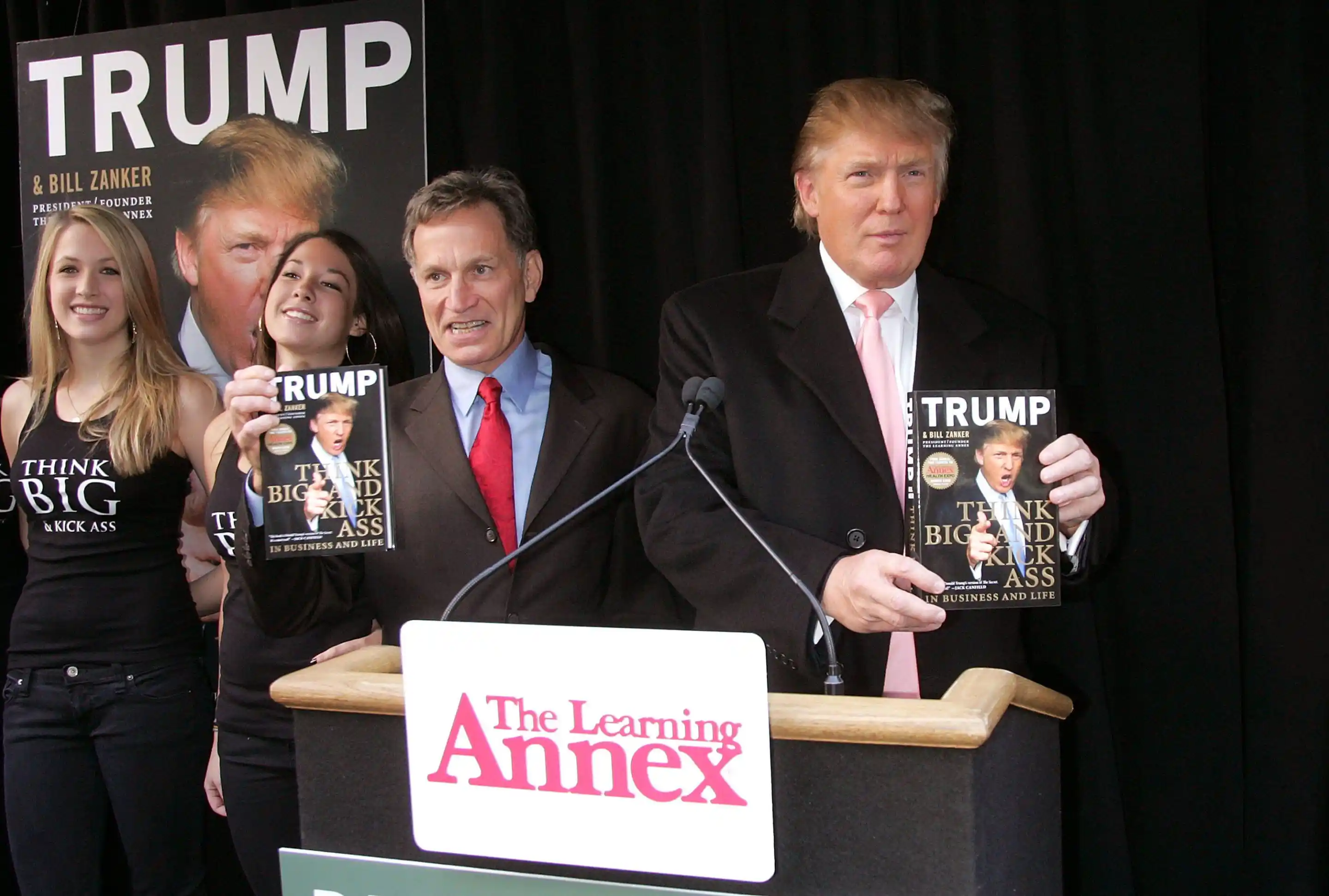
According to Zanker's recollection, when he first suggested the idea of launching an NFT to Trump in early 2022, although Trump was quite interested in the "Former President Art Image NFT," he was unwilling to use the term "NFT" and preferred to call it a "digital transaction card on a computer." By the end of the same year, Zanker pushed for this matter again, and Trump readily agreed, saying, "Many friends told me I shouldn't do it, but I like it, so let's do it."
In the Trump memecoin project TRUMP, Zanker also played a significant role. According to the website of this memecoin, the remaining tokens after the TRUMP token ICO are held by CIC Digital LLC and Fight Fight Fight LLC, accounting for 80% of the total supply. In the registration documents of "Fight Fight Fight LLC," Zanker is listed as the main contact person.
Regarding the specific details of the crypto gaming project, Zanker's spokesperson Kevin Mercuri only revealed that they are developing a "game." Mercuri denied claims that this game would have any similarity to "Monopoly Go," stating that such news is merely "rumors." Previously, the entity responsible for Trump's trademarks, DTTM Operations, applied to extend Trump's name to various virtual products and NFT-related services. However, Mercuri refused to disclose whether these trademark applications are directly related to the project and how blockchain functionality will be integrated into the gameplay.
Furthermore, there are many doubts about whether the upcoming blockchain game will be based on the "Trump: The Game" released over 30 years ago.
According to sources, in May last year, Zanker contacted Hasbro, hoping to repurchase the IP of "Trump: The Game." However, Hasbro informed Zanker that it no longer had the rights to this game that has been around for over 30 years. However, according to Fortune, a spokesperson for Hasbro, the original developer of the Monopoly board game, stated that the company did not license the Monopoly IP to Trump-affiliated organizations for cryptocurrency investments.
You may also like

The second half of the computing power battle: Intel CEO Pat Gelsinger reveals how AI is reshaping the global semiconductor supply chain

WEEX Live mode: Monitor 20 trading pairs at once and trade like a pro

Morning Report | Secret Network loses $4.67 million due to cross-chain vulnerability; Michael Saylor releases Bitcoin Tracker information again, may disclose increased holdings data next week

Kalshi's biggest competitor is not Polymarket
WEEX Makes Affiliate Access Easier on the Web and in the App

Customize Your Spot Trading Page: Drag Modules and Move the Order Panel Where You Want It

Perp DEX: The Next Generation Exchange "War"

10 Counterintuitive Insights on Latin American Payments

The AI gamble of mining companies: Valuations enter a phase of differentiation, and it's hard to turn the tide

A letter from Alliance to entrepreneurs: Written on the occasion of Cursor selling for 60 billion dollars
Stablecoins Finally Find Real Returns: On-Chain Reinsurance Re Explained | Interview with Re Founder Karan Saroya

The impossible triangle is simply a pseudo problem

Will MicroStrategy fall into a death spiral? What will the macro trend be in the second half of the year?

Blockchain Capital Partner: The Core Secret of Arbitrage
STRC unanchored by 11%, can the perpetual motion machine of Strategy still operate?

Bitcoin Market Analysis 2026: Can BTC Reach $150K by Year-End?
Bitcoin ETF Outflows Hit a Record $4.4 Billion: What Are Traders Doing With Their Cash?
WEEX App Just Got Smarter – New Tabs for Faster Trades & Easy Asset Management
The second half of the computing power battle: Intel CEO Pat Gelsinger reveals how AI is reshaping the global semiconductor supply chain
WEEX Live mode: Monitor 20 trading pairs at once and trade like a pro
Morning Report | Secret Network loses $4.67 million due to cross-chain vulnerability; Michael Saylor releases Bitcoin Tracker information again, may disclose increased holdings data next week
Kalshi's biggest competitor is not Polymarket
WEEX Makes Affiliate Access Easier on the Web and in the App
Customize Your Spot Trading Page: Drag Modules and Move the Order Panel Where You Want It


