
On-Chain Data School (Part 9): Market Health Monitor RUPL(I) Data Overview & Buy-the-Dip Strategies

原文标题:《链上数据学堂(九):市场晴雨表 RUPL (I) - 数据介绍 & 抄底应用》
原文作者:貝格先生,链上数据分析师
TLDR
- RUPL 系列文章将分为 2 篇,这是第 1 篇
- RUPL 可以呈现市场当前的未实现盈利状况
- 通过观察 RUPL 可以发现市场顶部和底部的运行规律
- 本文将分享一个基于 RUPL 设计的抄底模型
一、什么是 RUPL?
RUPL,全称 Relative Unrealized Profit & Loss,中文为「相对未实现损益」。该指标可以拆解为两部分:RUP 和 RUL。
以 RUP 的计算方式为例:
1、比较当前价格与每一枚 $BTC 最后转移时的价格,将「现价 > 最后转移价格」的筹码归类为盈利筹码。
2、将每个盈利筹码的盈利额乘上对应数量,得到 Unrealized Profit(未实现利润)。
3、最后将该数据基于当时市值进行标准化处理。
换句话说,Unrealized Profit 就是当前市场上的总未实现利润;而 RUP 是将其根据市值标准化,以便横向比较各时期市场的盈利情况。RUL 的算法与 RUP 相同,本文不再赘述。
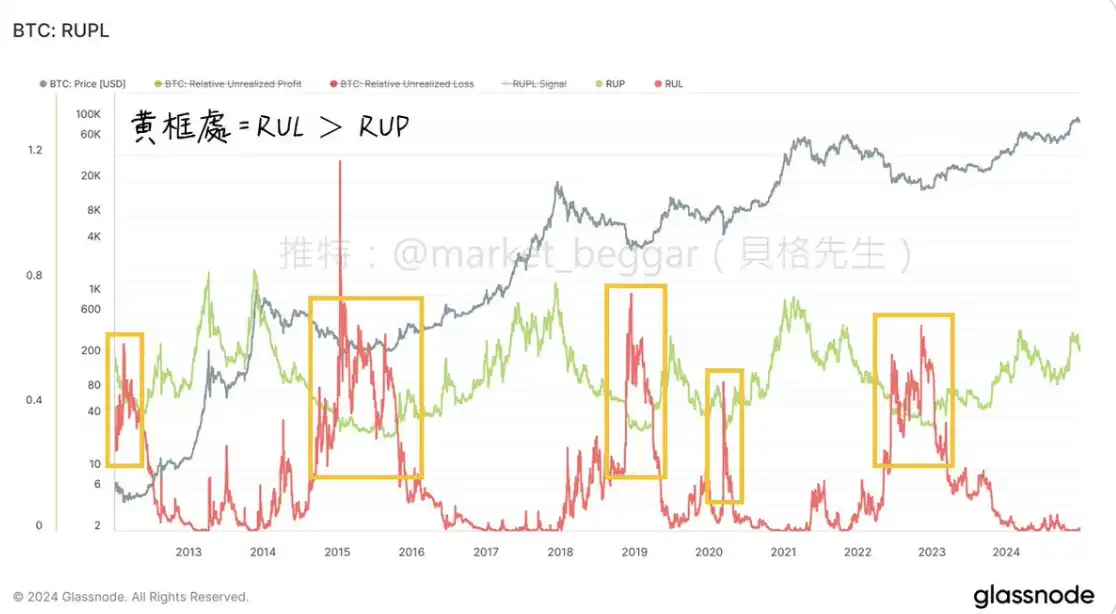
如上图一,绿色线为 RUP,红色线为 RUL。可以看出:价格与 RUP 高度正相关,与 RUL 高度负相关。这很直观,因为随着币价上涨,盈利筹码及未实现利润自然增加。
但如果进一步观察上图,会发现 RUL 在某些时间段会高于 RUP(即红线高于绿线,如图中黄色框处),这表示市场整体处于未实现亏损状态,那么这些时间段是否具有特殊意义?请继续往下阅读
二、RUPL 的抄底应用
承上,有句话说得好:「别人恐惧时我贪婪」,当市场大多数筹码处于亏损状态时,或许就是我们进场收集筹码的好时机。
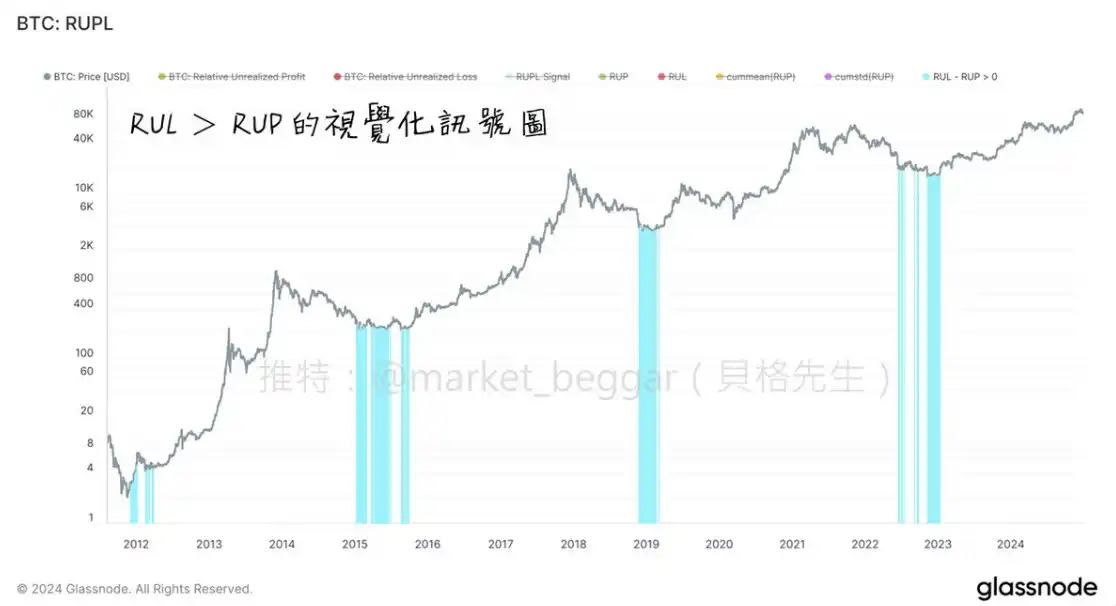
如上图二,我将图一中 RUL > RUP 的时间段标记出来后绘制了该图表。可以清晰看到:当 RUL > RUP 时,几乎都处于历史性的周期底部。
这并非刻舟求剑,其逻辑在于:
「当市场整体处于亏损状态时,意味着持有大量低价筹码的投资者已基本完成派发;而被套牢的投资者往往因为价格过低不愿意割肉,这两种情绪交织,导致卖压大幅下降,因此只要稍有买盘介入,就可能推动趋势反转并开始上涨。」
这个逻辑与先前分享的 LTH-RP 抄底策略非常相似,有兴趣的读者可参考这篇贴文:《链上数据学堂(二):老是赚钱的 Hodlers 们,他们买 BTC 的成本是多少?》
三、抄底模型设计逻辑分享
接下来,我们暂时不看 RUL,单独观察 RUP 图表,可以发现 RUP 在历史底部时有一个较为接近的数值区间:
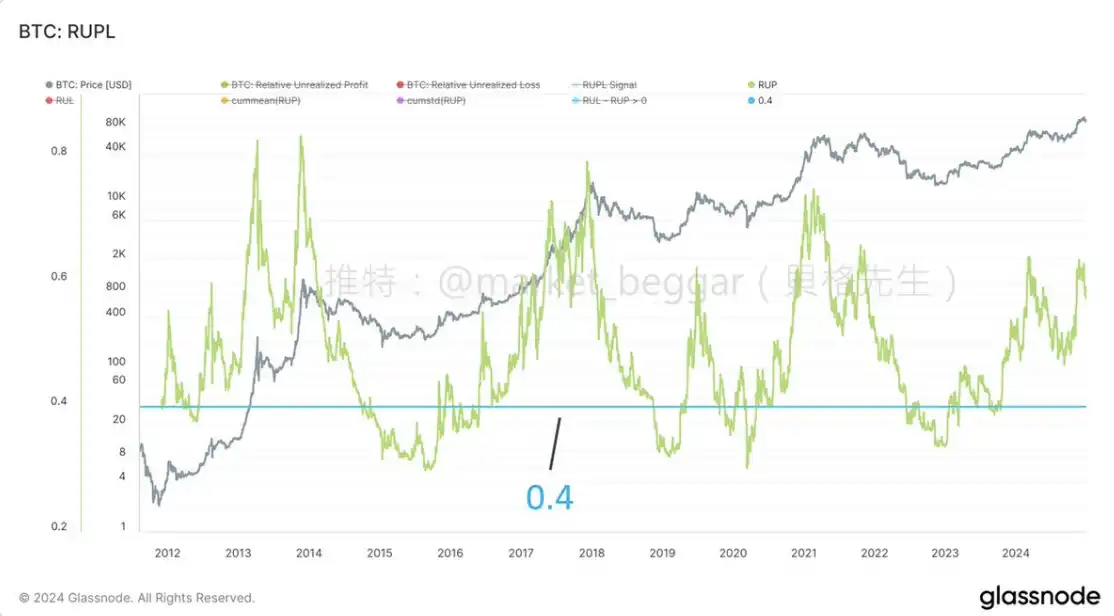
举个例子,我在图表中加入一条 0.4 的水平线,可以明显看到 RUP < 0.4 的区域。(这里的 0.4 是模型参数,可调,后续还会提到)
既然发现 RUP 存在明显的底部区间,我们可以将 RUP < 0.4 这个条件叠加到前面的 RUP < RUL 条件上,进行二次信号过滤,得到以下结果:
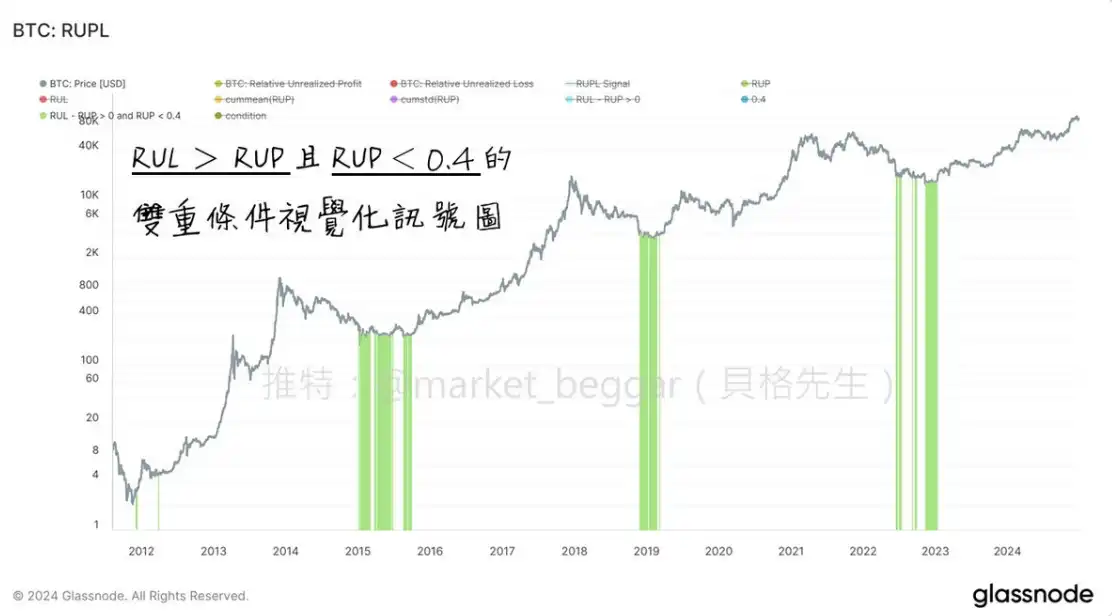
这是模型设计中常用的方式,目的是通过信号筛选达到更精准的效果,让模型输出的信号更具参考价值。
上图显示的是(RUP < 0.4)+(RUP < RUL)两个条件的组合,虽然过滤效果不算非常显著,但仍能看出比单独使用 RUP < RUL 更严谨。如果将 0.4 调小(比如设为 0.38),模型会更严格,但参数调优过程中要注意过度拟合(overfitting)的问题,因为一味根据历史数据微调模型,可能导致模型未来失效。
补充:Overfitting 即「过度拟合」,类似于我们常说的刻舟求剑。
四、结语
本文是 RUPL 系列的第 1 篇,主要介绍了 RUPL 指标的定义及计算方式,并分享了基于该指标设计的抄底模型逻辑。
下一篇我将介绍一个基于 RUPL 的逃顶实战应用,并对历史周期顶进行回顾分析,保证干货满满,敬请期待。
You may also like

On-chain finance: On-chain IPOs and on-chain ICOs, a new frontier in the trillion-dollar market

Rented Belief: How Much of the Bitcoin ETF Fund Flow is Real Money

The two giants are racing in "credit": loan balances of 9.9 billion vs 14.6 billion USD, Brazil has become the main battlefield

A company that was on the verge of bankruptcy has just surpassed Bitcoin in market value

B.AI partners with MiniMax to launch a limited-time free experience of M3, enabling zero-threshold implementation of Agentic productivity through full-stack infrastructure

The second half of the computing power battle: Intel CEO Pat Gelsinger reveals how AI is reshaping the global semiconductor supply chain

WEEX Live mode: Monitor 20 trading pairs at once and trade like a pro

Morning Report | Secret Network loses $4.67 million due to cross-chain vulnerability; Michael Saylor releases Bitcoin Tracker information again, may disclose increased holdings data next week

Kalshi's biggest competitor is not Polymarket
WEEX Makes Affiliate Access Easier on the Web and in the App
Customize Your Spot Trading Page: Drag Modules and Move the Order Panel Where You Want It

Perp DEX: The Next Generation Exchange "War"

10 Counterintuitive Insights on Latin American Payments

The AI gamble of mining companies: Valuations enter a phase of differentiation, and it's hard to turn the tide
A letter from Alliance to entrepreneurs: Written on the occasion of Cursor selling for 60 billion dollars
Stablecoins Finally Find Real Returns: On-Chain Reinsurance Re Explained | Interview with Re Founder Karan Saroya

The impossible triangle is simply a pseudo problem

Will MicroStrategy fall into a death spiral? What will the macro trend be in the second half of the year?
On-chain finance: On-chain IPOs and on-chain ICOs, a new frontier in the trillion-dollar market
Rented Belief: How Much of the Bitcoin ETF Fund Flow is Real Money
The two giants are racing in "credit": loan balances of 9.9 billion vs 14.6 billion USD, Brazil has become the main battlefield
A company that was on the verge of bankruptcy has just surpassed Bitcoin in market value
B.AI partners with MiniMax to launch a limited-time free experience of M3, enabling zero-threshold implementation of Agentic productivity through full-stack infrastructure
The second half of the computing power battle: Intel CEO Pat Gelsinger reveals how AI is reshaping the global semiconductor supply chain


