
Seraph: Exploring and Innovating Web3 AAA Games



Source: Wu Shuo

After the temporary decline in the popularity of the TON mini-game, the volume of the chain game track seems to have quieted down. However, at recent major industry events such as Token2049 in Singapore, THBW2024 in Bangkok, and Binance Blockchain Week in Dubai, the vitality of chain game projects can still be seen, with active presence of both new and old chain games at key booths. Among them, Seraph has attracted a lot of attention with its positioning as a next-generation AAA chain game and its eye-catching design. This article will attempt to analyze Seraph's game design, economic model, and globalization strategy, exploring how chain game projects can break through bottlenecks and the insights they may bring to the future development of GameFi.
Project Background
Seraph is a AAA-level loot game developed by Seraph Studio. The project has received over $10 million in investment, and ample funding is conducive to achieving its goals in technology research and development, game development, and ecosystem building.
Starting from April 2023, Seraph went through Alpha Testing, Beta Testing, Chaos Legacy Test, Preseason, and Season 0, and will soon start Season 1, with official reports indicating a player base of 90,000 and its current status as a top game on the BNB Chain. Seraph booths were set up at BNB Incubation Alliance (BIA) events, and at the Dubai Binance Blockchain Week event, it was showcased near the main hall entrance, with Binance CEO Richard Teng taking a photo and tweeting, showing BNB Chain's strong support for its flagship project.
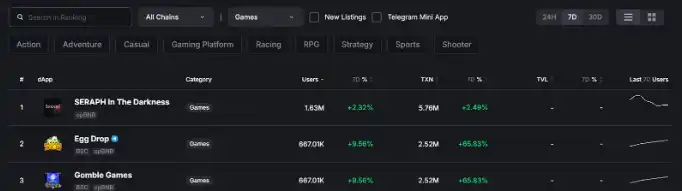
From the data presented by Seraph, its player base is widely distributed globally, covering many countries and regions, with particular prominence in the European, North American, and Southeast Asian markets where user growth is fast and engagement is high. The Southeast Asian market, possibly due to a higher acceptance of chain games, shows a more significant player base and growth rate. Currently, Seraph has generated over $10 million in revenue, mainly from in-game player payments and service fees from the free trade of NFT-equipped items among players.
Game Content: Market-Proven Classic Gameplay
Seraph currently supports PC and Android, and will be available on Steam, Google Play, and iOS in the future. The game's graphics and gameplay belong to the classic ARPG (Action Role-Playing Game) genre. Players in a dark, Western fantasy-style world use magic or combat skills to kill minions and bosses. As they face higher difficulty challenges, they continuously improve their attributes through monster loot, obtaining more powerful and visually appealing weapons and equipment.
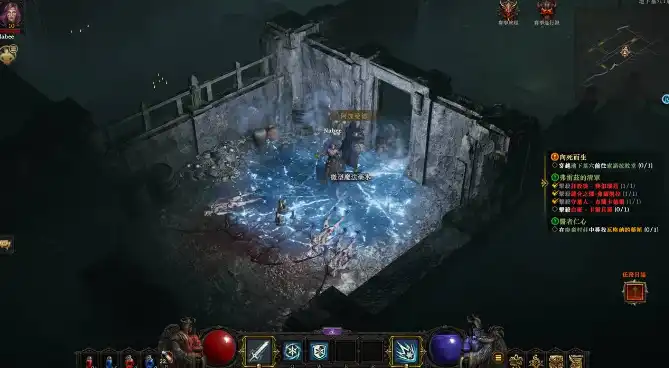
In simple terms, upon entering the game, you first create a game character, then take on missions to experience the storyline. You control your character to move, attack, and use skills to defeat enemies and complete a series of challenges. Throughout this process, you become familiar with your character's abilities and the game mechanics, continuously leveling up to level 60. After reaching level 60, you enter the core gameplay of the game, known as the Gear Farming Gameplay. Players repeatedly challenge monsters and bosses in more difficult dungeons to obtain higher-level and rare gear to enhance their characters, creating a positive loop of gearing up. Combined with multiple difficulty levels and seasonal modes with different gameplay styles, you can experience higher difficulty challenges and refreshing gameplay experiences.
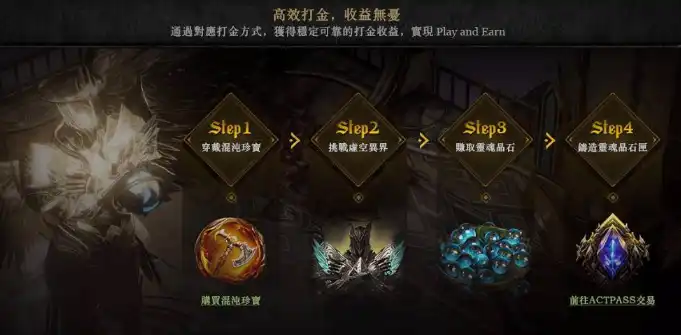
It's worth noting that the division between Seraph's Web2 and Web3 occurs after this level 60 gear farming stage. Although gear farming can still be continued, if you want to play the game, farm gear, and trade to earn profits, you need to purchase an NFT gear piece using real money as an "entry ticket" and initial investment. Then, you can participate in specific challenges to receive randomly dropped treasure chests containing valuable NFTs, NFT fragments, or limited edition costumes.
Having seen many common clicker games and casual gameplay games in the blockchain gaming market, Seraph's graphics and content are undoubtedly a "pleasant surprise," truly comparable to Web2 AAA games. The game's fundamental systems such as character progression, skills, and gear are well-developed and deep, allowing players to create powerful builds through skill learning and equipment combinations. If you are a fan of deep Web2 games, these elements will feel familiar and easy to grasp. This gameplay style almost spans the entire Web2 gaming era and remains popular to this day, proving to have stood the test of time and received full validation from the market.
Within such a gameplay framework and without compromising the underlying fun of the game, Seraph seamlessly integrates NFT gear and a player-driven free-trade market into the game to build a self-sustaining in-game economy. This approach is quite reasonable and easily acceptable to a game player.
Economic Model: "Everything is Tradable" and "Play and Earn"
The economic model of Seraph is based on the concept of "Everything is Tradable" and combines with "Play and Earn," allowing players to trade in-game equipment NFTs to create a self-sustaining, sustainable game economy:
1. NFT-ized Equipment: Gold farming equipment in the game is all tradable NFTs that players have a chance to obtain from treasure chests by clearing dungeons. These equipment items not only have in-game attributes but also possess different levels of rarity and collectible value, allowing players to sell them on the in-game marketplace to earn profits.
2. Player-Driven Free Market: The in-game marketplace enables trading of all in-game assets, where players can set their prices. Market dynamics based on supply and demand determine price fluctuations, and a decentralized market mechanism allows players to truly own in-game assets.
3. Revenue Mechanism and "Play-to-Earn" Mode: Players earn equipment and items through in-game activities such as treasure hunting, monster slaying, and cooperative challenges, then trade them on the market, enabling them to receive real economic rewards for in-game actions.
4. Self-Sustaining Economic Ecosystem: With the continuous growth of the player base, the in-game market demand will expand, driving more transactions and liquidity. This, in turn, enhances the overall ecosystem's stability, continuously improving the gaming experience and revenue potential.
Comparison Analysis of In-Game NFTs and Artwork NFTs
As mentioned earlier, Seraph has currently generated over $10 million in revenue, with a portion of the revenue coming from in-game equipment NFT trades. While the NFT sector seems to have had its heyday and even faced some backlash, the NFT ecosystem based on in-game weapons, equipment, and items in Seraph presents a different picture. Here is a simple comparison between mainstream artists/celebrities' NFTs and in-game NFTs:
1. Source and Acquisition Method: Artist/Celebrity NFTs mainly derive their value from personal branding, with their creation having no direct utility but relying more on the creator's fame and fan base. The acquisition of such NFTs is unidimensional, usually obtained through purchases, lacking interactivity. On the other hand, game equipment NFTs are acquired by players through dungeon runs or synthesis, directly linked to players' efforts. This acquisition method adds fun and a sense of accomplishment, while also increasing players' attachment to the items' value.
2. Functionality and Use Cases: Artist/Celebrity NFTs are often used as collectibles, only possessing aesthetic value or symbolic meaning, lacking practical functionality. Their value mainly comes from fan emotions or limited scarcity, rather than actual use cases. On the other hand, Gaming Equipment NFTs are relatively functional, able to enhance player character attributes, improve gold farming efficiency, etc. Players can not only collect them but also trade them in and out of the game, realizing economic value. This practicality makes them more appealing.
3. Market Driving Force and Value Stability: Artist/Celebrity NFTs rely on the creator's brand influence. If the creator's popularity declines or market interest shifts, their value can easily fluctuate or even drop to zero. On the contrary, Gaming Equipment NFTs' value is determined by the in-game ecosystem's supply and demand relationship. Rare equipment is directly linked to market demand. If the game remains active, the liquidity and value of equipment NFTs will remain stable.
4. User Participation and Interactivity: The process of acquiring Artist/Celebrity NFTs is straightforward; users only need to purchase them, lacking a sense of active participation. This passive consumption model may lead to unsustainable user enthusiasm. On the other hand, Gaming Equipment NFTs are obtained by players through in-game activities, making the participation process interactive and engaging. This model encourages players to invest time and effort continuously, enhancing community engagement.
In summary, compared to the single attribute and volatility of Artist/Celebrity NFTs, Gaming Equipment NFTs perform better in terms of functionality, market driving force, and user participation. Artist/Celebrity NFTs overly rely on the creator's personal influence. Once their popularity wanes, it is challenging to sustain their value. On the other hand, Equipment NFTs are part of the gaming experience, allowing players to enhance their in-game achievements through use and gain actual profits through trading, making them more sustainable. Although Gaming NFTs' applicability is limited by the game's audience, their design logic and transaction value are more rational.
Seraph's revenue data validates the maturity and effectiveness of its NFT economic model, demonstrating its robust self-sustaining capability. The economic rewards players receive during the gaming experience will further enhance the game's appeal, attracting more players. More players will then drive the healthy development of the in-game trading market. Seraph continuously updates its game content based on this foundation to provide players with a fresher gaming experience, creating a positive economic cycle.
Asset Management System: Lowering the Entry Barrier for Web2 Players to Enter Web3
The main obstacle Web2 players face when entering Web3 games is the complexity of blockchain technology, including wallet creation, private key management, and on-chain transaction processes. Seraph integrates the ActPass account with the asset management system in the game. Players can log in via email/account, abstracting away the encrypted wallet and private key management process. It incorporates an MPC wallet to manage assets and transactions within ActPass. This design has the following advantages:
1. One-Click Wallet Generation for Easier Operation: Most Web3 games require downloading and setting up a separate wallet. ActPass is integrated within the Seraph game, allowing players to generate a wallet with a single click and bind their account directly, without the need to switch to an external application. This design is similar to the email or social login method used in Web2 games, significantly reducing the entry barrier.
2. Built-in Asset Management to Reduce Operational Burden: Asset management in blockchain games typically involves complex on-chain transactions, but ActPass stores digital assets such as equipment and items directly in the built-in wallet, supporting quick in-game transactions and management. Players can complete operations without switching platforms, eliminating the cumbersome signing process.
3. Hiding Complexity for Optimized User Experience: ActPass automatically handles gas fees, allowing players to pay using fiat or stablecoins, shielding most of the blockchain technical details. Players do not need to learn additional complex processes and can focus on game content for a smoother experience. Additionally, thanks to the low gas, speed, and security of the BNB Chain's layer-two network opBNB chain, players can save on gas costs for activities such as transactions and on-chain/off-chain item transfers.
In summary, this design maintains a certain level of isolation between game content and the Web3 asset management system, avoiding the poor experience of repetitive asset verification and wallet interactions in many Web3 games. It effectively lowers the technical and psychological barriers for Web2 players to transition to Web3 games, leading to higher user conversion rates and market penetration. It can be seen as an excellent solution bridging Web2 and Web3.
Exploring the Incremental Market: The Bridge Between Web2 and Web3
In the context of intense competition in the existing market, expanding to new user groups has become a crucial task in the Web3 field. As a representative of the Web3 incremental market, blockchain games, with their high user stickiness and interactivity, are key to attracting Web2 players to Web3. In particular, AAA-level heavy blockchain games, compared to traditional lightweight blockchain applications, offer new possibilities for converting Web2 users through higher technical levels, stronger immersion, and richer ecosystems.
Based on the analysis of Seraph above, here are some design ideas that similar games can refer to:
1. Lowering Entry Barriers: Integrate user-friendly Web3 wallets, simplify asset management and transaction processes, allowing Web2 players to participate smoothly without intricate blockchain knowledge.
2. Strengthening Economic Incentives: Adopt a "Play and Earn" model where players earn NFT equipment through in-game actions (such as treasure hunting, challenges) and realize actual profits through market transactions, enhancing participation motivation.
3. Provide an Immersive Experience: Through high-quality graphics, rich storyline, and diverse gameplay, make the game closer to the experience of traditional AAA games, making it easier for Web2 players to accept and engage.
4. Balanced Economic System: By designing scarcity and market supply-demand relationship reasonably (such as limited-edition equipment or functional items), maintain a vibrant trading market and drive long-term player participation.
The potential of the Play-to-Earn market cannot be ignored. According to BusinessResearch's forecast, the GameFi market is expected to reach $905.1 billion in 2031, with a growth potential of 10 to 15 times. In the current bull market, the Play-to-Earn track has not yet fully exerted its strength. It is hoped that with the emergence of more high-quality Play-to-Earn games, the rough impression of Web3 games will gradually change, bringing more players to the Web3 industry.
Original Article Link
You may also like

Latest research from 13 top universities including Cornell University: The current state, challenges, and misconceptions of the fusion of Crypto and AI
Deconstructing Anthropic: The Best AI Company, Possibly Also a Type of Organizational Invention

Humanity Protocol Security Incident Escalates: More Than $31 Million Stolen From Related Addresses as Attacker Continues Selling H for ETH
On June 9, according to monitoring by Onchain Lens, more than $31 million has been stolen from addresses linked to Humanity Protocol, and the attack is still ongoing, with the hacker continuously swapping H tokens for ETH. Project founder Terence Kwok later confirmed the security incident on X, saying the issue involved a private key leak.

Bloomberg: As Bitcoin Weakens, Stablecoins and RWA Continue to Drive Expansion in Crypto Businesses
In June, Bloomberg reported that despite Bitcoin falling below $60,000 last week, wiping out about $235 billion in market value within seven days, and dropping close to 50% from last year’s peak, some core businesses in the crypto industry are still expanding, mainly in stablecoins, real-world asset tokenization (RWA), payments, and infrastructure. The report also noted that overall altcoin activity has contracted significantly: altcoin market capitalization has fallen from a peak of about $431 billion in November 2021 to around $170 billion, and among the tens of millions of tokens issued in recent years, fewer than 1,700 still maintain meaningful trading activity.

Galaxy Deep Research Report: How Hyperliquid's HIP-4 Upgrade Changes the Landscape of Prediction Markets?
Binance Research: RWA Market Expected to Expand Nearly 6x from Early 2025, with Public Equities and Onchain Payments Heating Up Together
In June, Binance Research said in its monthly market report that the real-world asset (RWA) market is expected to grow by about 589% from the beginning of 2025. Bond- and money market fund-related RWA expanded by about $6.5 billion, up 83% year over year, while publicly traded equity RWAs grew by about 422%. The report also noted that monthly crypto debit card transaction volume exceeded $747 million in May, up 48.6% year to date.

Japan to Assess a Framework for Yen Stablecoins and Crypto ETFs as Asia’s Compliant Payments Narrative Heats Up
Recently, according to the original report, Japan is considering the launch of yen stablecoins and cryptocurrency ETFs. Public information remains limited at this stage, and there is still no complete policy text, regulatory draft, or clear implementation timeline, so this is better characterized as a “policy discussion” rather than formal implementation. The original wording also noted that advancing stablecoin regulation in Asia is driving XRP usage and supporting growth in the XRPL ecosystem. However, based on currently available public information, there is not enough evidence to directly establish a clear causal relationship between this round of discussion in Japan and XRP or XRPL.

ZachXBT: Humanity private key leak and abnormal surge in H token should be viewed separately
On June 9, according to related disclosures, on-chain investigator ZachXBT posted an update on Humanity’s roughly $31 million security incident, saying that after further analyzing fund flows, he currently tends to believe the project team was not involved in an “inside job” or a self-staged attack. According to him, the official explanation about the private key leak was broadly accurate, but before the token unlock, the price of H had been artificially pushed higher, and the hacker later took advantage of that market environment; therefore, the private key leak and the earlier abnormal price pumping should be regarded as two separate and independent events. This reframing has shifted the market’s understanding of the nature of the incident. Earlier discussion around Humanity had focused on whether the team directly participated in the attack or used the security incident to cover up internal operations. ZachXBT’s latest remarks shift the focus from “whether it was self-theft” to “whether there were pre-unlock market structure issues.” He also questioned whether the team may have.

Morning Report | OpenAI has submitted an S-1 registration statement draft to the U.S. SEC; Morpho completes $175 million financing

Morning Report | BitMine increased its holdings by 126,971 ETH last week; trader Eugene announced his exit from the crypto market

Wang Chuan: How can one not feel anxious after the neighbor Old Wang made thirty times profit by investing in storage stocks? (Seven) - A quarter-century cycle
Cryptocurrency CEXs are flocking to sell US stocks, and traditional brokerages are facing an "uninvited guest."
$75 billion in foreign capital has fled, and South Korean retail investors have absorbed it all using leverage

Japan’s Three Megabanks Plan Joint Stablecoin Issuance in Fiscal 2026
MUFG, SMBC, and Mizuho reportedly plan to jointly issue fiat-pegged stablecoins in fiscal 2026, signaling Japan’s growing push into bank-led digital payment infrastructure.

Humanity Discloses H Token Dual-Chain Attack Details, With Losses on Ethereum and BSC Exceeding $36 Million
Humanity said the H token attack across Ethereum and BSC caused more than $36 million in losses after leaked ProxyAdmin keys enabled malicious contract upgrades and token minting.
White House Discusses CLARITY Act With Law Enforcement Ahead of Senate Vote
The White House discussed the CLARITY Act with law enforcement ahead of a Senate vote, focusing on illicit finance risks and developer protections.

Bitcoin Trading Guide 2026: Strategies for Experienced Traders

What Is XAUT and PAXG? Why Tokenized Gold Is Booming in 2026
Latest research from 13 top universities including Cornell University: The current state, challenges, and misconceptions of the fusion of Crypto and AI
Deconstructing Anthropic: The Best AI Company, Possibly Also a Type of Organizational Invention
Humanity Protocol Security Incident Escalates: More Than $31 Million Stolen From Related Addresses as Attacker Continues Selling H for ETH
On June 9, according to monitoring by Onchain Lens, more than $31 million has been stolen from addresses linked to Humanity Protocol, and the attack is still ongoing, with the hacker continuously swapping H tokens for ETH. Project founder Terence Kwok later confirmed the security incident on X, saying the issue involved a private key leak.
Bloomberg: As Bitcoin Weakens, Stablecoins and RWA Continue to Drive Expansion in Crypto Businesses
In June, Bloomberg reported that despite Bitcoin falling below $60,000 last week, wiping out about $235 billion in market value within seven days, and dropping close to 50% from last year’s peak, some core businesses in the crypto industry are still expanding, mainly in stablecoins, real-world asset tokenization (RWA), payments, and infrastructure. The report also noted that overall altcoin activity has contracted significantly: altcoin market capitalization has fallen from a peak of about $431 billion in November 2021 to around $170 billion, and among the tens of millions of tokens issued in recent years, fewer than 1,700 still maintain meaningful trading activity.
Galaxy Deep Research Report: How Hyperliquid's HIP-4 Upgrade Changes the Landscape of Prediction Markets?
Binance Research: RWA Market Expected to Expand Nearly 6x from Early 2025, with Public Equities and Onchain Payments Heating Up Together
In June, Binance Research said in its monthly market report that the real-world asset (RWA) market is expected to grow by about 589% from the beginning of 2025. Bond- and money market fund-related RWA expanded by about $6.5 billion, up 83% year over year, while publicly traded equity RWAs grew by about 422%. The report also noted that monthly crypto debit card transaction volume exceeded $747 million in May, up 48.6% year to date.


