
 Buy Crypto
- Markets
 Futures
- Spot
- Copy Trade
- Earn
- More
Slash Staking Rewards: Aptos New Proposal Targets Whale "Lazy Yield Farming" Benefit

在 Aptos 生态沉寂数月后,一项名为 AIP-119 的社区提案为这条 Layer 1 公链注入了新的争议与生机。
4 月 18 日,Aptos 社区成员 moon shiesty 发起「分阶段降低质押奖励率」提案「AIP-119」,建议将质押奖励率从目前的约 7%,在未来 3 个月内每月递减 1%,最终年化收益率降至 3.79%。
提案认为,降低质押奖励率将有助于 Aptos 生态的长期增长,特别是推动在 DeFi 领域更积极地参与竞争,同时也有利于增强 APT 的代币经济学,以支持其长期可持续发展。作为 Aptos 经济模型改革的第一步,提案将接受社区反馈,若提案通过将设置 6 个月观察期评估影响。
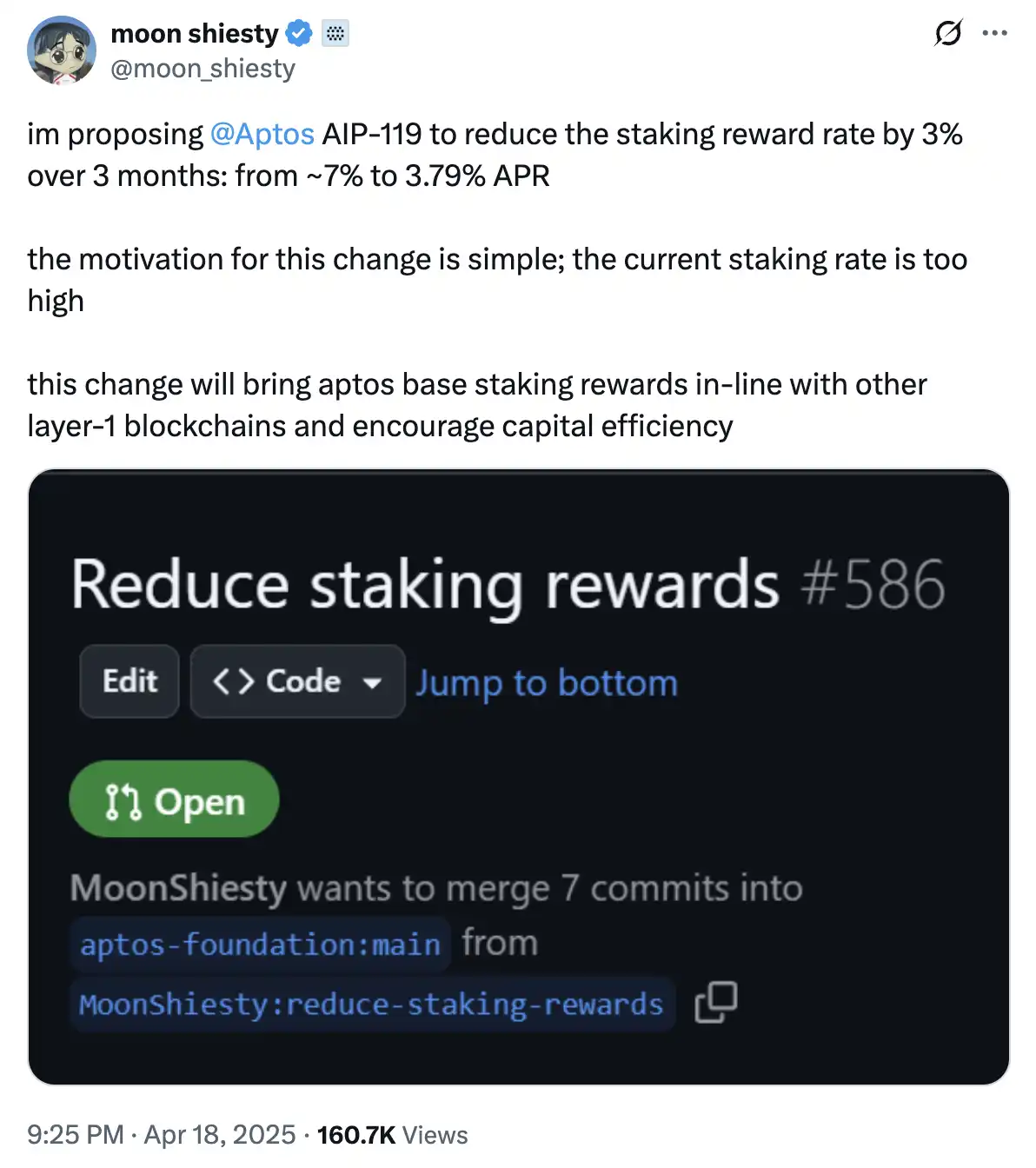
在许多观察者眼中,这不仅是一项技术治理上的调整,更是一次对 Aptos 经济模型底层逻辑的重构尝试。
高收益的隐患与结构性通胀
Aptos 当前的质押收益率在 L1 公链中名列前茅,但其带来的问题也日益凸显。7% 的无风险年化回报虽吸引了大量用户将 APT 锁定参与质押,却同时造成了严重的通胀压力与资金使用效率低下。
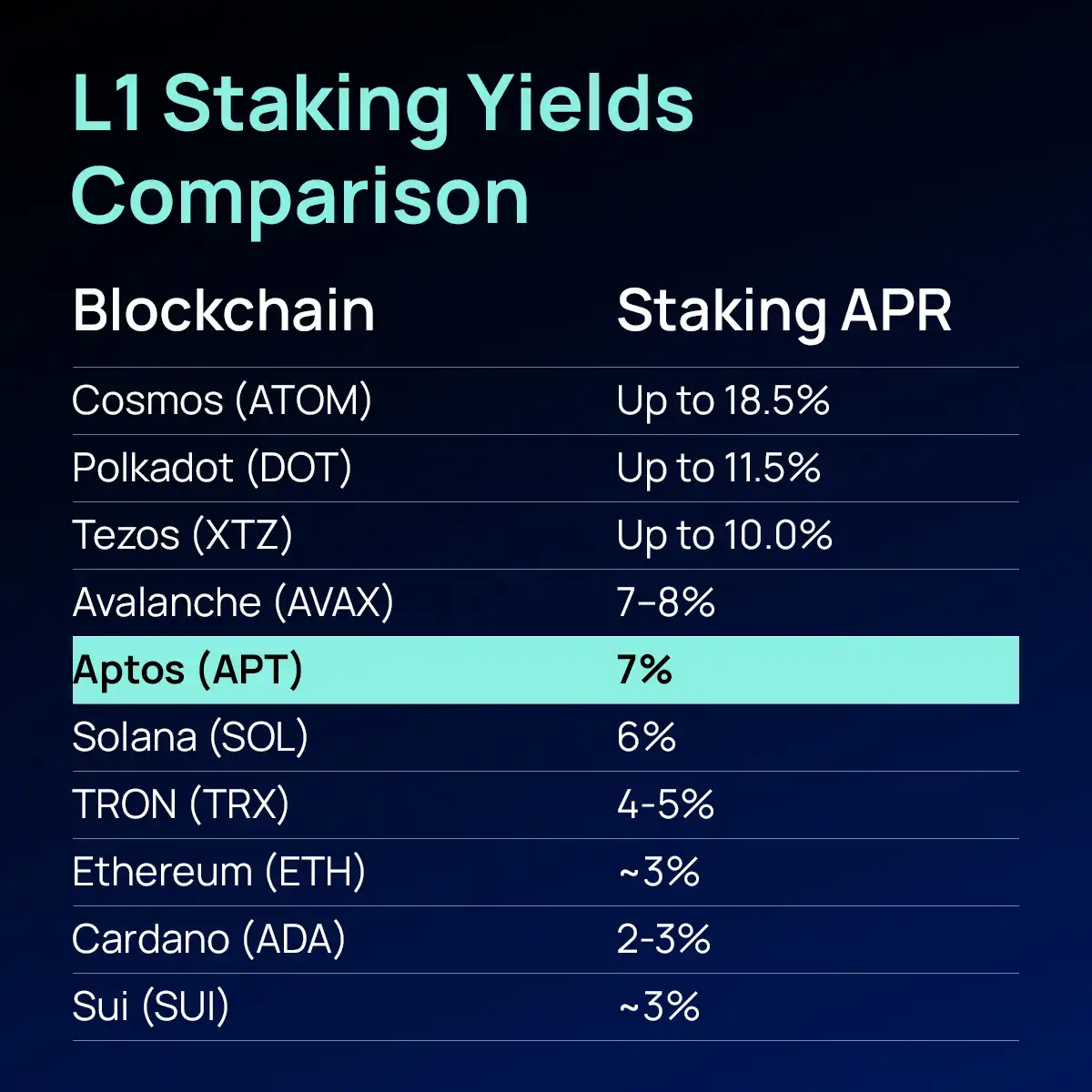
社区普遍认为,这种模式正不断稀释代币价值,也阻碍了生态资金向更具风险与创新性的应用流动。正如提案发起人所比喻,质押奖励在链上扮演了「央行利率」的角色,而此刻的「利率」可能已偏离了市场实际。
在过去两年间,Aptos 虽以超高性能和 Move 语言的安全性吸引了开发者,但生态活跃度始终未能与之匹配。与此同时,与其同为「Move 双子星」的 Sui 持续走强,形成鲜明对比。
许多社区成员将此归因于 Aptos 代币模型的结构性问题——高比例代币集中在基金会与核心节点手中,叠加早期设定的高质押收益,使得生态资金过度集中于「躺赚」,反而抑制了建设性创新。
新官上任三把火
提案的提出背景,是 Aptos 近期在管理层与市场定位上的一系列变化。据社区消息,Aptos 创始人 Mo Shaikh 与早期成员有法律争议,最终结果是华裔 Avery Ching 接任 Aptos Labs CEO(原为 CTO),Mo Shaikh 退出日常管理。
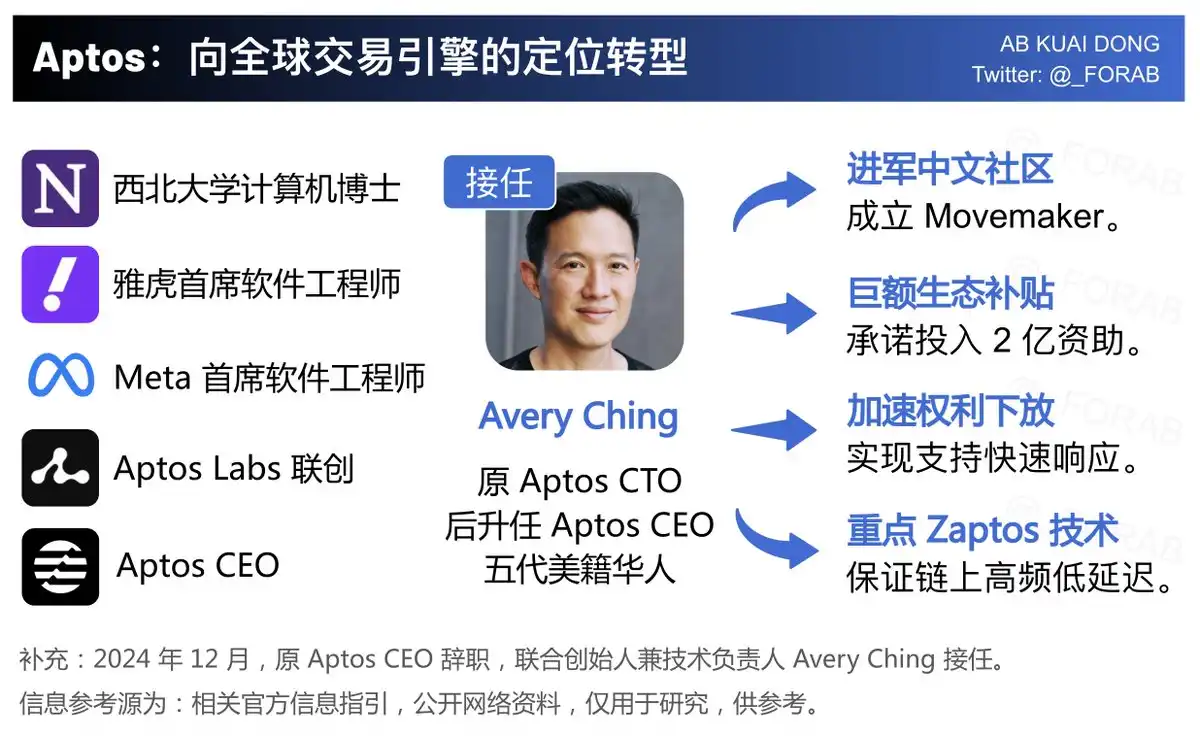
在他上任后,Aptos 的战略叙事也从「可扩展 L1」转向「下一代全球交易引擎」,更明确强调性能与交易体验为核心竞争力。
更为显著的是,Aptos 重新拥抱华语市场的姿态:设立中文社区 MovemakerCN、举办多场黑客松并提供千万美元级别的生态资助,显示出其重新构建社区信任与拓展全球开发者网络的决心。
技术上,Aptos 也不断推进 Zaptos 升级与 Block-STM v2 等性能优化,希望在「低收益高性能」的新生态中吸引开发者以真实需求驱动的 PMF(产品市场契合)为核心重建繁荣。
社区怎么看?
尽管 AIP-119 的提出触碰了既得利益者的蛋糕,社区整体反馈却未陷入情绪化对抗。相反,包括最大流动质押协议 Amnis Finance 在内的多方意见表现出较为理性的审视与反馈。Amnis 在公开回应中指出,当前提案方向合理,但执行节奏过于激进,可能损害 Aptos 的竞争力。他们认为,质押收益率类似于新兴市场的利率工具,对于 Aptos 这样的公链而言,高收益是吸引资本的关键。
若降至 3.79%,Aptos 将在 L1 阵营中处于收益最低梯队,可能导致资金流向 Solana 或美国国债等更高回报的选项。此外,反对者担忧,收益骤降会削弱散户的锁仓动力,增加 APT 的市场流通量,从而加剧抛压。DeFi 生态也可能因杠杆质押策略的萎缩而面临 TVL 下滑的风险。
针对验证节点,反对者指出,收益率降低将显著影响小型节点的盈利能力。以 100 万 APT 的质押量为例,3.79% 的收益率和 7% 的佣金仅带来约 13,000 美元的年收入,而运营成本可能高达 72,000 至 96,000 美元。这可能迫使小节点退出,加剧网络的中心化风险。为此,提案中提到的社区验证者支持计划成为关注的焦点,但具体实施方案尚未明确。
支持者则强调,Aptos 要走出当前困境,必须优先解决通胀预期和代币滥发问题。高收益质押机制制造的「信用幻觉」,正悄然侵蚀生态根基。每一轮价格反弹都沦为质押用户的「出货窗口」,形成价格天花板,这不仅扭曲了市场行为,也削弱了长期持有者的信心。
更值得关注的是,提案提出了「社区质押支持计划」,试图在降息之余,扶持质押量较小的验证节点,缓解去中心化程度下滑的风险。与其他 L1 如 Solana 采取的委托支持计划类似,Aptos 也开始正视其网络安全与去中心化之间的微妙平衡。
生态进化的拐点
AIP-119 更深层的意义,是 Aptos 在面对市场周期性衰退、DeFi 流动性下降和「高 APY 陷阱」后,对其经济模型与生态机制做出的主动调整。在当前 L1 公链普遍「增发-质押-通胀」的恶性循环中,Aptos 成为罕见主动压缩基础收益、释放长期潜力的尝试者。
这也引发了更深层的讨论:是否一条链的健康发展,必须以牺牲无风险利率为代价?是否「高 APY=强吸引力」的逻辑,正在失效?真正的竞争力来自网络效用和生态持续性,而非短期激励。正如 Hashkey Capital 成员 Rui 所指出的那样,「验证节点的基础收益率不能高,通过 LST 赚 Mev 的钱增加收益率,通过 DeFi 和生态给大户更多的对网络的 ownership,其次是进入退出随意(APT 搞了 Delegators Pool)。」
AIP-119 仍处于草案阶段,但它或许已成为 Aptos 摆脱沉疴、重新定义经济模型的一个重要节点。在这个决策上,Aptos 选择的不只是数字的调整,更是一次集体治理机制的再验证,以及对「长期主义」价值的公开宣示。
当然,降低质押收益的同时,Aptos 需要提供更清晰、更具吸引力的替代激励方案,否则短期资金出逃与社区信任损失将不可避免。但至少,从「自断一臂」到「重塑生态」,这条链开始试图回答那个被反复提出却少有项目认真面对的问题:我们究竟是为了什么而设计这套系统?
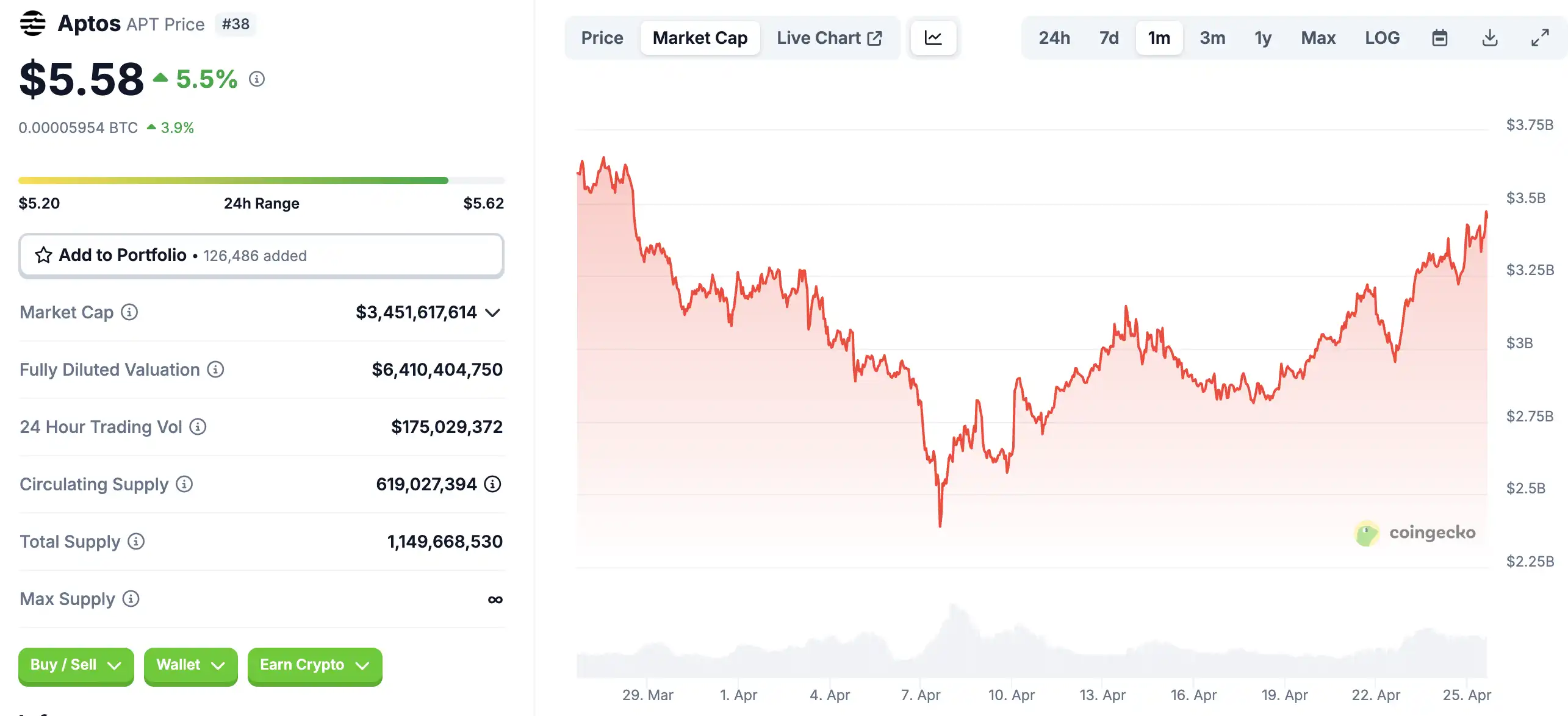
截至撰稿时,APT 代币价格为 5.58 美元,24 小时上涨 5.5%;4 月以来,较市场大跌期间币价回升明显。
You may also like

Consumer-grade Crypto Global Survey: Users, Revenue, and Track Distribution

Prediction Markets Under Bias

Stolen: $290 million, Three Parties Refusing to Acknowledge, Who Should Foot the Bill for the KelpDAO Incident Resolution?

ASTEROID Pumped 10,000x in Three Days, Is Meme Season Back on Ethereum?

ChainCatcher Hong Kong Themed Forum Highlights: Decoding the Growth Engine Under the Integration of Crypto Assets and Smart Economy

Why can this institution still grow by 150% when the scale of leading crypto VCs has shrunk significantly?

Anthropic's $1 trillion, compared to DeepSeek's $100 billion

Geopolitical Risk Persists, Is Bitcoin Becoming a Key Barometer?

Annualized 11.5%, Wall Street Buzzing: Is MicroStrategy's STRC Bitcoin's Savior or Destroyer?

An Obscure Open Source AI Tool Alerted on Kelp DAO's $292 million Bug 12 Days Ago

Mixin has launched USTD-margined perpetual contracts, bringing derivative trading into the chat scene.
The privacy-focused crypto wallet Mixin announced today the launch of its U-based perpetual contract (a derivative priced in USDT). Unlike traditional exchanges, Mixin has taken a new approach by "liberating" derivative trading from isolated matching engines and embedding it into the instant messaging environment.
Users can directly open positions within the app with leverage of up to 200x, while sharing positions, discussing strategies, and copy trading within private communities. Trading, social interaction, and asset management are integrated into the same interface.
Based on its non-custodial architecture, Mixin has eliminated friction from the traditional onboarding process, allowing users to participate in perpetual contract trading without identity verification.
The trading process has been streamlined into five steps:
· Choose the trading asset
· Select long or short
· Input position size and leverage
· Confirm order details
· Confirm and open the position
The interface provides real-time visualization of price, position, and profit and loss (PnL), allowing users to complete trades without switching between multiple modules.
Mixin has directly integrated social features into the derivative trading environment. Users can create private trading communities and interact around real-time positions:
· End-to-end encrypted private groups supporting up to 1024 members
· End-to-end encrypted voice communication
· One-click position sharing
· One-click trade copying
On the execution side, Mixin aggregates liquidity from multiple sources and accesses decentralized protocol and external market liquidity through a unified trading interface.
By combining social interaction with trade execution, Mixin enables users to collaborate, share, and execute trading strategies instantly within the same environment.
Mixin has also introduced a referral incentive system based on trading behavior:
· Users can join with an invite code
· Up to 60% of trading fees as referral rewards
· Incentive mechanism designed for long-term, sustainable earnings
This model aims to drive user-driven network expansion and organic growth.
Mixin's derivative transactions are built on top of its existing self-custody wallet infrastructure, with core features including:
· Separation of transaction account and asset storage
· User full control over assets
· Platform does not custody user funds
· Built-in privacy mechanisms to reduce data exposure
The system aims to strike a balance between transaction efficiency, asset security, and privacy protection.
Against the background of perpetual contracts becoming a mainstream trading tool, Mixin is exploring a different development direction by lowering barriers, enhancing social and privacy attributes.
The platform does not only view transactions as execution actions but positions them as a networked activity: transactions have social attributes, strategies can be shared, and relationships between individuals also become part of the financial system.
Mixin's design is based on a user-initiated, user-controlled model. The platform neither custodies assets nor executes transactions on behalf of users.
This model aligns with a statement issued by the U.S. Securities and Exchange Commission (SEC) on April 13, 2026, titled "Staff Statement on Whether Partial User Interface Used in Preparing Cryptocurrency Securities Transactions May Require Broker-Dealer Registration."
The statement indicates that, under the premise where transactions are entirely initiated and controlled by users, non-custodial service providers that offer neutral interfaces may not need to register as broker-dealers or exchanges.
Mixin is a decentralized, self-custodial privacy wallet designed to provide secure and efficient digital asset management services.
Its core capabilities include:
· Aggregation: integrating multi-chain assets and routing between different transaction paths to simplify user operations
· High liquidity access: connecting to various liquidity sources, including decentralized protocols and external markets
· Decentralization: achieving full user control over assets without relying on custodial intermediaries
· Privacy protection: safeguarding assets and data through MPC, CryptoNote, and end-to-end encrypted communication
Mixin has been in operation for over 8 years, supporting over 40 blockchains and more than 10,000 assets, with a global user base exceeding 10 million and an on-chain self-custodied asset scale of over $1 billion.

$600 million stolen in 20 days, ushering in the era of AI hackers in the crypto world
Vitalik's 2026 Hong Kong Web3 Summit Speech: Ethereum's Ultimate Vision as the "World Computer" and Future Roadmap
On the same day Aave introduced rsETH, why did Spark decide to exit?
Full Post-Mortem of the KelpDAO Incident: Why Did Aave, Which Was Not Compromised, End Up in Crisis Situation?

After a $290 million DeFi liquidation, is the security promise still there?
ZachXBT's post ignites RAVE nearing zero, what is the truth behind the insider control?




 App
App