
Three-Day 54% Surge: Where Does SUI's Growth Momentum Come From?




Original Title: "SUI Surges 54% in Three Days! DeFi Craze + Capital Frenzy, Is $4 Just the Beginning?"
Original Author: Lawrence, Mars Finance
SUI Against the Trend: Value Awakening Driven by Technology, Ecosystem, and Capital Synergy
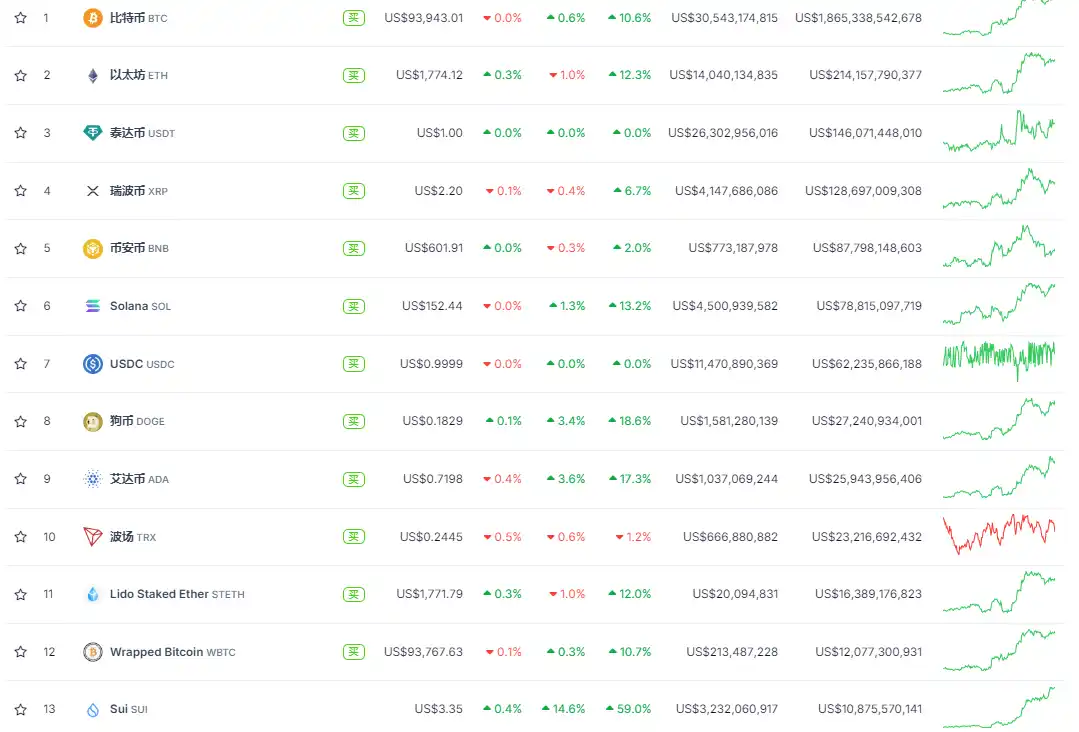
On April 25, 2025, the SUI token surged a staggering 54% over three days to break through $3.39, with the total on-chain value locked reaching $11 billion, making it the only project among the top 20 tokens by market capitalization to break historical resistance levels.
Key Data Comparison (as of April 25):
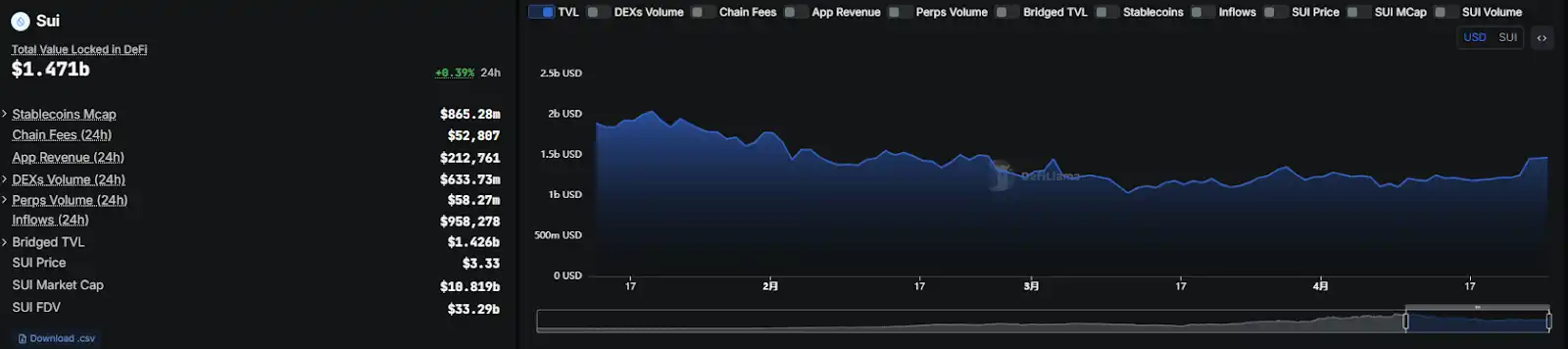
· TVL Growth: The Sui Network's total value locked (TVL) reached $14.6 billion, with a weekly growth rate of 10%, far exceeding Solana (+3.2%) and Avalanche (-1.8%) during the same period.
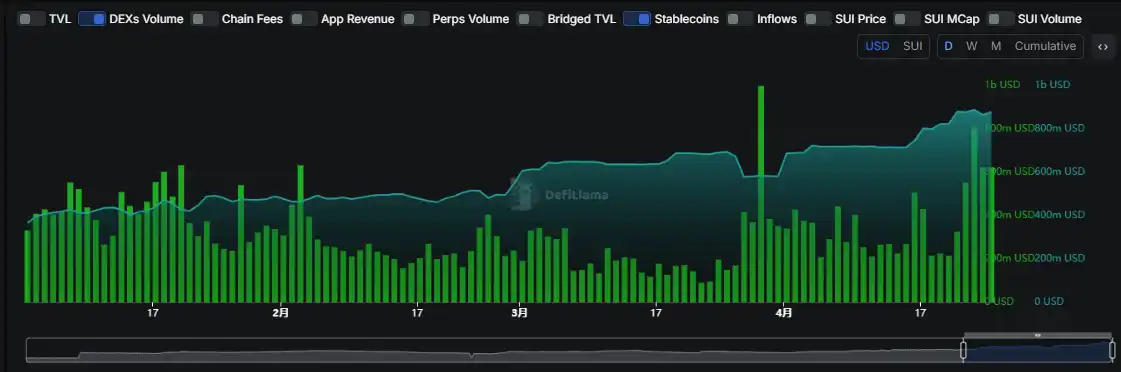
· Stablecoin Ratio: On-chain stablecoin market value surpassed $8.8 billion, with USDC holding a market share of 71%, and liquidity depth increased by 200% compared to three months ago
· DEX Surge: Daily DEX trading volume exceeded $620 million, weekly DEX trading volume reached $2.77 billion, 8 times higher than the market average, with meme coins contributing over 60% of the trading volume.
Behind this "divergent growth" is a new ecological paradigm built by Sui—a triple-engine breakthrough from foundational protocol to application ecosystem through technological stack refactoring, capital synergy, and community fission.
Technological Revolution: Operating System-level Architecture of Public Chain 3.0 Era
Sui's technical architecture is far from a traditional linear upgrade of public chains; it is a restructuring of blockchain architecture based on the concept of a "full-stack operating system":
1. Paradigm Shift of Consensus Mechanism
Mysticeti V2 Engine: Using a DAG (Directed Acyclic Graph) structure, it compresses the confirmation time of shared object transactions to 0.25 seconds, with a tested TPS throughput exceeding 120,000. This makes Sui the first public chain to support high-frequency quantitative trading, with DeepBook order book slippage reduced by 40% compared to Uniswap V4.Remora Sharding Mechanism: By splitting the validation node tasks into computing, storage, and verification modules, linear scalability is achieved. In the testnet environment, adding each group of node clusters increases TPS by 43,000.
2. Disruptive Breakthrough in Storage Layer
Walrus Distributed Network: As the first programmable storage sidechain, it uses erasure coding technology to reduce storage costs to 10% of traditional solutions. In its first month online, the mainnet hosted a 200TB AI training dataset, providing infrastructure for compute-intensive projects like Render Network.SEAL Dynamic Encryption Protocol: Achieving NFT content hierarchical authorization, Warner Music has released dynamic music NFTs based on this technology, with over 120 million plays.
3. Inter-Generational Leap in Developer Experience
· Move Prover Smart Verification: By formal verification, the contract vulnerability rate is reduced to 0.3%, a 5x improvement in security compared to Solidity.· RPC 2.0 Response System: A GraphQL-based query system compresses data call latency to within 50ms. Paired with Bugdar AI audit tools, development efficiency is tripled. This technological architecture has freed Sui from the "performance-decentralization" dichotomy. Artemis data shows that its active validating nodes reach 297, far exceeding Solana's 183, truly achieving both high performance and decentralization.
Ecosystem Eruption: Flywheel Effect of Multi-Track Collaboration
The Sui ecosystem has formed a complete matrix of "Infrastructure-Middleware-Application Layer," with each track showing a synergistic explosive trend:
1. Institutionalization Transformation of DeFi
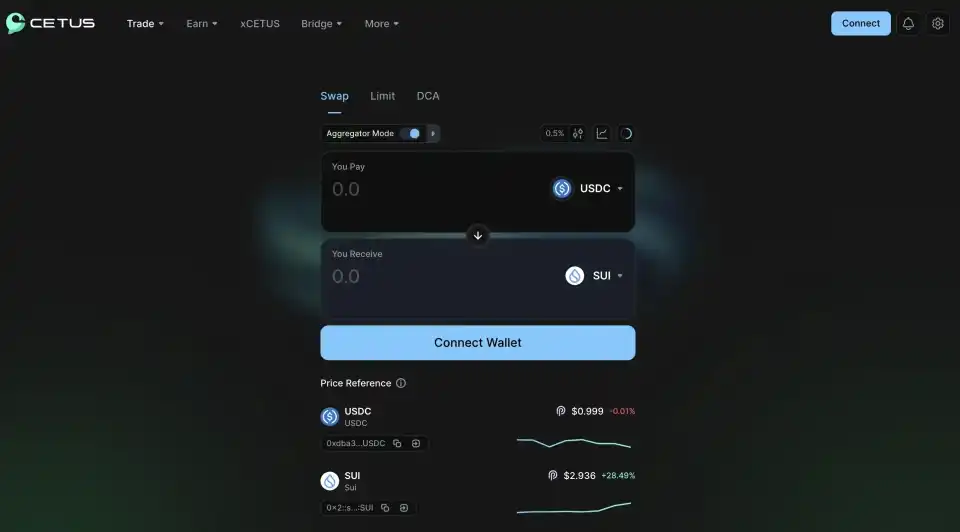
· Cetus Protocol: A liquidity aggregation protocol deeply integrated with DeepBook, stabilizing million-dollar trade slippage to within 0.3%. It has attracted top-tier market makers like Jump Crypto to settle, and the platform's token CETUS has seen a monthly increase of 180%.
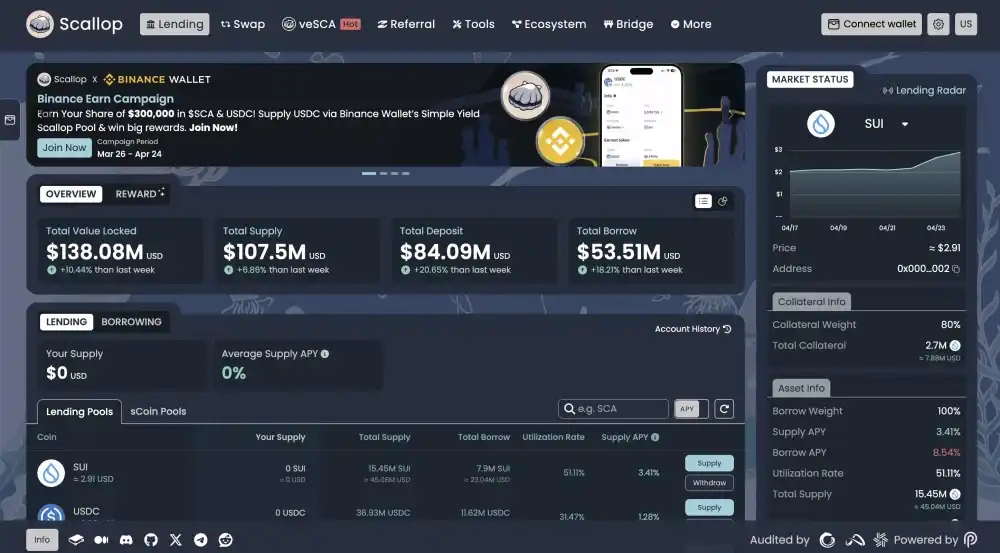
· Scallop Cross-Chain Hub: Through modular design, it supports seamless circulation of assets on 20 chains. Its "yield layering" mechanism has led stablecoin deposit APY to reach 15%, with TVL surpassing $500 million.
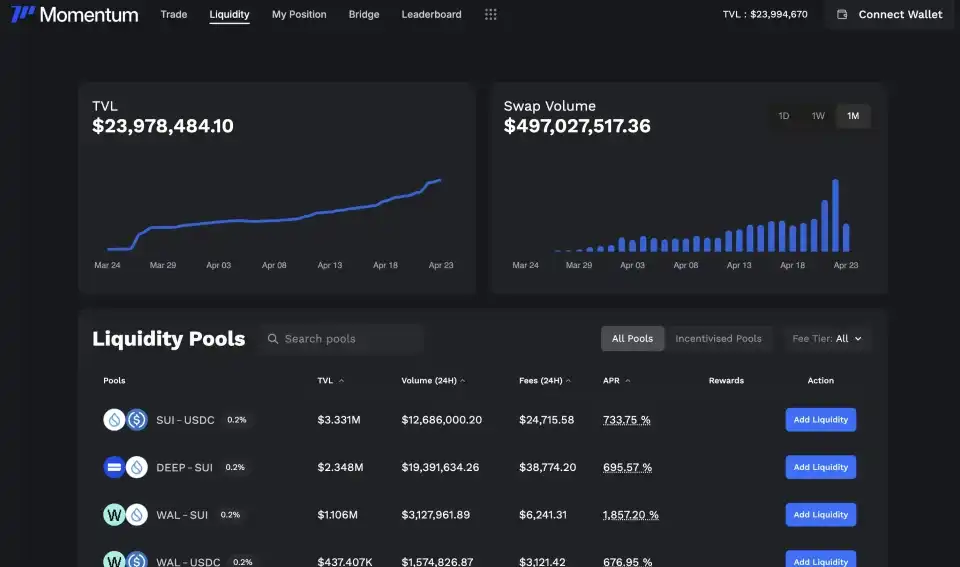
· Momentum Stablecoin Platform: The algorithmic stablecoin and over-collateralization hybrid mechanism achieve a daily average trading volume of $120 million, becoming a cornerstone of liquidity in the Sui DeFi ecosystem.
2. The Traffic Inflection Point of Meme+AI
· LOFI/BLUB Phenomenon: The single-day price surges of two major Meme coins reached 124% and 100% respectively, driving the on-chain active addresses to exceed 1.7 million. Its success stems from Sui's unique Gas Fee Subsidy Mechanism, keeping the cost of small transactions stable at $0.01
· RockeeAI: A DeFi protocol integrating natural language processing, achieving "Voice Command Trading" functionality. The social media sentiment analysis module covers 2000+ communities with a prediction accuracy of 78%
· Zeromorph Perpetual Contract: The AI Agent SDK supports users in training personalized strategies, and the "Risk Hedging Engine" reduces the liquidation rate to one-third of the industry average
3. Ecological Expansion of Hardware Breakthroughs
· SuiPlay0X1 Gaming Handheld: Deep integration of hardware with the blockchain gaming ecosystem, where 62% of the 700,000 pre-orders are from traditional gamers. This device supports seamless acquisition of NFT equipment, leading to a 300% surge in the number of Sui gaming DApps
· Sui Frens Dynamic NFT: Real-time interaction of NFT attributes through a gene mutation algorithm, with the floor price of rare editions surpassing 420 SUI. The minting volume has seen a 470% week-over-week growth
· This multi-dimensional outbreak forms an ecological flywheel: Technological superiority attracts developers → Rich applications enhance user retention → Capital inflow strengthens liquidity → Feedback into technological iteration.
Capital Resonance: Traditional Powers Entering to Reframe Valuation Logic
The essence of Sui's value reassessment is the mainstream capital's repricing of Web3 infrastructure:
1. Three Steps of Institutional Entry
· ETF Breakthrough: Canary Capital submitted the first SUI ETF application, with VanEck predicting a $3.5 billion incremental fund inflow upon approval
· RWA Layout: Collaborating with Franklin D. Roosevelt to build a tokenization platform, managing the on-chainization of $15 trillion in traditional assets
· Compliance Breakthrough: Obtaining the Dubai VARA license, becoming the first compliant public chain in the Middle East, with the Abu Dhabi Sovereign Wealth Fund allocating $230 million
2. Liquidity Structural Transformation
· Stablecoin Leverage: The USDC circulation increased by 7.77% weekly, with institutions conducting cross-chain arbitrage through the CCTP protocol, with a daily average arbitrage scale exceeding $80 million
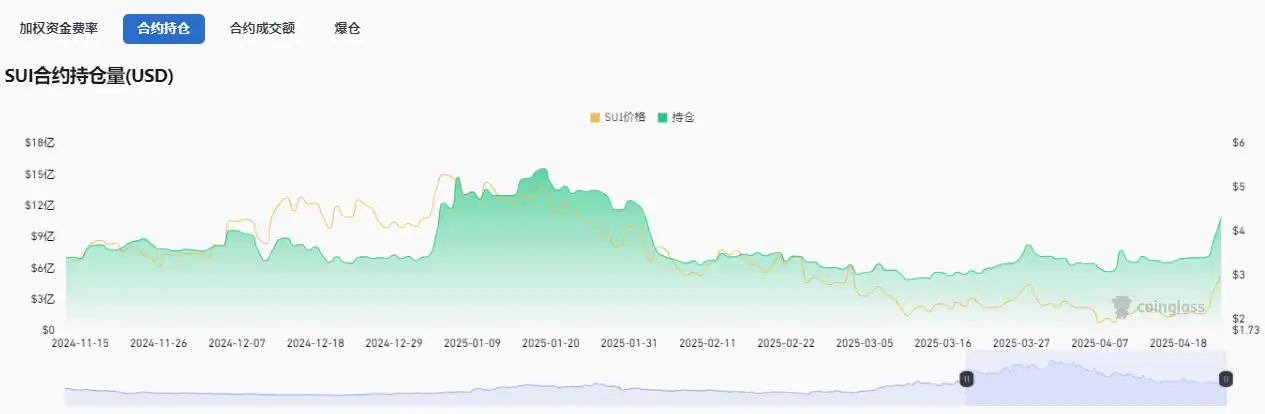
Sui Network-wide Contract Position Surpasses $1.1 Billion
· Contract Position Anomaly: Coinglass data shows a 320% weekly increase in the call option open interest at a $3.5 strike price, with the market betting on a breakout above $4 in May
3. Disruption of Valuation Models
Traditional public chain valuations often adopt Metcalfe's Law (Value∝Number of Users²), while Sui's full-stack capability has spawned the "Metcalfe-Ziff Composite Model":
· Valuation = Number of Developers × (Number of DApps + TVL)^1.5
· According to this model, Sui's current valuation should reach $20 billion, indicating an 80% upside potential from the current price.
· This expectation is supported by on-chain data: the current SUI chain adds 17 new DApps daily, which is 2.3 times that of Solana, signaling an exponential growth stage in network effects.
Conclusion: The Second Half of Public Chain Competition Begins
The rise of SUI marks the entry of blockchain competition into the era of "full-stack capabilities." While other public chains are still grappling with TPS figures, Sui has quietly completed its comprehensive layout from the protocol layer to the application layer, from the online ecosystem to offline hardware. Through the triple resonance of technological depth, capital strength, and ecosystem breadth, Sui is rewriting the fundamental rules of Web3.
The essence of this value reconfiguration is the evolution of blockchain from a "financial experimental field" to a "digital economic operating system." When SUI Play0X1 handheld devices begin to appear in the hands of subway passengers, when Warner Music fans go crazy for dynamic NFTs, we may be witnessing the true "breakout moment" of blockchain technology. Perhaps this feast has just begun.
You may also like

Morning Report | Secret Network loses $4.67 million due to cross-chain vulnerability; Michael Saylor releases Bitcoin Tracker information again, may disclose increased holdings data next week

Kalshi's biggest competitor is not Polymarket

The second half of the computing power battle: Intel CEO Pat Gelsinger reveals how AI is reshaping the global semiconductor supply chain
B.AI partners with MiniMax to launch a limited-time free experience of M3, enabling zero-threshold implementation of Agentic productivity through full-stack infrastructure

A company that was on the verge of bankruptcy has just surpassed Bitcoin in market value

The two giants are racing in "credit": loan balances of 9.9 billion vs 14.6 billion USD, Brazil has become the main battlefield

Rented Belief: How Much of the Bitcoin ETF Fund Flow is Real Money

On-chain finance: On-chain IPOs and on-chain ICOs, a new frontier in the trillion-dollar market

WEEX Live mode: Monitor 20 trading pairs at once and trade like a pro

WEEX Makes Affiliate Access Easier on the Web and in the App

Customize Your Spot Trading Page: Drag Modules and Move the Order Panel Where You Want It

Perp DEX: The Next Generation Exchange "War"

10 Counterintuitive Insights on Latin American Payments

The AI gamble of mining companies: Valuations enter a phase of differentiation, and it's hard to turn the tide
A letter from Alliance to entrepreneurs: Written on the occasion of Cursor selling for 60 billion dollars
Stablecoins Finally Find Real Returns: On-Chain Reinsurance Re Explained | Interview with Re Founder Karan Saroya

The impossible triangle is simply a pseudo problem

Will MicroStrategy fall into a death spiral? What will the macro trend be in the second half of the year?
Morning Report | Secret Network loses $4.67 million due to cross-chain vulnerability; Michael Saylor releases Bitcoin Tracker information again, may disclose increased holdings data next week
Kalshi's biggest competitor is not Polymarket
The second half of the computing power battle: Intel CEO Pat Gelsinger reveals how AI is reshaping the global semiconductor supply chain
B.AI partners with MiniMax to launch a limited-time free experience of M3, enabling zero-threshold implementation of Agentic productivity through full-stack infrastructure
A company that was on the verge of bankruptcy has just surpassed Bitcoin in market value
The two giants are racing in "credit": loan balances of 9.9 billion vs 14.6 billion USD, Brazil has become the main battlefield


