
 Buy Crypto
- Markets
 Futures
- Spot
- Copy Trade
- Earn
- More
Three Failures, Four Attempts: Why is Trump Obsessed with the "Crypto Billionaire"?


Original Article Title: "Monopoly Fan Donald Trump Makes Move into Blockchain Game, Another Play in Crypto Track"
Original Article Author: Zen, PANews
Known for his "businessman mindset," U.S. President Donald Trump has had a career spanning various fields, including real estate, reality TV, vodka, mortgages, the NFL, airline industry, bottled water, steaks, and even board games. His business empire has also been continuously expanding into the cryptocurrency industry — after making moves in the NFT, DeFi, stablecoin, memecoin, and crypto mining sectors, Trump has now extended his reach into the blockchain gaming field.
According to Fortune magazine citing two anonymous sources, Trump is working with business partner Bill Zanker to develop a real estate-themed crypto game centered around his brand, with gameplay similar to "Monopoly Go!" For this "veteran enthusiast" who launched a similar Monopoly-like board game thirty years ago, with the backing of blockchain and cryptocurrency, releasing a digital version of Monopoly is both unexpected yet seemingly anticipated, indeed bringing a new wave of excitement to the long-dormant blockchain gaming track.
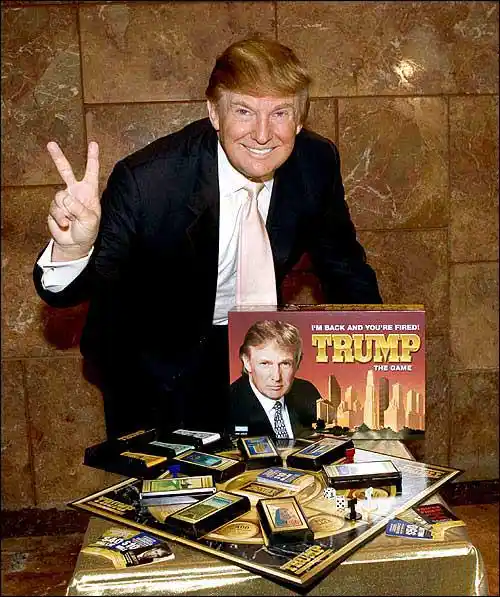
Real Estate Tycoon Trump: Monopoly Game Enthusiast
In May 1989, Donald Trump collaborated with the established board game company Milton Bradley to launch the board game "Trump: The Game," inspired by "Monopoly" and Trump's own real estate tycoon career. Milton Bradley's then-president, Milton Bradley, stated that the game was based on high-stakes gambles, trades, and Trump's bestselling 1987 book, "The Art of the Deal." Trump also filmed a TV commercial for the game and used the slogan, "It's not whether you win or lose, it's whether you win!"
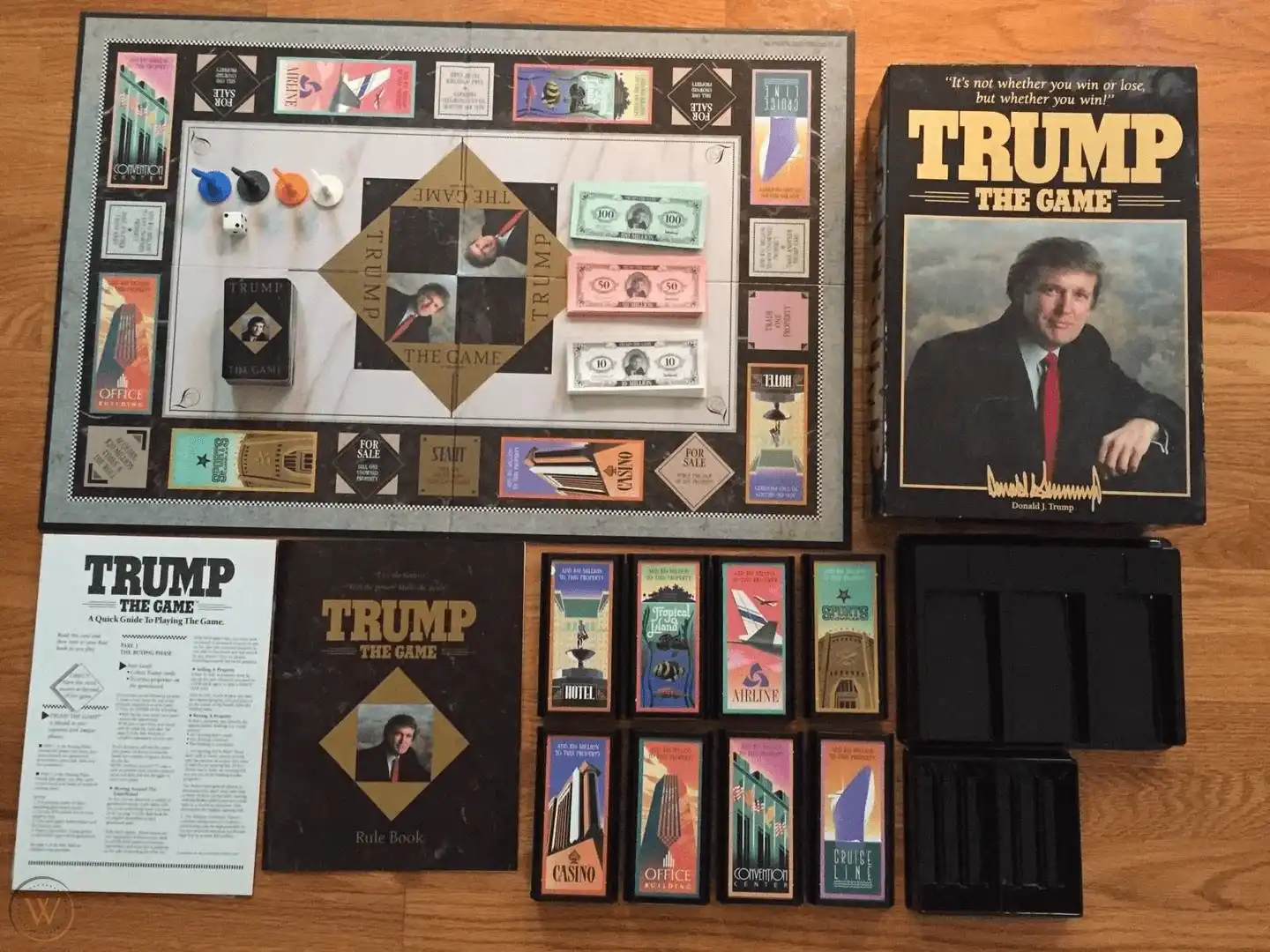
During a pre-launch rally for "Trump: The Game," Trump announced that he would donate an undisclosed portion of the game's revenue to charities supporting cerebral palsy and AIDS research, as well as aiding the homeless. Priced at $25, this board game had ambitious sales expectations, with Trump and Milton Bradley envisioning sales of 2 million units, but it only sold 800,000 units, far below expectations.
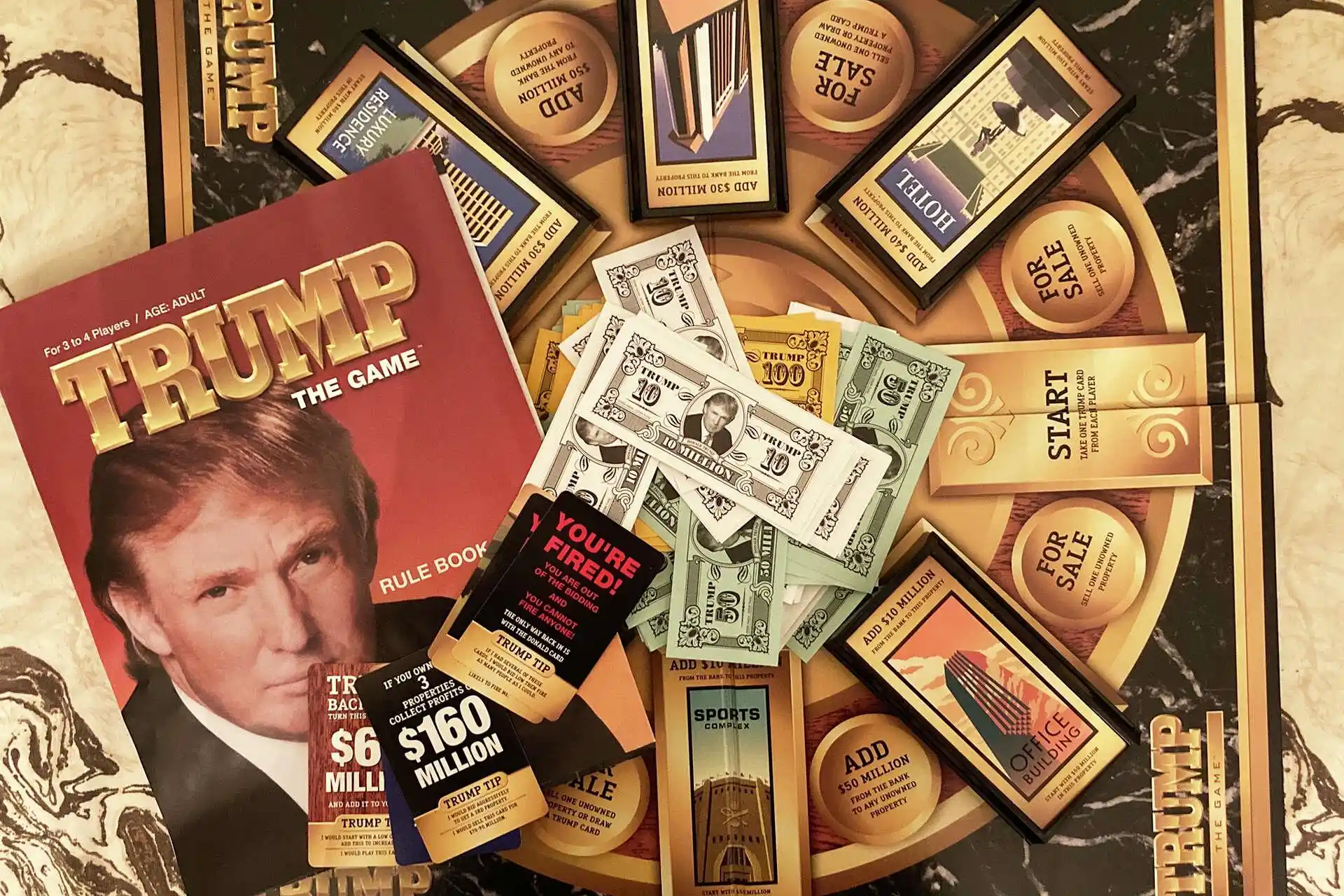
The reasons for its underperformance were twofold: firstly, due to the direct association with Trump's name, the game was easily perceived as a tool for the rich to capitalize on, with the public unaware of the charitable contributions; secondly, misleading marketing campaigns led people to believe it was a knockoff version of "Monopoly." Trump believed the main reason for the low sales was the overly complex design of the game, with a rulebook exceeding 12 pages and lacking mass appeal.
Despite subsequent advertisements specifically stating, "Mr. Trump's proceeds from 'Trump: The Game' will be donated to charity," the game continued to underperform in sales. Furthermore, a 2016 Huffington Post report stated that Trump's previous claim of donating board game earnings to charity could not be verified, with both Trump and related entities declining to comment on the matter.
In 2004, following the success of Trump's reality show The Apprentice, the Parker Brothers re-released "Trump: The Game." The new version introduced Trump's classic catchphrase from The Apprentice: "You're fired!" and featured the slogan "Making millions takes brains, making billions takes Trump." However, despite the Trump celebrity effect, this recycled game failed to make a splash.
It is worth noting that Milton Bradley was acquired by the toy and entertainment giant Hasbro in 1984 and merged with another Hasbro subsidiary, Parker Brothers, in 1998. The brand was later abandoned in 2009 in favor of using the parent company's name and eventually rebranded as Hasbro Gaming, so the IP of this Trump-licensed board game should belong to Hasbro.
"I've always thought Monopoly was a great game, and many people are interested in it." In 2006, Monopoly enthusiast Trump attempted to launch a primetime reality show based on Monopoly. Trump was set to collaborate with documentary filmmaker RJ Cutler, and Hasbro was to be part of the project. However, the plan quietly fell through during development, with no television network picking it up, and no official show title or episodes announced.
Over Thirty Years Later, Returning to the Monopoly Game Board with Cryptocurrency
Today, Trump is once again back in the Monopoly game but this time he has taken it to the blockchain.
According to Fortune, multiple sources have revealed that Trump is collaborating with his business associate Bill Zanker to develop a cryptocurrency-based real estate-themed game set to launch by the end of April this year. The game is an adaptation of "MONOPOLYGO!," where players move game pieces on a virtual Monopoly board and construct buildings in a digital city to earn game coins.
Insiders say that Zanker is the driving force behind this blockchain game project, originally planning to launch the project before the 47th president's inauguration ceremony. Zanker is considered the "trailblazer" for Trump's entry into the cryptocurrency industry, as it was his repeated suggestions that led to Trump's NFT project.
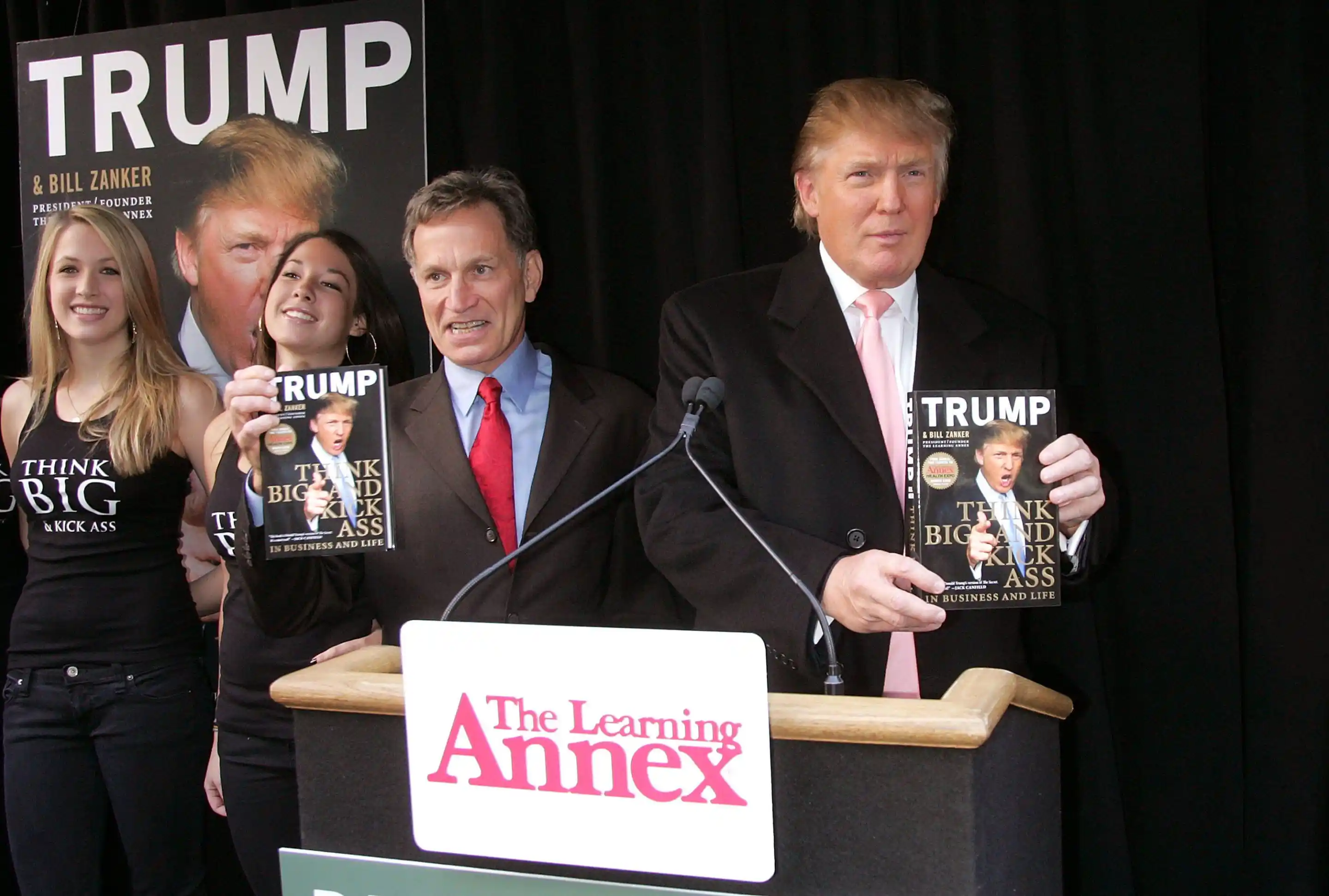
According to Zanker's recollection, when he suggested to Trump in early 2022 to launch an NFT, although Trump was quite interested in the idea of a "former president art image NFT," he was unwilling to use the term "NFT" and preferred to call it a "digital trading card on the computer." By the end of the same year, Zanker pushed for it again, and Trump promptly agreed, saying, "Many friends say I shouldn't do this, but I like it, so let's do it."
In Trump's memecoin project TRUMP, Zanker also plays a crucial role. According to the memecoin's website, after the TRUMP token ICO, the remaining tokens are held by CIC Digital LLC and Fight Fight Fight LLC, accounting for 80% of the total supply. In the registration documents of "Fight Fight Fight LLC," Zanker is listed as the main contact person.
Regarding the specific details of the crypto game project, Zanker's spokesperson Kevin Mercuri only revealed that they are developing a "game." Mercuri denied claims that this game would be similar to "Monopoly Go," stating that all such information is merely "rumors." Previously, the entity responsible for Trump's trademarks, DTTM Operations, applied to extend Trump's name to various virtual products and NFT-related services. However, Mercuri refused to disclose whether these trademark applications are directly related to the project and how blockchain functionality will be integrated into the gameplay.
Furthermore, there are doubts about whether the upcoming blockchain game will be based on the more than 30-year-old "Trump: The Game" that was previously released.
According to sources, in May of last year, Zanker contacted Hasbro, hoping to repurchase the IP of "Trump: The Game." Hasbro informed Zanker that they no longer hold the rights to this game, which has been around for over 30 years. However, according to Fortune, a spokesperson for Hasbro, the original developer of the Monopoly board game, stated that the company did not license the Monopoly IP to any Trump-affiliated organizations for cryptocurrency investment.
You may also like

ChainCatcher Hong Kong Themed Forum Highlights: Decoding the Growth Engine Under the Integration of Crypto Assets and Smart Economy

Why can this institution still grow by 150% when the scale of leading crypto VCs has shrunk significantly?

Anthropic's $1 trillion, compared to DeepSeek's $100 billion

Geopolitical Risk Persists, Is Bitcoin Becoming a Key Barometer?

Annualized 11.5%, Wall Street Buzzing: Is MicroStrategy's STRC Bitcoin's Savior or Destroyer?

An Obscure Open Source AI Tool Alerted on Kelp DAO's $292 million Bug 12 Days Ago

Mixin has launched USTD-margined perpetual contracts, bringing derivative trading into the chat scene.
The privacy-focused crypto wallet Mixin announced today the launch of its U-based perpetual contract (a derivative priced in USDT). Unlike traditional exchanges, Mixin has taken a new approach by "liberating" derivative trading from isolated matching engines and embedding it into the instant messaging environment.
Users can directly open positions within the app with leverage of up to 200x, while sharing positions, discussing strategies, and copy trading within private communities. Trading, social interaction, and asset management are integrated into the same interface.
Based on its non-custodial architecture, Mixin has eliminated friction from the traditional onboarding process, allowing users to participate in perpetual contract trading without identity verification.
The trading process has been streamlined into five steps:
· Choose the trading asset
· Select long or short
· Input position size and leverage
· Confirm order details
· Confirm and open the position
The interface provides real-time visualization of price, position, and profit and loss (PnL), allowing users to complete trades without switching between multiple modules.
Mixin has directly integrated social features into the derivative trading environment. Users can create private trading communities and interact around real-time positions:
· End-to-end encrypted private groups supporting up to 1024 members
· End-to-end encrypted voice communication
· One-click position sharing
· One-click trade copying
On the execution side, Mixin aggregates liquidity from multiple sources and accesses decentralized protocol and external market liquidity through a unified trading interface.
By combining social interaction with trade execution, Mixin enables users to collaborate, share, and execute trading strategies instantly within the same environment.
Mixin has also introduced a referral incentive system based on trading behavior:
· Users can join with an invite code
· Up to 60% of trading fees as referral rewards
· Incentive mechanism designed for long-term, sustainable earnings
This model aims to drive user-driven network expansion and organic growth.
Mixin's derivative transactions are built on top of its existing self-custody wallet infrastructure, with core features including:
· Separation of transaction account and asset storage
· User full control over assets
· Platform does not custody user funds
· Built-in privacy mechanisms to reduce data exposure
The system aims to strike a balance between transaction efficiency, asset security, and privacy protection.
Against the background of perpetual contracts becoming a mainstream trading tool, Mixin is exploring a different development direction by lowering barriers, enhancing social and privacy attributes.
The platform does not only view transactions as execution actions but positions them as a networked activity: transactions have social attributes, strategies can be shared, and relationships between individuals also become part of the financial system.
Mixin's design is based on a user-initiated, user-controlled model. The platform neither custodies assets nor executes transactions on behalf of users.
This model aligns with a statement issued by the U.S. Securities and Exchange Commission (SEC) on April 13, 2026, titled "Staff Statement on Whether Partial User Interface Used in Preparing Cryptocurrency Securities Transactions May Require Broker-Dealer Registration."
The statement indicates that, under the premise where transactions are entirely initiated and controlled by users, non-custodial service providers that offer neutral interfaces may not need to register as broker-dealers or exchanges.
Mixin is a decentralized, self-custodial privacy wallet designed to provide secure and efficient digital asset management services.
Its core capabilities include:
· Aggregation: integrating multi-chain assets and routing between different transaction paths to simplify user operations
· High liquidity access: connecting to various liquidity sources, including decentralized protocols and external markets
· Decentralization: achieving full user control over assets without relying on custodial intermediaries
· Privacy protection: safeguarding assets and data through MPC, CryptoNote, and end-to-end encrypted communication
Mixin has been in operation for over 8 years, supporting over 40 blockchains and more than 10,000 assets, with a global user base exceeding 10 million and an on-chain self-custodied asset scale of over $1 billion.

$600 million stolen in 20 days, ushering in the era of AI hackers in the crypto world
Vitalik's 2026 Hong Kong Web3 Summit Speech: Ethereum's Ultimate Vision as the "World Computer" and Future Roadmap
On the same day Aave introduced rsETH, why did Spark decide to exit?
Full Post-Mortem of the KelpDAO Incident: Why Did Aave, Which Was Not Compromised, End Up in Crisis Situation?

After a $290 million DeFi liquidation, is the security promise still there?
ZachXBT's post ignites RAVE nearing zero, what is the truth behind the insider control?

Vitalik 2026 Hong Kong Web3 Carnival Speech Transcript: We do not compete on speed; security and decentralization are the core
In-depth Analysis of RAVE Events: Short Squeeze, Crash, and Quantitative Financial Models of Liquidity Manipulation

Eve of Ceasefire, US Military Fires on Iranian Vessel | Rewire News Morning Brief

Figma's stock price drops over 7%, will Claude Design be the terminator?




 App
App