
 Buy Crypto
- Markets
 Futures
- Spot
- Copy Trade
- Earn
- More
Three Weeks of the US-Iran War: Who's Making Money, Who's Paying the Bill?


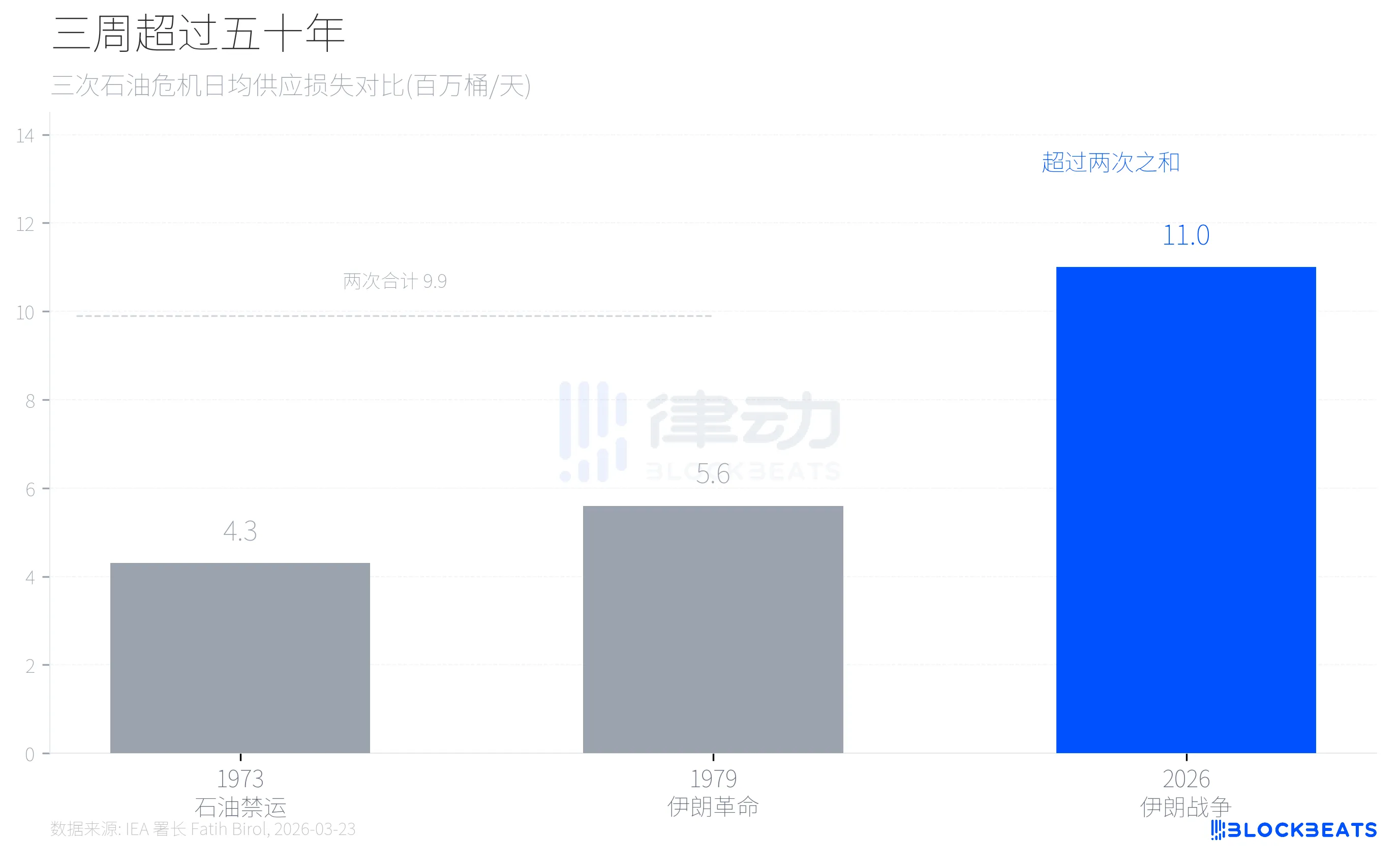
On February 28, the US and Israel launched a military strike against Iran. Iran then blocked the Strait of Hormuz, cutting off 20 million barrels of oil that pass through it daily. Three weeks later, IEA Director Fatih Birol gave a figure on March 23 at the National Press Club of Australia: the global daily oil supply loss caused by this war is 11 million barrels.
This figure surpasses the combined losses of the 1973 oil embargo and the 1979 Iran Revolution crises.
Energy infrastructure in more than 40 locations across 9 countries in the Middle East suffered varying degrees of damage. IEA data for the same period shows that global natural gas supply loss has reached 140 billion cubic meters, nearly double the loss of European natural gas (75 billion cubic meters) during the Russia-Ukraine conflict. In three weeks, the quantifiable impact of this conflict on the energy market has already exceeded that of the entire 1970s.
But supply loss is only half the story. The other half is that this crisis has clear beneficiaries.
Putin's Unexpected Harvest
Before the Iran war, Urals crude oil was trading at less than $60 a barrel. This price had been locked for nearly three years, a direct result of Western sanctions. After the Russia-Ukraine war broke out, the West imposed a price ceiling on Russian oil, and Urals crude maintained a discount of $30 to $40 compared to the international benchmark Brent for a long period. This discount was the most visible signal of the sanctions in effect.
The Iran war changed everything. After the closure of the Strait of Hormuz, a huge gap appeared in the global oil market, and buyers were forced to seek alternative supply. According to data from the Center for Energy and Clean Air (CREA), the total revenue from Russian fossil fuel exports in the first two weeks of March reached 7.7 billion euros, averaging 513 million euros per day, an 8.7% increase from February's 472 million euros. Of this, daily revenue from oil exports was 372 million euros, earning an additional 672 million euros (about 777 million USD) in the two weeks.
In three weeks, Urals crude oil rose from less than $60 to about $90, an increase of nearly 80%. According to Al Jazeera, energy analyst George Voloshin pointed out that during the same period, Brent also rose from about $65 to over $110, but the key is not the absolute price, but the price difference between the two. The discount between Urals and Brent significantly narrowed from around $40 pre-war. Moscow Times reported on March 16 that Urals crude delivered to India even saw a premium over Brent, something that had never happened since the sanctions took effect.
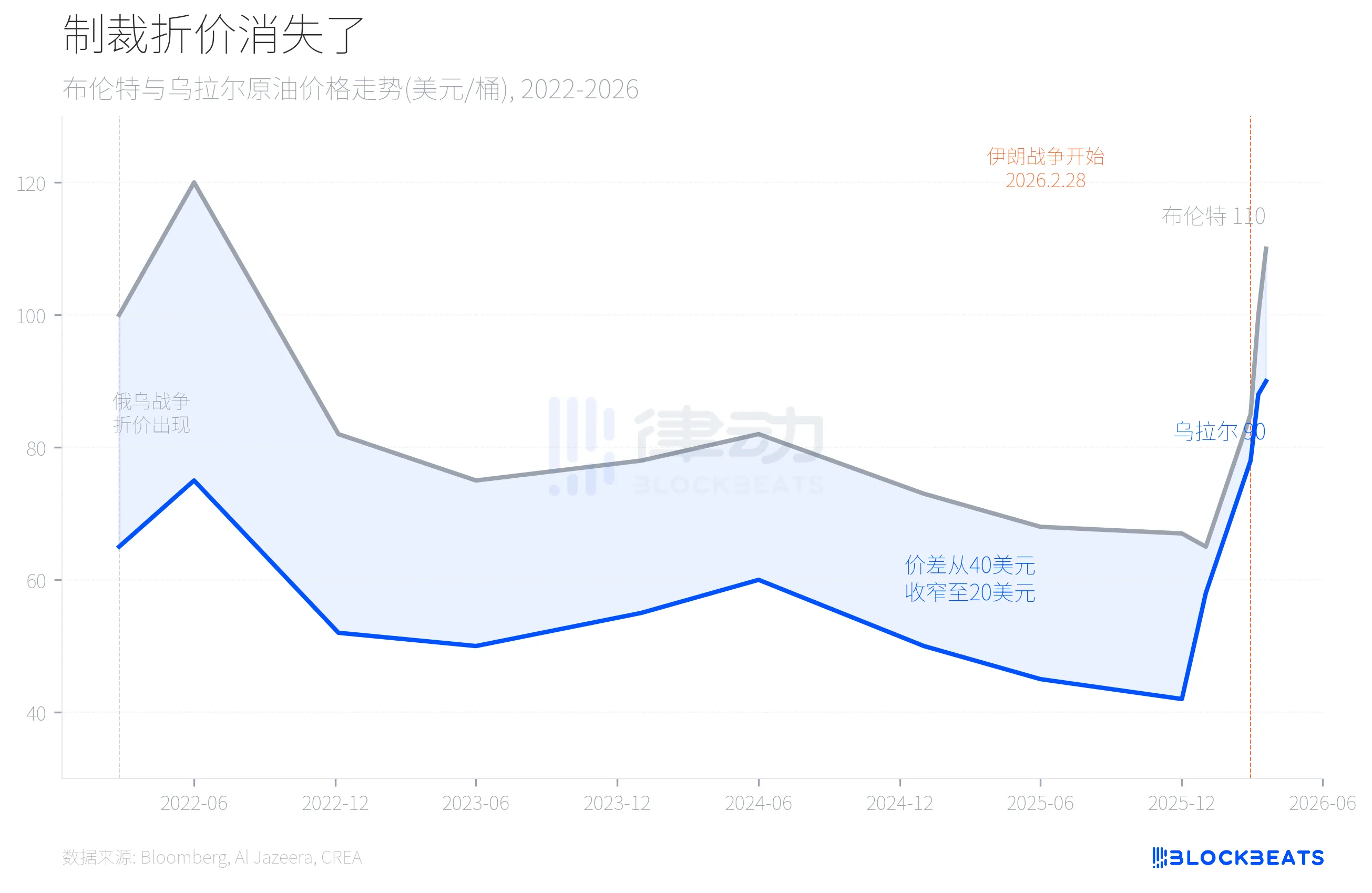
In other words, the three-year economic wall built by the West through sanctions was partially torn down by the three-week Iran War.
The Trump administration announced a 30-day sanction waiver on March 12, allowing countries to purchase Russian crude oil. Treasury Secretary Scott Bessent stated that this action would release approximately 140 million barrels of supply. However, analysts widely believe that the restriction on waivers that do not provide "significant financial benefits" is almost unenforceable. Meanwhile, the IEA announced the release of 400 million barrels from strategic petroleum reserves, the largest in history. This waiver is set to expire on April 11, ushering in a new round of market uncertainty.
India is the most direct actor in this scenario. CREA data shows that in the first two weeks of March, India's total purchases of Russian fossil fuels reached 1.3 billion euros, averaging 89 million euros per day, a 48% increase from February's daily average of 60 million euros. Al Jazeera reported that at least seven tankers originally headed for China changed course en route to India, with one vessel named Aqua Titan arriving at an Indian port on March 21. While the world is anxious about oil prices, the oil trade between Moscow and New Delhi is accelerating.
Who is footing the bill?
The losses on the supply side and the gains on the revenue side will ultimately be passed on to the consumer side. American consumers are the most direct bearers of this burden.
AAA data shows that the national average price of gasoline in the United States has risen from $2.98 before the war to $3.96 on March 23, a 33% increase. California has reached an average of $5.56, with even Kansas at a minimum of $3.23. The average diesel price is $5.07, the highest since 2022.
A Fortune report noted that this round of oil price hikes has coincidentally offset the tax refunds that American households have just received.
The aviation industry is one of the first sectors to feel the impact. Platts assessment data shows that U.S. jet fuel prices have risen over 60% in three weeks, doubling in some regions. United Airlines became the first major U.S. carrier to officially announce capacity cuts. CEO Scott Kirby stated in an internal memo that the company is preparing for oil prices to reach $175 per barrel, meaning annual fuel costs will increase by about $11 billion, more than double the profit of the company's "best year ever." United will cut 5% of its flights in the second and third quarters.
The impact is spreading globally. According to CNBC's March 21 report, Delta Air Lines has also warned of possible capacity cuts. Euronews reports that Qantas, SAS, and Thai Airways have raised prices, while Air New Zealand has canceled over 1,000 flights.
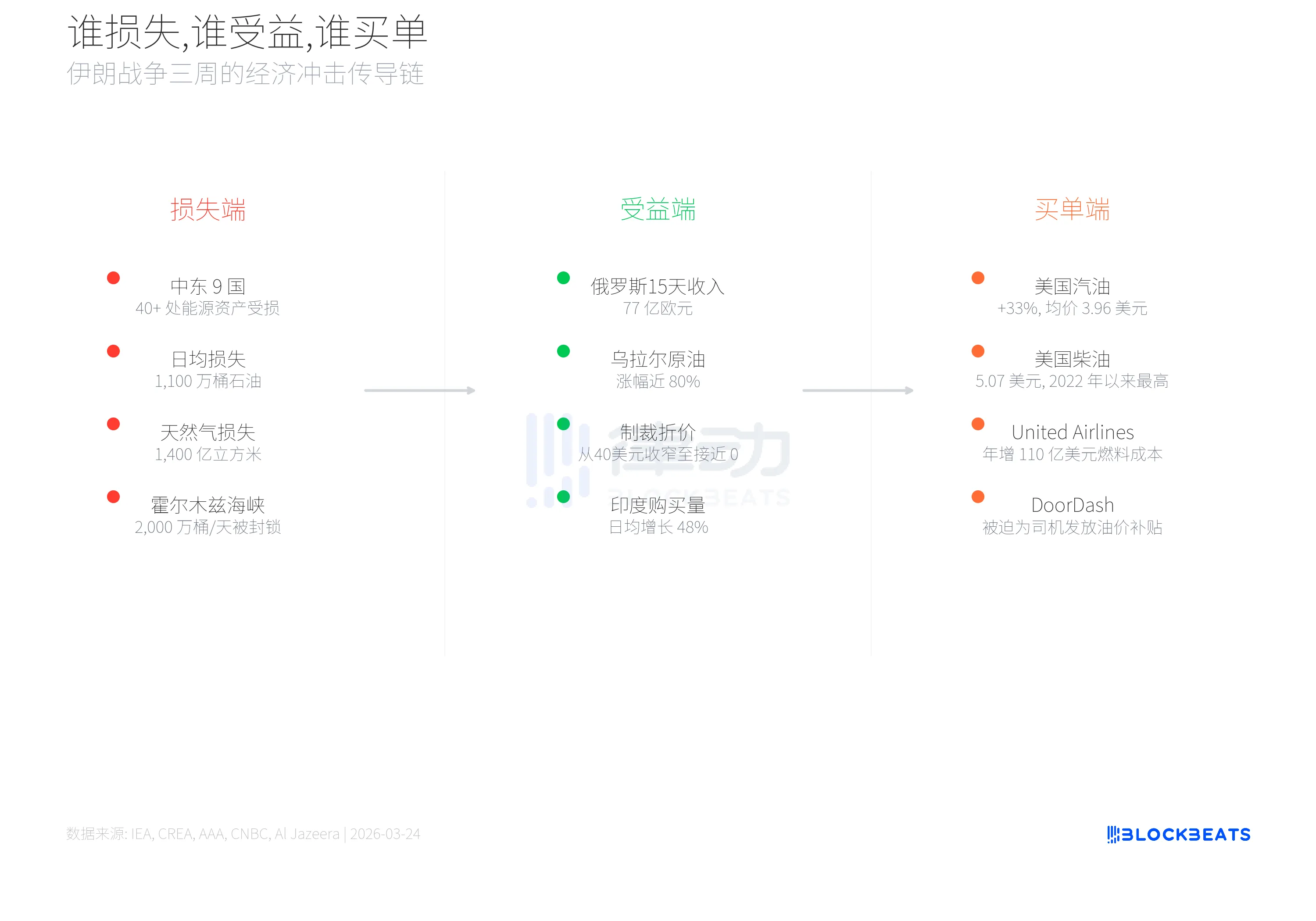
Even the gig economy is being affected. According to the Philadelphia Inquirer's March 23 report, DoorDash has started offering drivers weekly $5 to $15 fuel subsidies and a 10% fuel cashback to deal with a decrease in order acceptance due to rising fuel prices. When a food delivery platform has to foot the bill for a Middle East conflict, the length of the impact transmission chain needs no further explanation.
Three weeks into the Iran war, the world is losing 11 million barrels of oil per day, with Russia earning nearly $800 million extra in 15 days, U.S. consumers seeing a one-third hike in gasoline costs. After the April 11 sanction waivers expire, this transmission chain will further extend.
You may also like

Arthur Hayes New Post: It's "No Trade" Time Now

Claude Opus 4.7 Review: Is It Worthy of the Title of Strongest Model?

DWF In-Depth Report: AI Outperforms Humans in Yield Farming Optimization in DeFi, But Complex Transactions Still Lag Behind 5x
The financial tricks of the crypto giant Kraken

When proactive market makers start to take initiative

Massive Whale Movement: Unstaking $84.96 Million in HYPE Tokens
Key Takeaways A crypto whale, known as TechnoRevenant, has unstaked approximately $84.96 million in HYPE tokens. The tokens…

ListaDAO Addresses Third-Party Contract Vulnerability Concerns
Key Takeaways GoPlus Security revealed a vulnerability in a contract resembling those of ListaDAO. ListaDAO confirmed that their…

Security Risks of Fake Ledger Nano S+ Devices Emerging Through Chinese E-Commerce
Key Takeaways Counterfeit Ledger Nano S+ devices are being sold on Chinese e-commerce platforms, posing significant risks to…

Wave of Cyber Attacks Hits DeFi Protocols Post-Drift Hack
Key Takeaways A significant $280 million attack on Drift Protocol set off a chain of security breaches across…
Tom Lee Says ‘Mini Crypto Winter’ Is Over, Sees Ether Above $60K
Key Takeaways: Tom Lee predicts Ether’s resurgence, projecting it to surpass $60,000 in the coming years. Bitmine suffered…

French Government Tackles Rising Crypto Safety Concerns
Key Takeaways: France is intensifying measures to counter the surge in crypto kidnappings and wrench attacks. Since early…
Europe’s Bitcoin Treasury Playbook Unlikely to Mirror US Strategy: PBW 2026
Key Takeaways: European firms are adapting unique Bitcoin treasury strategies due to distinct financial regulations and market dynamics…
Circle Confronts Lawsuit Over $280M Drift Protocol Hack
Key Takeaways: Circle faces a lawsuit for allegedly aiding in the transfer of $230 million in stolen USDC.…
Bitcoin Faces ‘Near-Term Selling Pressure’ Following Surge to $76K: CryptoQuant
Key Takeaways: Bitcoin reaches a multi-month high of $76,000, prompting increased deposits to exchanges. CryptoQuant identifies a peak…

Ethereum Foundation Unveils North Korean Infiltration in Web3
Key Takeaways: The Ethereum Foundation’s ETH Rangers program exposed 100 North Korean operatives infiltrating Web3 companies. The Ketman…

Crypto in Sustained Winter as CEX Volumes Drop 39% in Q1
Key Takeaways: Centralized crypto exchange trading volume fell by 39% in Q1 2026 to $2.7 trillion. March saw…

Bitcoiners Should Prepare for Quantum Computing Now, Urges Adam Back
Key Takeaways: Adam Back emphasizes immediate steps toward quantum-resistant solutions for Bitcoin. Quantum computing may disrupt blockchain security…

Cybersecurity Alert: Counterfeit Ledger Devices on Chinese Market
Key Takeaways: Scammers distribute fake Ledger devices via Chinese marketplaces, risking user crypto assets. Victims of a related…
Arthur Hayes New Post: It's "No Trade" Time Now
Claude Opus 4.7 Review: Is It Worthy of the Title of Strongest Model?
DWF In-Depth Report: AI Outperforms Humans in Yield Farming Optimization in DeFi, But Complex Transactions Still Lag Behind 5x
The financial tricks of the crypto giant Kraken
When proactive market makers start to take initiative
Massive Whale Movement: Unstaking $84.96 Million in HYPE Tokens
Key Takeaways A crypto whale, known as TechnoRevenant, has unstaked approximately $84.96 million in HYPE tokens. The tokens…




 App
App