
 Buy Crypto
- Markets
 Futures
- Spot
- Copy Trade
- Earn
- More
Virtual All-in-One Doubles, Christmas Concept "Candlestick Chart on Tree" | What is today's meme?

Today, many hot tokens on the Solana leaderboard are Christmas-themed. As Christmas approaches, the market has entered a heated race, with many new tokens emerging. The Santa Claus token, Rizzmas, saw a rapid surge within 24 hours, with a market cap close to 1 billion USD; the GRINCH token, riding the wave of Rizzmas's popularity, experienced a fluctuating surge within two days, with its market cap peaking at 21 million USD; Chill GUY, through promotion on platforms like TikTok, maintained high popularity, leading Chill Grinch to ride the wave and experience a surge. Within four hours of its launch, the price had soared by a factor of 69.
Simultaneously, as the ecosystems of platforms like Solana and Base continue to expand, the popularity of AI agent platforms is also on the rise. The prices of platform tokens and agent tokens have been steadily rising, creating a highly dynamic overall market atmosphere.
Christmas: Hanging Candlestick Charts on the Christmas Tree
Rizzmas
Rizzmas is a Christmas-themed token, with Christmas falling on December 25th. Users hope for Rizzmas to reach a 1 billion market cap before Christmas. On the 28th, Rizzmas saw a rapid surge within 24 hours, approaching a 1 billion USD market cap. It now has over 140,000 wallet addresses, with over 20,000 being new inflows. The real buying volume in the last 24 hours exceeded 220,000. As a TikTok-related hype token, Rizzmas has demonstrated TikTok's strong promotional effect, serving as a harsh lesson for older projects.

Interestingly, as the price corrected, many CryptoTokkers (TikTok influencers and users) claimed on their live streams that they would stop when Rizzmas's volatility pushed the market cap to $100,000. Despite a price correction, RIZZMAS has shown a strong rebound, with some Tokkers believing it is preparing for the next surge, especially as Christmas approaches.
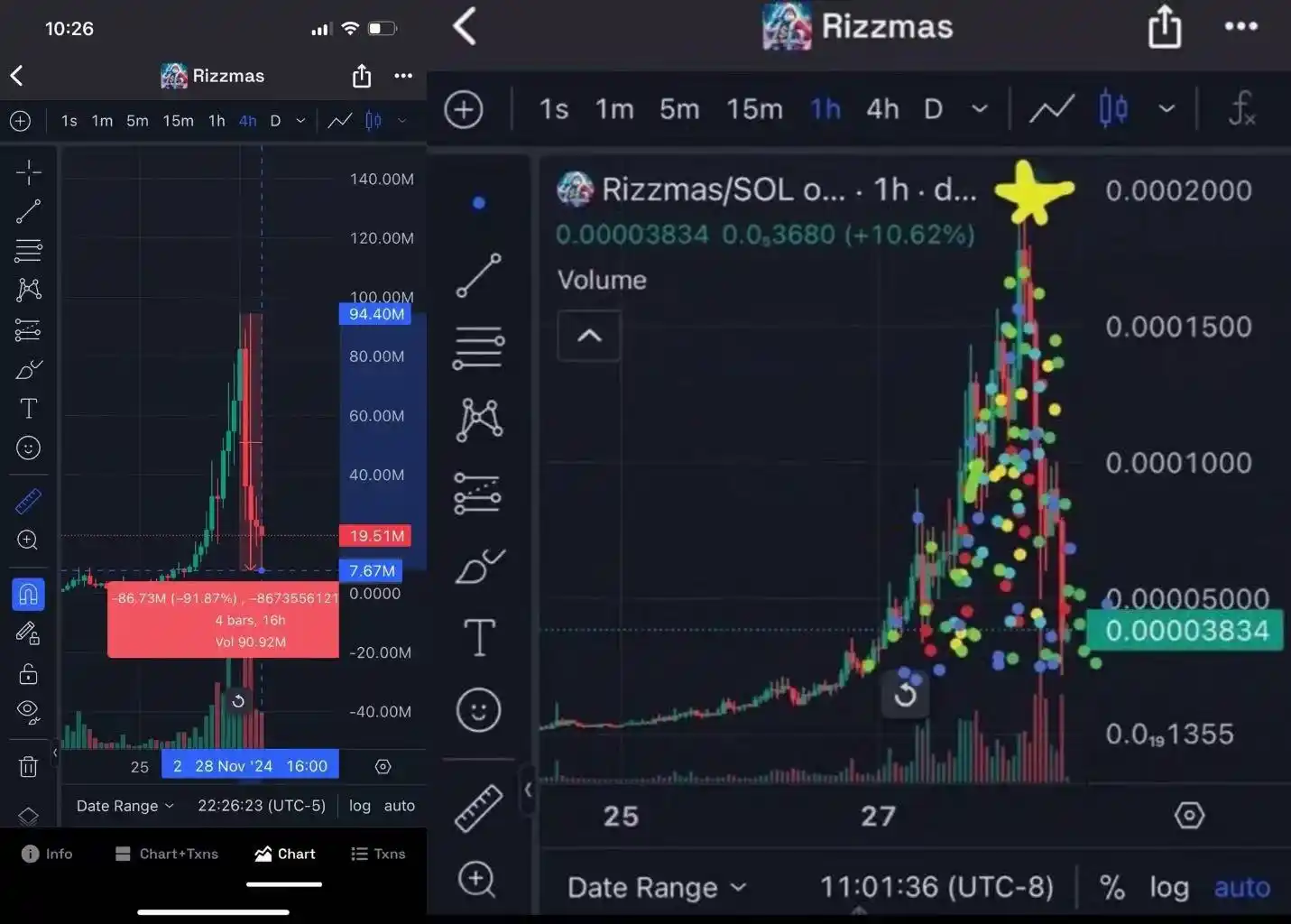
Highest Market Cap: 94.29M
Current Market Cap: 20.78M
24h Trading Volume: 107.4M
Today's Highest Profit at 12 AM (GMT+8): 216.67%; Current Profit: -33.33%

GRINCH
GRINCH is also a Christmas-themed token, with the main idea of stealing RIZZMAS. The two tokens compete with each other, and on its Twitter page, GRINCH mainly challenges RIZZMAS to a PK (Player Kill) battle. Riding on the hype of RIZZMAS, GRINCH quickly surged to a peak market value of 21M within two days, with a 24-hour trading volume of nearly 100M, closely following RIZZMAS.

GRINCH claims that the pullback of RIZZMAS is because it sucked up RIZZMAS. The competition and interaction between the two tokens have brought hype and drama to both tokens.

Highest Market Value: 20.4M
Current Market Value: 5.67M
24h Trading Volume: 97.9M
Today's 12AM (GMT+8) Highest Buy-in Profit: 1566.67%; Current Profit: -53.33%

CHILLGRINCH
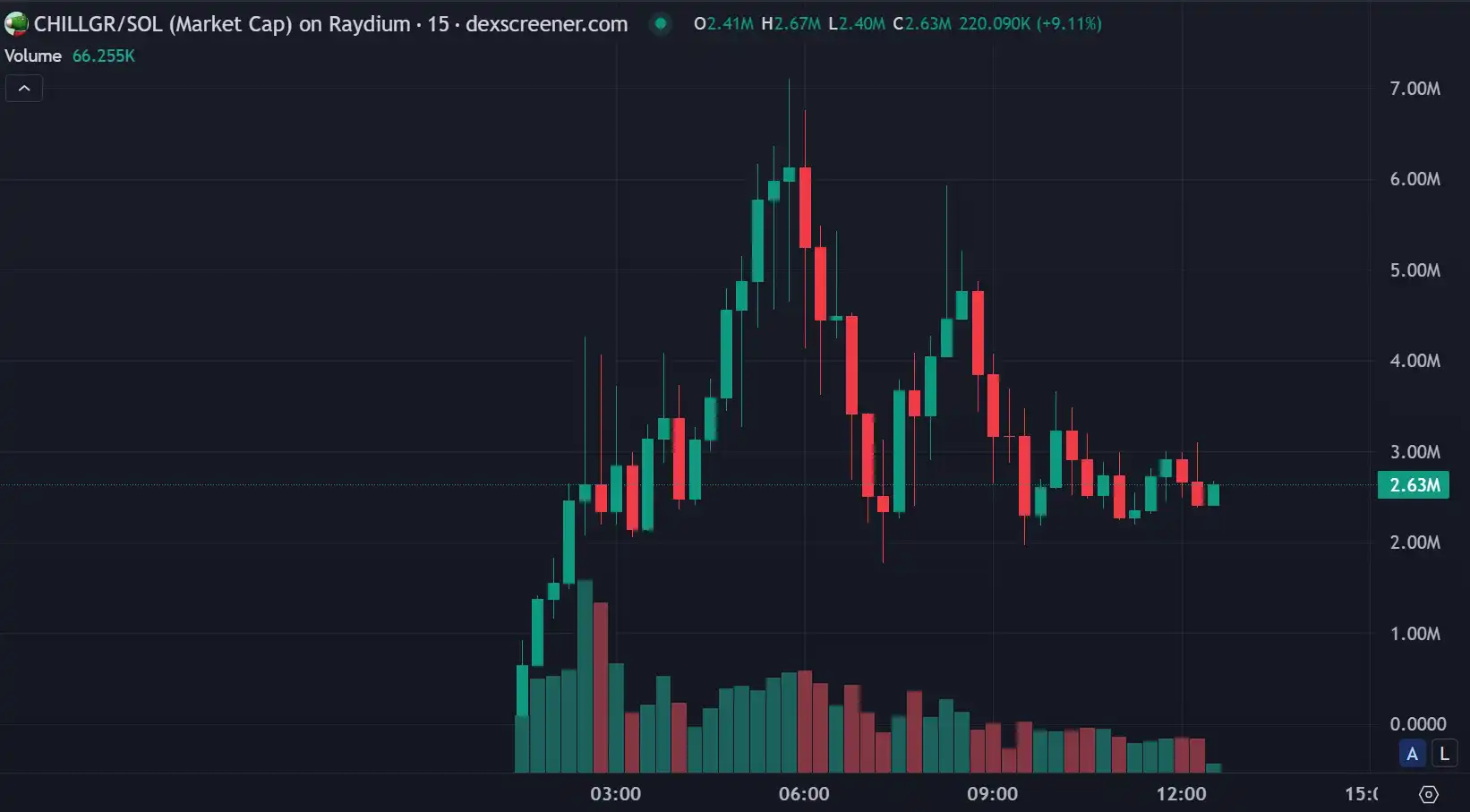
Chill Grinch is a combination of Christmas-themed culture and a Chill GUY. Recently, Chill GUY has been continuously driving traffic on platforms like TikTok, maintaining high popularity. The narrative of combining current hot topics with the characteristics of Christmas makes it very appealing.
Chill Grinch also encourages everyone to post videos related to Chill Grinch on TikTok and add specific theme tags to receive rewards. Additionally, they plan to release a sequel to the "SPOILED HOLIDAY" short film to maintain visibility and expand their influence. Within four hours of the coin's release, Chill Grinch's price once surged by 69 times, although there was a subsequent pullback, it still maintains a 25x increase.

Highest Market Value: 7.1M
Current Market Cap: 2.63M
24h Trading Volume: 24.7M
Today's Highest Buy Profit at 12AM (GMT+8): 6900.00%; Current Profit: 2500.00%
RUDOLPH
Rudolph is Santa's loyal companion—a reindeer with a red nose. Rudolph helps Santa Claus successfully complete the gift-giving mission, an image that everyone is very familiar with. Rudolph claims to be the Christmas mascot on Solana.
Currently, Rudolph's CTO (Chief Technology Officer) team has just been formed and is still in the early stages of development, but the community's activity is quite good. As Santa's favorite meme coin, Rudolph, fueled by holiday hype, may experience a surge in growth.

Highest Market Cap: 6.15M
Current Market Cap: 1.33M
24h Trading Volume: 23.1M
Today's Highest Buy Profit at 12AM (GMT+8): 3650.00%; Current Profit: 650.00%

Virtual Fiesta
Base Chain
Today, Virtual's market cap has surpassed 1 billion USD, attracting widespread attention and FOMO. At the same time, ACT has also rebounded strongly, both of which are AI-agent-based projects. Virtual is an AI agent platform based on the Base Chain, allowing project teams to create different types of AI characters, such as live streamer avatars like Luna Virtuals and Airene Asianmom. Users can also chat or interact with them on the platform using tokens. Some are functional tokens like AIXBT Agent, which analyze market opportunities through AI engines. Each project on this platform has practical applications to drive the practicality of AI technology.

Selected Tokens on the Virtual Platform (Ranked by Market Cap)
The Virtual platform will be divided into the Inner Circle and the Outer Circle. The token will first be listed on the Inner Circle, and when the number of Virtual tokens in the Inner Circle reaches 42,420 (currently valued at approximately $360,000), the Outer Circle will open. At the same time, the tokens in the Inner Circle will be sent to a black hole and converted into Outer Circle tokens, automatically transferring to the wallet.

Inner Circle on the left, Outer Circle on the right
To purchase tokens on the Virtual platform, you first need to buy Virtual's platform token $Virtual. The Virtual platform supports direct Eth swaps or purchases through the Base chain, allowing for easy asset transfer and token trading.

There are two important points to note when buying Virtual tokens:
The largest token pool is in Aerodrome, not Uniswap.
The largest pool is the BTC pool, not the ETH pool. So it is not recommended to buy directly using the Bot in Telegram because it usually goes through Uniswap's ETH pool. Buying a large amount using the Bot may result in a significant slippage.
Due to the recent surge in popularity of AI agents, the prices of AI agent tokens on Virtual have been rising. The number of tokens purchased on Virtual is also inevitably increasing, with a nearly twofold increase in market value in the past three days.
Peak Market Cap: 1.44B
Current Market Cap: 1.27B
24h Trading Volume: 47.3M
Highest Profit from Buying at 12AM Today (GMT+8): 35.92%; Current Profit: 23.30%

Solana Chain
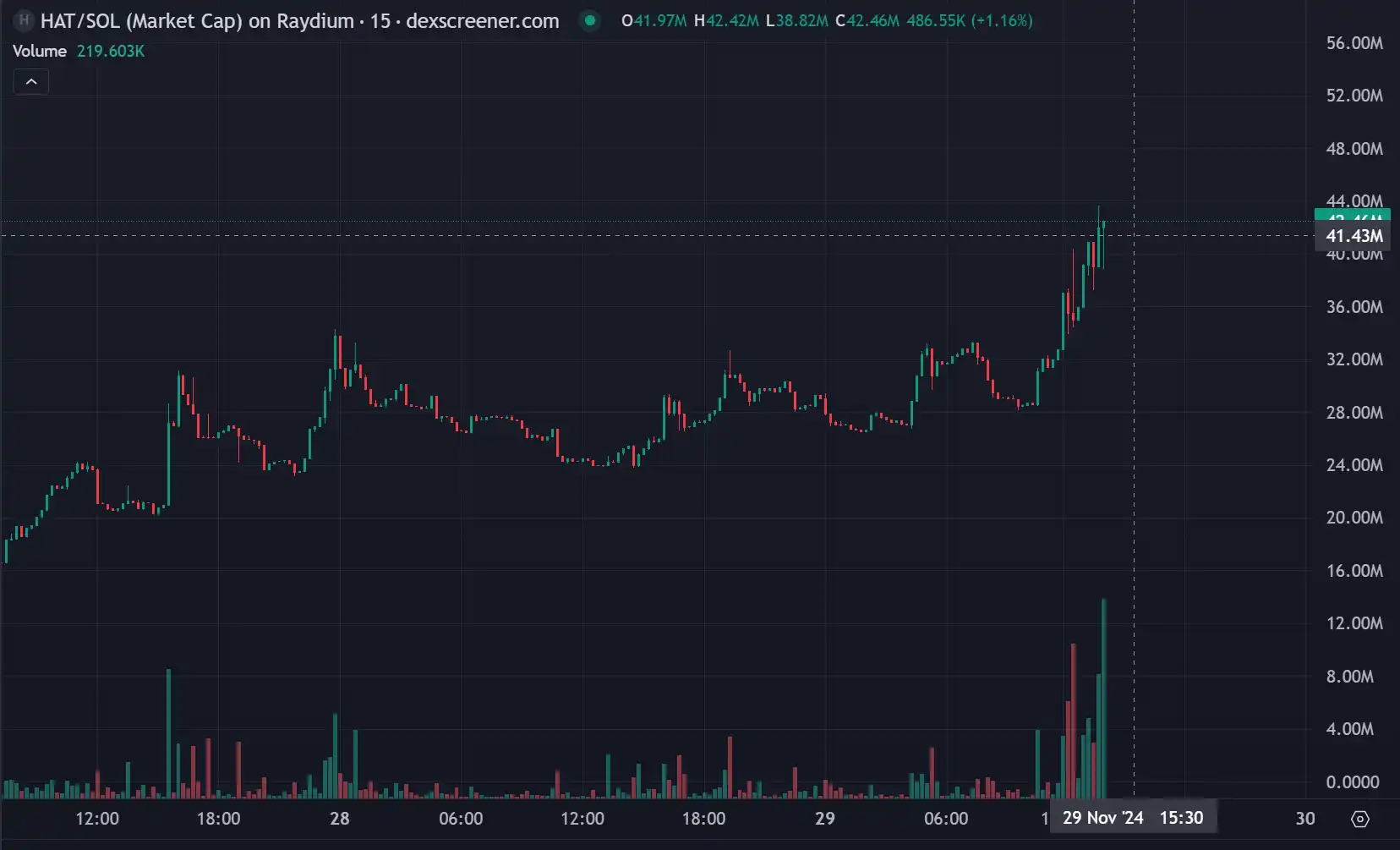
Top Hat is a platform on the Solana chain that supports the creation and management of AI agents. Top Hat also has its own platform token called Hat. This platform allows users to create AI agents (similar to Virtual). These agents can not only interact with users through text but also understand and process image content. For example, when you send them an image, they can "understand" the content of the image and provide a suitable response.

Market Cap: 43.45M
Current Cap: 41.43M
24h Trading Volume: 1.9M
Today's Highest Profit from 12AM (GMT+8): 69.23%; Current Profit: 65.38%
RoastMaster9000
Additionally, Top Hat's agents have some special features: the agents can become smarter by interacting with users, they can also remember interaction information on different platforms (such as Telegram, Twitter, etc.) and automatically engage in conversations. Users can choose to have these agents launch their own tokens and receive some liquidity support. For example, RoastMaster9000, this token can be purchased directly with sol, without the need to convert to Hat.

Market Cap: 4.75M
Current Cap: 4.39M
24h Trading Volume: 1.3M
Today's Highest Profit from 12AM (GMT+8): 104.17%; Current Profit: 83.33%

You may also like

The 17-Year Mystery Will Be Solved, Who is Satoshi Nakamoto?

5 Minutes to Make AI Your Second Brain

Uniswap is trapped in an innovation dilemma

What is the key to competition in crypto banking?

The flow of stablecoins and the spillover effects in the foreign exchange market

After two years, Hong Kong's first batch of stablecoin licenses finally issued: HSBC, Standard Chartered make the cut
The person who helped TAO rise by 90% has now single-handedly crashed the price again today

3-Minute Guide to Participating in the SpaceX IPO on Bitget

Top 5 Cryptos to Buy in 2026 Q1: A ChatGPT Deep Dive Analysis
Explore the top 5 cryptos to buy in Q1 2026 including BTC, ETH, SOL, TAO, and ONDO. See price outlooks, key narratives, and institutional catalysts shaping the next market move.

How to Earn $15,000 with Idle USDT Before Altcoin Season 2026
Wondering if altcoin season is coming in 2026? Get the latest market update, and learn how to turn your idle stablecoins waiting for entry into extra rewards up to 15,000 USDT.
Can You Win Joker Returns Without Large Trading Volume? 5 Mistakes New Players Make In WEEX Joker Returns Season 2
Can small traders win WEEX Joker Returns 2026 without huge volume? Yes—if you avoid these 5 costly mistakes. Learn how to maximize card draws, use Jokers wisely, and turn small deposits into 15,000 USDT rewards.

Altcoin Season 2026: 4 Stages to Profit (Before the Crowd FOMO In)
Altcoin Season 2026 is starting — discover the 4 key stages of capital rotation (from ETH to PEPE) and how to position before the peak. Learn which tokens will lead each phase and avoid missing the rally.

Will Alt season come in 2026? 5 Tips to Spot the Next 100x Crypto Opportunities
Will altcoin season arrive in 2026? Discover 5 rotation stages, early signals smart traders watch, and the key crypto sectors where the next 100x altcoin opportunities may emerge.

The bear market has arrived, and cryptocurrency ETF issuers are also getting involved

The richest man had a quarrel with his former boss

BTC Firm Above 70K! Saylor’s "Institutional Logic" vs. Moon’s "Retail Faith": Who is Really Harvesting the Market?
Bitcoin is holding firm above the $70,000 support level following a massive short squeeze that liquidated $427 million. As the "Four-Year Cycle" narrative shifts, the market is split: Michael Saylor’s cold, institutional "indiscriminate stacking" vs. Carl Moon’s high-energy retail "hopium." This article decodes these two polar-opposite strategies for the 2026 bull run and reveals how WEEX’s institutional-grade liquidity and AI trading tools empower every type of investor to convert market volatility into profit.

The Girl Who Created the SBTI Test: A Story of a Doomed Cyber Love, an E-Widow Ratfolk



 App
App