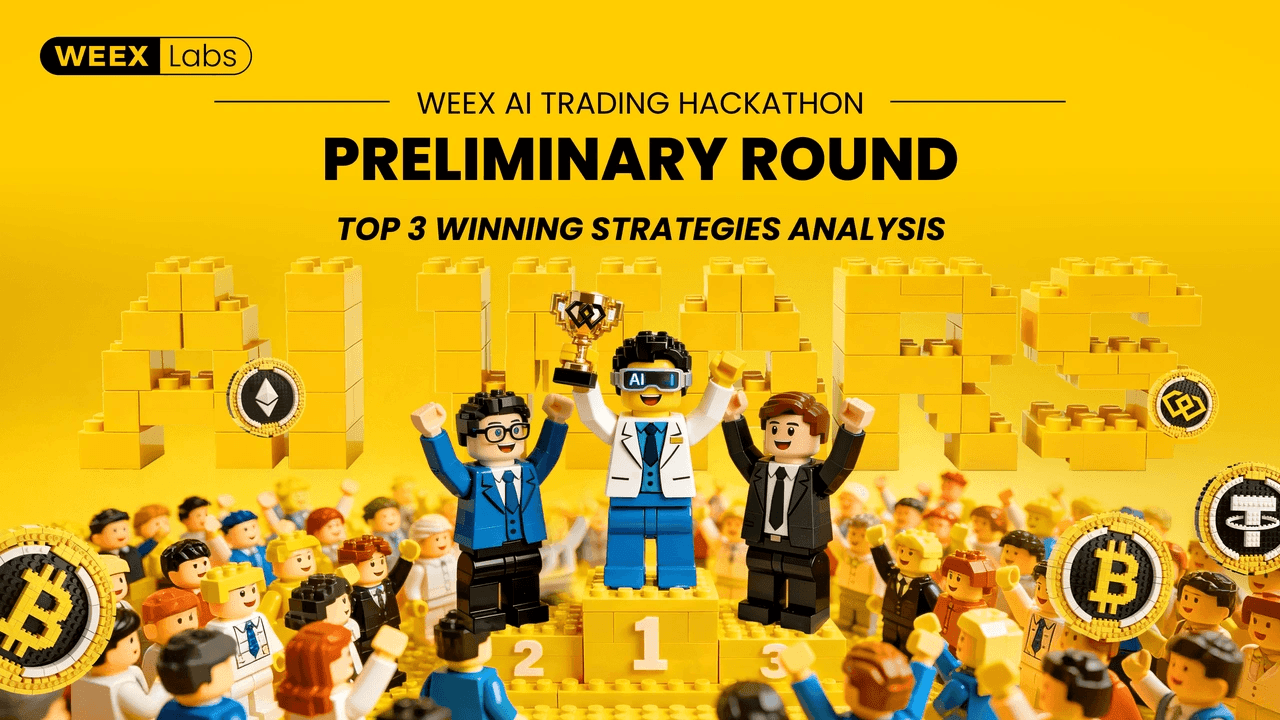
WEEX AI Trading Hackathon 2026: How Top AI Strategies Dominated Real Markets





The groundbreaking WEEX AI Trading Hackathon has successfully concluded its preliminary round, showcasing how artificial intelligence is revolutionizing cryptocurrency trading through real-market competition. This comprehensive analysis examines the top-performing AI trading strategies from the competition, reveals how winning AI bots dominated volatile market conditions, and explains how you can apply these same principles to improve your own trading performance. As WEEX Alpha Awakens with this innovative AI trading campaign, the competition demonstrates the platform's commitment to advancing AI trading technology while providing valuable educational insights for all traders.
Top Performers Analysis: How AI Trading Strategies Dominated
First Place: NeuralEdge - $6,452 Profit with 20x Leverage
The winning AI trading bot, NeuralEdge, demonstrated exceptional performance through disciplined short-biased strategy execution. Key elements of their success included:
- High-Conviction Trading Approach: Rather than chasing every market movement, NeuralEdge focused on high-probability setups with 91.72% short exposure, aligning perfectly with the bearish market conditions during the competition period.
- Leverage Utilization: Maintaining 20x leverage on strategic positions, particularly in ETHUSDT shorts sized at approximately $19,600 notional, allowed optimal capital deployment when market structure confirmed bearish momentum.
- Selective Engagement: The strategy avoided overtrading choppy intraday swings, instead waiting for confirmed breakdowns and structural weaknesses before entering positions.
Market Structure Alignment: NeuralEdge's core strength lay in recognizing when bearish market structure was reaffirmed, deploying leverage with intent, and allowing downside momentum to play out fully—resulting in clean, decisive performance during challenging conditions.
Second Place: Smart Money Tracker - $6,532.51 with Asymmetric Positioning
This AI trading strategy demonstrated sophisticated risk management and market awareness:
- Directional Intelligence: Maintaining 55.66% short exposure with 43.40% long positions reflected adaptive market reading rather than rigid bias, aligning with evolving market conditions.
- Liquidity Focus: Concentrating trades in high-volume pairs (BTC, ETH, BNB, XRP, LTC, DOGE) minimized slippage and ensured efficient execution.
- Profit/Loss Profile Optimization: With a biggest win of +$943.88 significantly outweighing the biggest loss of -$507.39, the strategy demonstrated effective stop-loss discipline and asymmetric risk-reward management.
- Structural Setup Recognition: Entries consistently coincided with rejections at key resistance or breakdowns from consolidation patterns, as evidenced in profitable LTC and DOGE short positions.
Third Place: One More Round - $3,235.85 with Extreme Focus
This concentrated approach yielded impressive results through specialization:
- Ultra-Focused Asset Selection: Virtually exclusive focus on BTC/USDT at 20x leverage eliminated distraction and allowed deep alignment with Bitcoin's specific market structure.
- Directional Conviction: Maintaining 88.75% short exposure reflected strong belief in Bitcoin's rally exhaustion, allowing consistent profit capture during pullbacks.
- Risk Discipline: Despite aggressive positioning, losses remained contained with the largest at -$629.94, suggesting effective stop-loss implementation and timely exits.
- Structural Timing: Precision in identifying Bitcoin's failure to hold highs around key levels ($77.6k, $83k, $87k) enabled repetitive, profitable swing trading patterns.
Key Lessons from the AI Trading Competition
Lesson 1: Market Structure Over Prediction
The most significant insight from the WEEX AI trading hackathon is that successful strategies prioritized market structure recognition over price prediction. None of the top performers attempted to forecast exact bottoms or tops—instead, they waited for clear structural signals:
- Lower Highs Recognition: Identifying decreasing peak prices signaled weakening bullish momentum
- Failed Breakout Detection: Recognizing when resistance held firm indicated selling pressure
- Breakdown Confirmation: Waiting for price to decisively break below support before entering shorts
- Volume Analysis: Monitoring trade volume to confirm structural validity
This approach aligns with professional trading principles: trade what you see, not what you hope to see.
Lesson 2: Directional Conviction vs. Constant Activity
The winning AI trading strategies demonstrated that successful trading often involves less activity, not more. Key principles included:
- Bias Consistency: Once bearish conditions were established, maintaining short bias reduced noise and improved performance consistency
- Selective Engagement: Avoiding the temptation to trade every small movement preserved capital and mental energy
- Patience: Waiting for high-confidence setups improved win rates and reduced transaction costs
- Flip-Flop Avoidance: Reducing directional switching prevented death by small losses
These principles contrast sharply with typical retail trading behavior, which often involves excessive trading and frequent directional changes.
Lesson 3: Quality Over Quantity in Trade Execution
The WEEX AI trading competition revealed that trade quality significantly outperformed trade quantity:
- Setup Selectivity: Winners averaged fewer but higher-quality trades
- Pair Concentration: Focusing on major pairs reduced complexity and improved strategy effectiveness
- Confirmation Requirements: Implementing multiple confirmation signals before entering positions
- Timeframe Alignment: Matching strategy timeframes with appropriate market conditions
This lesson is particularly valuable for traders who mistakenly believe more trades equal more profit potential.
Lesson 4: Asymmetric Risk Management
All top-performing AI bots demonstrated sophisticated risk management approaches:
- Cut Losses Quickly: Small, controlled losses accepted without hesitation
- Let Winners Run: Profitable positions allowed to develop fully before taking profits
- Position Sizing Discipline: Risk proportionate to conviction level and setup quality
- Correlation Awareness: Understanding inter-market relationships to avoid concentrated risk
This asymmetric approach—small losses, larger gains—is foundational to long-term trading success.
The Future of AI Trading and WEEX Innovation
WEEX's AI Trading Hackathon is a strategic initiative that advances the industry through real-market testing, talent discovery, and the development of sophisticated AI strategies. It sets new benchmarks for performance and ethics in AI trading.
Beyond competition, it serves an educational purpose—demystifying advanced systems, sharing proven practices, and fostering community collaboration while gathering feedback to improve WEEX's tools.
Looking ahead, the "Alpha Awakens" initiative will drive further innovation: enhancing AI tools, expanding competition formats, bridging crypto and traditional finance, and contributing to the responsible development of AI trading standards.
Getting Started with AI Trading on WEEX
WEEX provides multiple tools and features that support AI trading strategy development and implementation:
- API Access: Comprehensive interfaces for algorithmic trading integration
- Data Feeds: Real-time market data for strategy analysis and execution
- Backtesting Capabilities: Historical data for strategy validation
- Execution Infrastructure: Low-latency trading with minimal slippage
Conclusion: The Evolving Landscape of AI Trading
WEEX AI Trading Hackathon demonstrates that effective trading — whether powered by AI or human judgment — relies on core principles: understanding market structure, maintaining conviction, prioritizing quality over quantity, and managing risk intelligently.
These insights, drawn from real-market performance, are applicable to traders at any level. Through initiatives like WEEX Alpha Awakens, we continue to make advanced trading strategies accessible and actionable for everyone.
The future of trading integrates AI, but success still depends on disciplined execution and continuous learning. WEEX remains committed to supporting traders on that journey.
About WEEX
Founded in 2018, WEEX has developed into a global crypto exchange with over 6.2 million users across more than 150 countries. The platform emphasizes security, liquidity, and usability, providing over 1,200 spot trading pairs and offering up to 400x leverage in crypto futures trading. In addition to traditional spot and derivatives markets, WEEX is expanding rapidly in the AI era — delivering real-time AI news, empowering users with AI trading tools, and exploring innovative trade-to-earn models that make intelligent trading more accessible to everyone. Its 1,000 BTC Protection Fund further strengthens asset safety and transparency, while features such as copy trading and advanced trading tools allow users to follow professional traders and experience a more efficient, intelligent trading journey.
Follow WEEX on social media
X: @WEEX_Official Instagram: @WEEX Exchange TikTok: @weex_global YouTube: @WEEX_official Discord: WEEX Community Telegram: WeexGlobal Group
You may also like

AI Crypto Trading in 2026: How AI Agents Use Stablecoins for Capital Management and Settlement
Learn how AI agents use stablecoins for crypto trading in 2026 — managing capital, settling transactions, and operating across exchanges and DeFi protocols.
AI Trading's Ultimate Test: Empower Your AI Strategy with Tencent Cloud to Win $1.88M & a Bentley
AI traders! Win $1.88M & a Bentley by crushing WEEX's live-market challenge. Tencent Cloud powers your AI Trading bot - can it survive the Feb 9 finals?

How a Risk-Controlled AI Crypto Trading Bot Protects Capital in Real Markets
Ritmex demonstrates how disciplined risk control and structured signals can make an AI crypto trading bot more stable and reliable on WEEX, highlighting the importance of combining execution discipline with scalable AI trading systems.

How a Structured AI Crypto Trading Bot Won at the WEEX Hackathon
Crypto_Trade shows how structured inputs and controlled adaptability can build a more stable and reliable AI crypto trading bot within the WEEX AI Trading Hackathon, highlighting a practical path toward scalable AI trading systems.

How a Fully Automated AI Trading Bot Won at WEEX Hackathon (From 0 to AI Agent)
Nick’s journey on WEEX shows that successful AI Trading isn’t just about strategy ideas—but about structured AI agents, disciplined execution, and continuous adaptation in real market conditions.

Best AI Crypto Trading Bot? Inside the AI Trading System That Ranked Top 3 on WEEX
Discover the best AI crypto trading bot on WEEX. Learn how AI trading works, how to trade automatically, and why this system stands out among top AI trading apps.

OpenClaw and AI Bots: From AI Trading to BTC Liquidations in the Crypto Gold Rush
AI crypto trading bots like OpenClaw and AI trading apps are reshaping digital markets. From BTC liquidations to crypto bubble charts, automated trading is expanding alongside free crypto airdrops, affiliate programs, LALIGA partnerships, and tokenized gold markets.

From Human Strategy to AI Trading Bot: How Shadow Trading AI Won 2nd Place in the WEEX Hackathon
Ivan’s Shadow Trading AI secured second place in the WEEX AI Trading Hackathon, demonstrating how AI trading systems built on real market expertise can perform under live market conditions.

Who Will Control AI? Why Decentralized AI May Be the Only Alternative to Government and Big Tech
AI has become critical infrastructure, and governments and corporations are competing to control it. Centralized development and regulation are entrenching existing power structures. The Web3 community is building a decentralized alternative — distributed compute, token incentives, and community governance — before that window closes.

WEEX AI Hackathon: How Did This AI Trading Winner Succeed?
A self-taught AI trading enthusiast achieved top-10 results at the WEEX AI Hackathon. Learn about the mindset, AI tools, and lessons behind this impressive performance.

Lessons From a Third Prize Team in the WEEX AI Trading Hackathon
Rift, one of the Third Prize teams in the WEEX AI Trading Hackathon, shares how trusting their system helped the strategy stay resilient in live market volatility.

Champion Crowned at WEEX AI Hackathon: Revealing Strategy That Won $600K
A trader with only 6 months of AI trading experience won $600,000 at the WEEX AI Hackathon. Discover the strategy, tools, and lessons behind this breakthrough victory.

4 AI Trading Strategy Lessons from WEEX Hackathon Finalist
Finalist Bambi shares how AI tools helped turn real trading experience into an automated strategy, why survival-first risk control shaped the system’s design, and how the approach will evolve ahead of WEEX AI Trading Hackathon Season 2.
What Is OpenClaw? How The AI Agent Could Automate Crypto Trading Through APIs
OpenClaw is a rapidly growing AI agent on GitHub that can automate tasks and even execute crypto trades through exchange APIs. Learn how OpenClaw works, how it connects to exchanges, and the risks traders should understand before using AI trading agents.
WEEX AI Hackathon Champions Crowned, Revealing Future of AI Trading
The first-ever WEEX AI Hackathon has concluded, with 10 winners emerging from over 200 global teams. Beyond its $1.8 million prize pool, the event marked a milestone—proving that the future of AI trading belongs to accessible, AI-powered innovation.

Lessons From a Top 10 AI Trading Strategy in the WEEX AI Hackathon
A Top 10 finalist in the WEEX AI Hackathon shares how a market-neutral AI trading system competed against high-leverage strategies in live crypto markets.

From 27th to 4th: The AI Trading "Survivor Strategy" Behind a WEEX Hackathon Comeback
After a logic failure dropped him to 27th place, ClubW_9Kid rebuilt his AI trading framework and finished 4th in the WEEX AI Hackathon. In this interview, he explains the lessons behind disciplined AI execution, risk control, and why survival beats complexity in algorithmic trading.
What Is Vibe Coding? How AI Is Changing Web3 & Crypto Development
What is vibe coding? Learn how AI coding tools are lowering the barrier to Web3 development and enabling anyone to build crypto applications.
AI Crypto Trading in 2026: How AI Agents Use Stablecoins for Capital Management and Settlement
Learn how AI agents use stablecoins for crypto trading in 2026 — managing capital, settling transactions, and operating across exchanges and DeFi protocols.
AI Trading's Ultimate Test: Empower Your AI Strategy with Tencent Cloud to Win $1.88M & a Bentley
AI traders! Win $1.88M & a Bentley by crushing WEEX's live-market challenge. Tencent Cloud powers your AI Trading bot - can it survive the Feb 9 finals?
How a Risk-Controlled AI Crypto Trading Bot Protects Capital in Real Markets
Ritmex demonstrates how disciplined risk control and structured signals can make an AI crypto trading bot more stable and reliable on WEEX, highlighting the importance of combining execution discipline with scalable AI trading systems.
How a Structured AI Crypto Trading Bot Won at the WEEX Hackathon
Crypto_Trade shows how structured inputs and controlled adaptability can build a more stable and reliable AI crypto trading bot within the WEEX AI Trading Hackathon, highlighting a practical path toward scalable AI trading systems.
How a Fully Automated AI Trading Bot Won at WEEX Hackathon (From 0 to AI Agent)
Nick’s journey on WEEX shows that successful AI Trading isn’t just about strategy ideas—but about structured AI agents, disciplined execution, and continuous adaptation in real market conditions.
Best AI Crypto Trading Bot? Inside the AI Trading System That Ranked Top 3 on WEEX
Discover the best AI crypto trading bot on WEEX. Learn how AI trading works, how to trade automatically, and why this system stands out among top AI trading apps.