
Northern Oil Asset Reserve: What NOAR Traders Should Know

Northern Oil Asset Reserve, often shortened to NOAR, is a Solana-based crypto token using an oil-reserve narrative. The name sounds like a real-world asset project, but as of May 25, 2026, the more careful reading is that NOAR behaves like a speculative Solana meme or narrative token, not a verified claim on physical oil reserves.
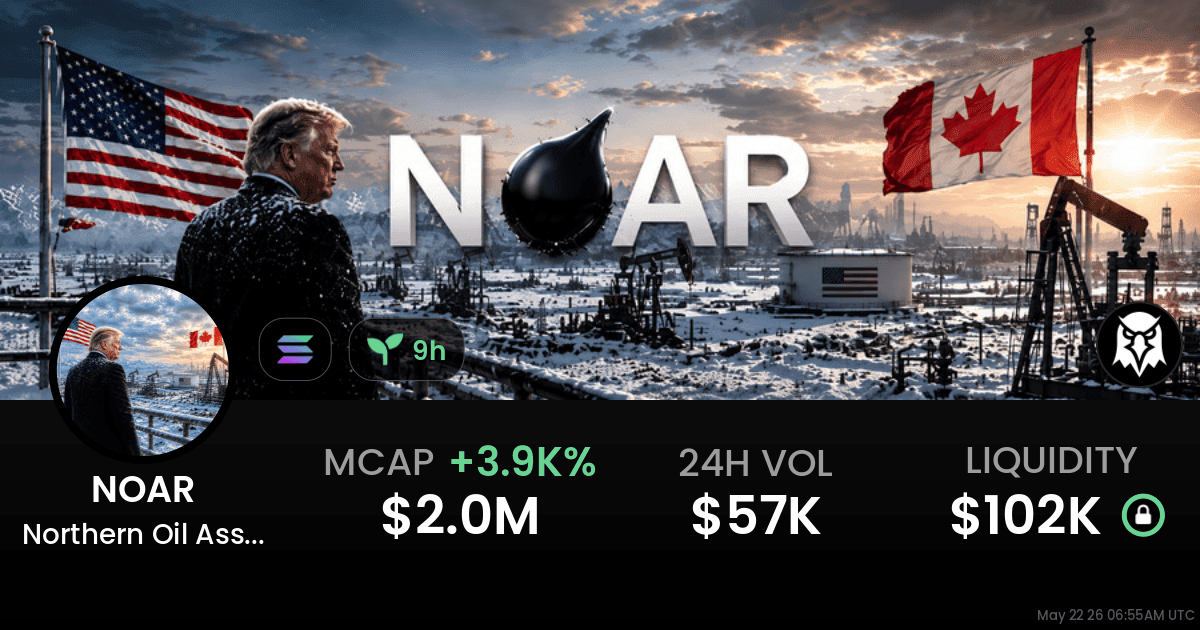
That distinction matters. In crypto, commodity language can attract attention fast, especially when traders are chasing real-world asset themes. But a token name is not collateral, a ticker is not an audit, and a DEX chart is not proof of asset backing. Anyone looking at Northern Oil Asset Reserve should start with verification before thinking about price.
What Is Northern Oil Asset Reserve?
Northern Oil Asset Reserve is a Solana token associated with the ticker NOAR. Market pages and DEX trackers describe it around themes such as North American oil reserves, pipelines, strategic energy supply, and tokenized commodity narratives.
In practice, NOAR appears to trade mainly through decentralized exchange pools rather than as a deeply established centralized-exchange asset. That means traders usually need to understand wallets, token contract verification, liquidity pools, slippage, and Solana transaction fees before interacting with it. If you are still learning the chain itself, start with a basic Solana buying guide before moving into micro-cap DEX tokens.
| Item | Current Read |
|---|---|
| Token name | Northern Oil Asset Reserve |
| Ticker | NOAR |
| Network | Solana |
| Main narrative | Oil reserve, energy asset, RWA-style branding |
| Trading style | DEX-driven, highly speculative |
| Verified oil backing | No clear reserve audit visible as of May 25, 2026 |
| Main risk | Contract confusion, thin liquidity, narrative-driven volatility |
Is NOAR Actually Backed By Oil?
There is no clear evidence that Northern Oil Asset Reserve represents ownership of oil, a legal claim on reserves, pipeline revenue, or audited commodity collateral. The token’s branding points toward oil and energy, but branding alone does not make a crypto asset a reserve-backed instrument.
This is the central issue with NOAR. If a project claims real-world asset exposure, serious traders look for legal structure, custodian details, reserve attestations, redemption terms, issuer identity, jurisdiction, and ongoing reporting. Without those, the asset should be treated as a narrative token, not as tokenized oil.
The better market interpretation is simple: Northern Oil Asset Reserve may trade on the attention around energy and RWAs, but the evidence does not support treating it like a verified oil-backed product.
Why Contract Verification Matters With NOAR
NOAR is especially risky because several trackers and pages show different Northern Oil Asset Reserve references, pools, or contract identifiers. That is common with fast-moving Solana meme tokens, but it creates a serious execution problem.
Before buying any NOAR token, traders should verify:
| Check | Why It Matters |
|---|---|
| Exact token mint address | Similar names can point to unrelated tokens |
| Active liquidity pool | A chart without usable liquidity may be misleading |
| Holder distribution | Concentrated supply can increase dump risk |
| Buy/sell activity | Dead pools can trap traders even when charts load |
| Contract permissions | Mint, freeze, or admin controls can change risk |
| Community channel consistency | Fake links often appear around trending tickers |
This is where many traders lose money. They do not lose because they failed to predict the story; they lose because they bought the wrong contract, entered a pool with poor liquidity, or could not exit without severe slippage.
How Traders Usually Evaluate NOAR Price Action
NOAR price pages can move quickly and may show very different figures depending on the pool, region, data provider, or token contract being tracked. For a micro-cap token, a market cap screenshot is not enough.
A better workflow is to check the live DEX pair, liquidity, 24-hour volume, holder count, recent transactions, and whether the pool has meaningful two-sided trading. If a token shows a large notional valuation but almost no liquidity, the displayed market cap can be more cosmetic than tradable.
For newer traders, spot markets are easier to understand than DEX micro-caps because execution, order books, and fees are more standardized. WEEX’s spot trading guide is a useful baseline before moving into thin on-chain pools.
What Makes Northern Oil Asset Reserve Risky?
The main NOAR risk is not only price volatility. It is the combination of narrative hype, uncertain backing, contract ambiguity, and DEX execution risk.
A token can be up sharply and still be fragile. If liquidity is shallow, a small sell order can move the price heavily. If supply is concentrated, a few wallets can dominate the market. If the project has no clear issuer or audit trail, traders have limited recourse when claims change or channels disappear.
The most important question is not “Can NOAR pump?” It is “Can I verify what I am buying, enter at a fair execution price, and exit without being trapped?”
Conclusion
Northern Oil Asset Reserve is best understood as a high-risk Solana narrative token using oil-reserve branding. The name may appeal to traders watching energy, RWAs, and meme-token momentum, but there is no visible basis for treating NOAR as a verified oil-backed asset.
If you research NOAR, focus on the exact contract, live liquidity, sellability, holder concentration, and whether the project can prove any real-world asset claim. For most readers, the practical next step is not rushing into the token; it is building the habit of checking high-risk assets carefully. WEEX’s high-risk token security guide is a useful reference before trading speculative micro-caps.
FAQ
1. What is Northern Oil Asset Reserve?
Northern Oil Asset Reserve, or NOAR, is a Solana-based crypto token using an oil-reserve and energy-market narrative. It appears to trade as a speculative DEX token rather than a verified oil-backed instrument.
2. Is NOAR backed by real oil reserves?
No clear reserve audit, legal claim, or redemption mechanism is visible as of May 25, 2026. Traders should not assume that NOAR represents ownership of physical oil or energy assets.
3. Why are there different NOAR contracts or market pages?
Fast-moving Solana tokens often attract duplicate names, copycat pools, and inconsistent tracker pages. Always verify the exact token mint address and active liquidity pool before interacting with any NOAR market.
4. Is Northern Oil Asset Reserve a good investment?
That depends on personal risk tolerance, but NOAR should be treated as a highly speculative micro-cap token. Its risk profile is closer to a narrative meme token than a proven real-world asset product.
5. What should I check before buying NOAR?
Check the token mint address, liquidity, holder distribution, transaction history, contract permissions, and whether you can sell a small test amount. Never rely only on a token name or social post.
Risk Warning
Crypto assets are volatile and may result in partial or total loss. Northern Oil Asset Reserve carries additional risks from thin liquidity, contract confusion, unverified reserve claims, DEX execution, smart-contract settings, and sudden narrative-driven price swings. This article is for information only and is not financial advice.
You may also like

What is Solstice (SLX) Coin
Solstice (SLX) Coin, now available on WEEX for trading since May 25, 2026, is a groundbreaking cryptocurrency focusing…

What is MP Materials Tokenized Stock (MPON) Coin?
The MP Materials Tokenized Stock (MPON) Coin has been newly listed on WEEX, with trading opening on May…

What is Ratspeak (RATSPEAK) Coin?
Ratspeak (RATSPEAK) Coin has made its debut on WEEX, a prominent cryptocurrency exchange. This innovative token was listed…
What is IBM Tokenized Stock (IBMON) Coin?
The rapidly evolving landscape of digital assets presents yet another opportunity for crypto traders with the recent listing…
What is Nebius Group (NBISON) Coin?
The Nebius Group (NBISON) Coin has been newly listed on WEEX, allowing crypto enthusiasts to trade this exciting…
What is Navacoin (NAVA) Coin
Navacoin (NAVA) has recently secured a listing on the renowned WEEX Exchange, allowing enthusiasts and investors to engage…

What is The Most Valuable Currency (ATTENTION) Coin?
Recently making waves in the crypto community, The Most Valuable Currency (ATTENTION) Coin has been listed on WEEX…
What is Gitbank (GITBANK) Coin?
Gitbank has just been listed on WEEX Exchange as of May 21, 2026, providing an exciting new trading…
What is Surplus Intelligence(SURPLUS) Coin? Everything You Need to Know to Trade SURPLUS/USDT
This article explains what Surplus Intelligence (SURPLUS) is, why it matters in the AI crypto category, how it…
What is Root Edge (ROOTAI) Coin?
The new cryptocurrency, Root Edge (ROOTAI), is making waves in the cryptosphere as it gets newly listed on…

Meme Coin Comparison: DOGE PEPE BONK Maxi Doge Market Analysis
Meme coins such as DOGE, PEPE, BONK, and Maxi Doge are shaped by sentiment, liquidity, and short-term trading behavior rather than traditional fundamentals. This article compares their market structure, price behavior, and narrative differences to explain how each meme coin reacts under changing market conditions.

FLR Token Price Analysis: Flare XRP Yield Growth
FLR token price has moved higher as Flare Network continues rolling out ecosystem upgrades tied to XRP liquidity and DeFi expansion. This guide breaks down the latest FLR token price analysis, what is driving trading activity, how the Flare ecosystem is evolving, and whether current momentum could continue in the near term.

Is Polymarket Legal? Global Access and Regulation Guide
Is Polymarket legal? This guide explains how Polymarket works, why prediction market rules differ by country, and how global regulation affects access to event-based trading platforms in crypto and digital finance.

How Prediction Markets Work Bitcoin Forecasting?
Can prediction markets predict Bitcoin prices, or just reflect trader expectations? This guide explains how Bitcoin prediction markets work, how pricing is formed, and how platforms like Polymarket track real-time market sentiment in crypto.
Fidelity Oil United Reserve (FOUR): Oil Reserve Meme Coin Explained
Learn what Fidelity Oil United Reserve (FOUR) is, whether it is oil-backed, how to verify the contract, and which risks matter before trading.

ISOR Coin Explained: Oil-Themed Solana Token Risks
ISOR coin explained: what the Iran Strategic Oil Reserve token is, why oil-themed Solana memes are trending, and the risks to check before trading.
Le Bon Coin and Crypto Scams: What Buyers Should Know
Learn what Le Bon Coin is, how leboncoin secure payment works, why crypto payment requests are risky, and how to spot marketplace scams.
SLX Token Price Today: Solstice Launch Volatility Explained
SLX token price is trading near $0.18-$0.20 after Solstice’s volatile launch. Here is what traders should watch next.
What is Solstice (SLX) Coin
Solstice (SLX) Coin, now available on WEEX for trading since May 25, 2026, is a groundbreaking cryptocurrency focusing…
What is MP Materials Tokenized Stock (MPON) Coin?
The MP Materials Tokenized Stock (MPON) Coin has been newly listed on WEEX, with trading opening on May…
What is Ratspeak (RATSPEAK) Coin?
Ratspeak (RATSPEAK) Coin has made its debut on WEEX, a prominent cryptocurrency exchange. This innovative token was listed…
What is IBM Tokenized Stock (IBMON) Coin?
The rapidly evolving landscape of digital assets presents yet another opportunity for crypto traders with the recent listing…
What is Nebius Group (NBISON) Coin?
The Nebius Group (NBISON) Coin has been newly listed on WEEX, allowing crypto enthusiasts to trade this exciting…
What is Navacoin (NAVA) Coin
Navacoin (NAVA) has recently secured a listing on the renowned WEEX Exchange, allowing enthusiasts and investors to engage…


