
AIINU: How a "100x Coin" on Robinhood Chain Turned NVDA Stock Into a Memecoin

 Prefer us on Google


AIINU, AIINU, and AIINU kept showing up in crypto feeds for one simple reason: this was not just another meme token pump. On Robinhood Chain, AIINU became a case study in how a memecoin can trade against NVDA stock exposure instead of a standard crypto pair, turning a familiar equity ticker into part of an onchain meme economy. That twist matters more than the headline “100x coin” label. Based on WEEX market data and reporting from The Block, Odaily, CoinDesk, CoinGecko, and other cited materials, this article breaks down what happened, how the mechanism works, and what beginners should verify before treating AIINU as anything more than a high-risk speculative asset.
The Big Picture
- AIINU is a Robinhood Chain meme token launched via long.xyz and paired with NVDA stock exposure rather than a typical WETH-only route.
- Its market cap reportedly climbed from about $1.5 million on August 1 to a peak near $135 million on August 30, then eased to around $126.327 million.
- This structure matters because trading demand can feed into NVDA-linked liquidity, not just into another isolated meme pool.
- Beginners should focus on contract verification, liquidity structure, and token mechanics before reacting to price headlines.
Why a Memecoin's Trading Pair Actually Matters
Most traders look at a meme coin chart and stop at price action. That misses the more important question: what is the token actually paired with? In DeFi, the trading pair shapes liquidity behavior, slippage, and where buy pressure ends up. If a memecoin is mainly paired with WETH, then speculation mostly stays inside the crypto loop. AIINU stood out because the WEEX coin page describes its trading mechanism as using NVIDIA’s NVDA stock token as the pair.
That is a meaningful design choice. It ties the meme narrative to a real-world asset theme rather than treating the token as a free-floating joke coin. According to the same WEEX page, this setup also fits the broader Robinhood Chain idea of combining meme culture with RWA-style market exposure. For beginners, the takeaway is simple: a token’s pair can tell you more about its actual market design than its mascot, community slogans, or viral posts ever will.
What Happened to AIINU's Market Cap
The “100x” label in the title works as trader shorthand, but the reported move was closer to 90x than a literal 100x. The Block reported that AIINU’s market cap was around $1.5 million on August 1 and then surged to roughly $135 million by August 30. As of the checked WEEX data, AIINU’s market cap sits around $126.327 million, which suggests the token pulled back from its peak but still held onto most of that explosive run.
That kind of move matters because it was not a small intraday spike from an illiquid base. It signaled sustained attention, enough for the token to become one of the more visible examples of stock-paired meme coin activity on Robinhood Chain. WEEX also shows a circulating supply of 1.000 billion tokens, while total and maximum supply are listed as undisclosed. Separately, another report relaying OpenSea data said AIINU reached an FDV of about $156 million, had roughly 26,300 holder addresses, and posted a seven-day gain above 400% at one stage. Since that figure came through third-party reporting, it is best read as an additional signal rather than the main valuation anchor.
-- Price
How Stock-Paired Memecoins Actually Work
This is where AIINU becomes more interesting than a standard meme coin chart. According to Odaily, users place orders on the front end with ETH, but the system routes that order in the background by first converting ETH into NVDA tokens, then using that NVDA-linked position to swap into the meme token. Odaily also reported that creator fees are denominated in NVDA tokens.
For a beginner, the easiest way to think about this is as a two-step pipeline hidden behind a simpler user interface. You may feel like you are just buying a meme coin, but under the hood the system is touching a stock-linked token first. That means demand for AIINU can indirectly create demand for NVDA-paired liquidity. It also means price behavior may reflect both meme speculation and the health of that stock-linked pool.
This structure adds complexity. It can deepen narrative appeal, but it can also create new risks around routing, liquidity concentration, and volatility. A meme coin is already speculative. A meme coin built on top of stock-token plumbing adds another layer that traders need to understand before they assume it is just a fun ticker.
Why This Design Feeds Money Back Into Real-World Assets
The key difference with AIINU is that the speculation loop does not stay entirely inside a closed meme ecosystem. The Block reported that the NVDA liquidity pool locked more than $3.3 million, which was over three times deeper than its WETH pool. That detail suggests the NVDA side was not cosmetic. It had real weight in the market structure.
The same report said stock-paired memecoins accounted for about one quarter of all stock-related trading volume on Robinhood Chain. That is a striking number because it shows how meme demand can become an onboarding path for RWA-style activity. Instead of users entering through a pure tokenomics story, they are entering through a hybrid of meme culture, equity branding, and DeFi rails.
In practical terms, that means a trader chasing a viral coin may be helping grow liquidity around stock-linked assets, even if that was not their main intention. This is one reason AIINU attracted attention beyond ordinary meme traders. It showed that speculation can be used to route interest toward a broader blockchain ecosystem theme.
What Made AIINU Different From a Typical Pump-and-Dump
No serious analyst should call any fast-rising meme coin “safe.” That said, AIINU’s story appears different from the classic pattern where insiders launch, hype, drain liquidity, and disappear. Odaily and CoinDesk coverage described earlier launchpad activity such as Noxa earning nearly $12 million in fees before quickly stopping issuance, while AI or AIINU was characterized as building more gradually through longer community participation rather than a one-shot exit.
That distinction matters, but it should not be overstated. A slower community buildup is better than an obvious smash-and-grab, yet it does not remove core meme coin risk. The broader research materials also show a gap here: independent verification for audit status, renounced ownership, LP lock details, and dedicated contract risk reports remains limited in the retrieved sources. Chainalysis has repeatedly warned that unaudited and weakly disclosed token structures leave retail traders exposed to rug-pull style losses. So while AIINU may look more durable than a typical flash pump, it still deserves cautious handling.
How to Verify AIINU's Contract Directly
If you remember one rule, make it this: verify the contract address, not the token name. Meme coin names get copied constantly across chains. According to the WEEX coin page, AIINU’s contract can be checked through the Robinhood Chain block explorer. That step is more useful than relying on screenshots, social posts, or group chats.
Start by opening the explorer from the official market page and confirm that the displayed contract address matches the trading asset you are looking at. Then review the token holders page, transfer history, and liquidity-related activity. For beginners, this will not replace a formal audit, but it can still reveal whether one wallet dominates supply, whether trading activity looks organic, and whether the contract record actually matches the market you think you are buying.
This matters even more because outside research on “AIINU” also turns up a separate Base-chain token tracked by sites like CoinGecko and Blockspot. CoinGecko’s page for that asset shows a seven-day decline of 4.60%, underperforming both the broader crypto market, which was up 1.60%, and similar Base-native tokens, which were down 1.20%. That mismatch is a good reminder that ticker confusion is real. Similar names do not mean the same asset, the same chain, or the same risk profile.
What Comes Next: Leverage Enters the Picture
The next phase may be even more speculative. According to Odaily and CoinGecko coverage, LongX, a newer long.xyz feature, allows users to issue tokens using leveraged stock tokens as the underlying asset. The protocol reportedly handles rebalancing automatically, with execution supported by Lighter, so users do not have to manage perpetual contract positions manually.
If that model expands, the market could move from stock-paired memecoins to leveraged stock-paired memecoins. That would make the ecosystem more capital-efficient and more attention-grabbing, but also more fragile during sharp market moves. In crypto terms, leverage tends to compress time. It can speed up gains, liquidations, and sentiment reversals all at once. For traders watching AIINU, the bigger story may not be this single token, but the direction it points to: meme speculation merging with tokenized equity exposure and deeper DeFi mechanics.
Conclusion
AIINU matters less as a mascot coin and more as proof that market structure can become the real narrative. When a memecoin is paired with NVDA-linked liquidity, the trade is no longer just about hype, tokenomics, or short-term price action. It becomes part of a wider experiment in how DeFi can package stocks, memes, liquidity, and onchain fees into one product. That can create powerful momentum, but it also raises the bar for due diligence. If this design spreads, the traders who understand the plumbing, not just the memes, will have the clearest edge.
This content is provided for general informational purposes only and doesn't constitute financial, investment, legal, or tax advice. Any events, rewards, online promotions, or related information mentioned herein should not be considered a recommendation, solicitation, or invitation to purchase, sell, trade, or otherwise deal in any crypto assets. Crypto assets are highly volatile and may result in loss. The availability of WEEX services, products, and related events may vary by region. You are responsible for ensuring that your participation is in accordance with applicable local laws and regulations.
You may also like
ARK Invest Crypto Stocks vs ARKB: How Cathie Wood Gets Crypto Exposure
Which ARK ETFs Hold Coinbase Stock? COIN Exposure in ARKK, ARKW and ARKF

How Much Coinbase Stock Does Cathie Wood Own? ARK’s COIN Position Explained
Why Is Cathie Wood’s ARK Invest Buying Coinbase, Circle, BitMine and Bullish?
Cathie Wood’s $50 Million Crypto Stock Bet Explained: What Did ARK Invest Buy?

"We're Back": Why Strategy's Return to Bitcoin Buying Is Moving More Than Just MSTR Stock
When Can You Trade U.S. Stock Tokens? Trading Hours Explained
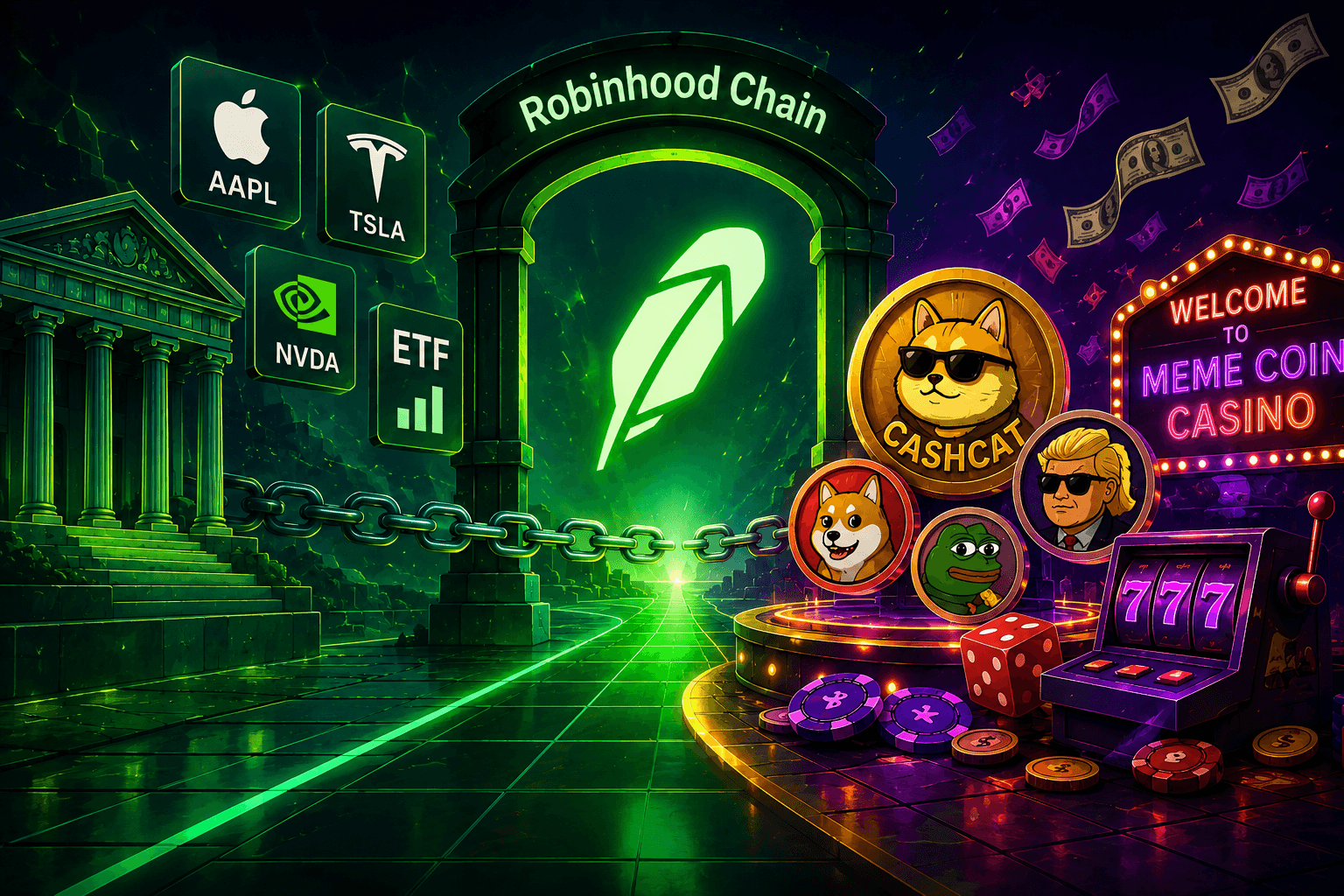
Robinhood Built a Chain for Tokenized Stocks: Did It Just Become a Meme Coin Casino?
Should You Buy RST (Raini Studios Token)? What Low Liquidity and No Migration Plan Actually Mean
What Are Spot Stock Tokens? How Synthetic Stock Trading Works
Cathie Wood Nvidia Stock Purchase: What ARK's August Buys Show
PEP Stock Analysis: Why PEPon Trades Above PepsiCo Shares
SpaceX Stock Price Holds Near $141: Why Isn't a $100 Billion Spaceport Plan Moving It?
"我的女友景甜" Days Later: What Happened to the Viral Meme Coin
XST Coin Price Bounced 19% Off a New Low in Hours: Is This the Bottom or Just Noise?
Is NVDA Stock Overvalued After Record Q2 Earnings?
NVDA Stock Pulls Back After Earnings: Is $250 Still Next?

Salesforce Stock Price Targets Are Rising Fast: What Wall Street Actually Sees
MRVL Stock Price Target: Why Options Traders Bet on $300 Before Earnings
Marvell Stock (MRVL) Beat Earnings and Raised Guidance: Why Did It Fall Anyway?
What Is the WEEX Mini App? A Lightweight Way to Trade Inside Telegram
What Is CLAN? Is a Dump Coming After Its 100% Surge?
How to Evaluate a Crypto Exchange in Pakistan: A Practical Checklist for Traders
Which Crypto Exchange Offers the Widest Range of Assets for Pakistani Traders?
XST Coin Price Crosses Into Deep Capitulation Territory: What a 90%+ Decline Actually Signals
A Breakup Became "我的女友景甜" Token in Hours: What That Says About Crypto's Attention Economy
NVDA Stock Jumps 7% After Earnings: Is $250 Next?
PONS After 200% Rally: Overvalued or Still a Growth Story?
What Happened to Raini Studios Token? RST After the Game Shutdown
RST vs RAINI: Which Raini Studios Token Is Still Supported?
ARK Invest Crypto Stocks vs ARKB: How Cathie Wood Gets Crypto Exposure
Which ARK ETFs Hold Coinbase Stock? COIN Exposure in ARKK, ARKW and ARKF
How Much Coinbase Stock Does Cathie Wood Own? ARK’s COIN Position Explained
Why Is Cathie Wood’s ARK Invest Buying Coinbase, Circle, BitMine and Bullish?
Cathie Wood’s $50 Million Crypto Stock Bet Explained: What Did ARK Invest Buy?
"We're Back": Why Strategy's Return to Bitcoin Buying Is Moving More Than Just MSTR Stock
Contents
Popular coins
Latest articles





