
Why Is GoPro Stock Surging 80%? A YouTuber's 8.5% Stake and a Short Squeeze Collide

 Prefer us on Google


GoPro stock has done something this week that almost never happens to a struggling, sub-dollar action-camera maker: it surged nearly 50% in a single session, then kept climbing another 80% or more the next morning. GoPro stock hasn't traded at these levels since early January, and the catalyst behind the move has nothing to do with a product launch, an earnings beat, or a new strategic partnership in the traditional sense. It has everything to do with one person disclosing a stake in the company.
Understanding why GoPro stock moved this violently requires looking at three things happening at once: who bought in and what they said about it, why the stock's existing structure made it unusually vulnerable to a rapid squeeze, and what else was already sitting in the background that gave the rally additional fuel once it got going.
Why A YouTuber's Stock Filing Set Off This Kind Of Reaction
The move traces back to a Schedule 13G filing with the SEC disclosing that Mark Fischbach, the YouTuber and filmmaker better known as Markiplier, had built an 8.5% stake in GoPro, instantly making him the company's largest individual shareholder. Bloomberg first reported the disclosure, and the market's reaction was immediate: GoPro shares closed Monday up more than 46%, finishing the day at 87 cents, before extending the move into Tuesday's premarket session.
A single individual disclosing a stake of this size in a company GoPro's size is unusual on its own, but what amplified the reaction was who that individual is. Fischbach has built a YouTube following approaching 40 million subscribers, largely around gaming content and commentary, and has more recently transitioned into Hollywood filmmaking. That combination, a creator with direct brand affinity to the kind of consumer who actually buys action cameras, plus a platform large enough to move retail sentiment on its own, gave this disclosure a different character than a typical institutional 13G filing that might pass with little notice.
Fischbach didn't stay quiet about his reasoning either. He described the stock as undervalued and said he genuinely wants to see the company stage a turnaround, comments that, according to Investing.com's reporting, directly ignited a powerful wave of retail buying interest. That combination, a large disclosed stake plus a public, conviction driven statement from someone with an enormous built in audience, created exactly the kind of narrative retail traders tend to rally around quickly, and GoPro stock's reaction reflected that immediately.
What Markiplier's 8.5% Stake Actually Discloses
It's worth being precise about what an 8.5% stake and a Schedule 13G filing actually represent, since the mechanics matter for understanding what happens next. A 13G is generally used for passive institutional or individual investors who aren't seeking to influence or control the company, as opposed to a 13D, which signals more active intent. Fischbach's filing means he now holds a meaningful economic interest in GoPro, but it doesn't by itself indicate he's pushing for a seat on the board or a specific strategic change.
What the stake does communicate is confidence, at a scale large enough to matter. GoPro's entire market capitalization sat around $161.66 million before this rally began, according to TradingView data, which means an 8.5% position represents a genuinely sizable commitment relative to the company's total value, not a token gesture. For a stock that had been trading under a dollar and had recently received a Nasdaq notice for share price noncompliance, a stake of this size from a high profile individual reads as a significant vote of confidence regardless of the filing type.
The market's interpretation of that vote of confidence is where things moved beyond a normal reaction. Once Fischbach's comments about an undervalued stock and a hoped for turnaround circulated alongside the filing, the story stopped being purely about the numbers on the 13G and became a narrative other traders wanted to participate in. That shift, from a technical disclosure to a story people wanted to be part of, is a large part of why GoPro stock's move extended well beyond what the stake size alone would typically produce.
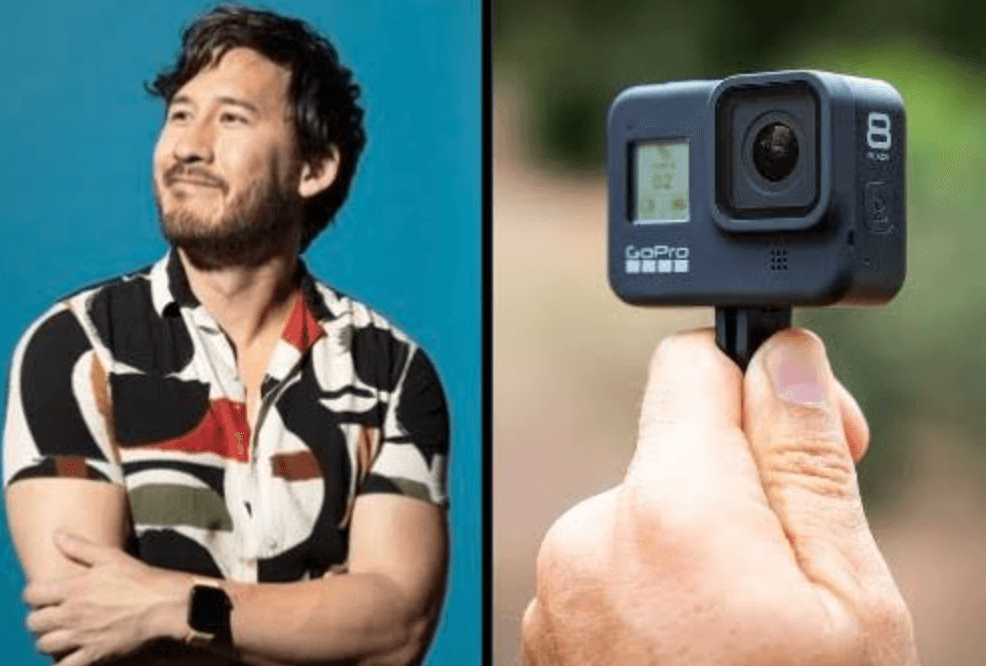
How A Heavily Shorted Float Turned Buying Into A Squeeze
A large stake disclosure and an enthusiastic public statement explain the initial spark, but they don't fully explain why GoPro stock moved as violently as it did across two consecutive sessions. The other half of the story is mechanical: GoPro's short interest sat at roughly 16.5% of its float heading into this week, according to Investing.com's reporting, a level high enough to create genuinely favorable conditions for a squeeze once buying pressure showed up.
A heavily shorted stock behaves differently from an ordinary stock when demand suddenly increases. As GoPro's price started climbing on the initial wave of retail buying tied to Fischbach's disclosure, short sellers holding positions built at much lower prices faced mounting pressure to close those positions to limit losses, and doing so requires buying shares, which pushes the price higher still. That dynamic, new buyers pushing the price up, which then forces existing short sellers to buy as well, which pushes the price up further, is precisely what a short squeeze looks like in practice, and a float with 16.5% already sold short gave this setup real fuel to work with.
The broader market gave GoPro stock no help during this stretch either, which actually makes the case for a company specific squeeze stronger rather than weaker. The Nasdaq fell roughly 1.0%, the S&P 500 slipped about 0.6%, and the Dow declined roughly 0.6% during the same window GoPro was posting an 80%-plus premarket gain, according to Investing.com. GoPro's direct competitors, Sony, which dominates the imaging sensor supply chain, and Garmin, which holds a strong position in outdoor and adventure devices, offered no sympathy move of their own, meaning nothing sector-wide was lifting GoPro along with it. The move was isolated entirely to GoPro, which is exactly what you'd expect from a stock-specific short squeeze rather than a broader rotation into camera or consumer electronics names.
-- Price
The Product Catalyst Adding Fuel To The Move
Beyond the ownership disclosure and the mechanical short squeeze, GoPro had a genuine near-term product catalyst sitting on the calendar that added a layer of fundamental justification to the rally rather than leaving it purely as a speculative, sentiment driven event. The company's new MISSION 1 PRO ILS cinema camera is scheduled to hit global retail shelves on September 2, a launch date that landed right in the middle of this stock surge.
A specific, dated product launch gives momentum traders something more concrete to point to than pure short-covering dynamics alone. Rather than the rally resting entirely on one person's disclosed stake and a heavily shorted float unwinding, the imminent MISSION 1 PRO ILS launch reinforced the idea that GoPro had a real near-term business event worth getting positioned ahead of, which likely encouraged some buyers who might otherwise have stayed on the sidelines during a pure squeeze-driven move.
This timing also connects back to Fischbach's own stated reasoning for building his position. A creator who described the stock as undervalued and expressed hope for a turnaround has a more credible story to tell when there's an actual new product about to reach retail shelves, rather than simply a bet on sentiment alone. Whether the MISSION 1 PRO ILS launch itself moves GoPro's revenue meaningfully is a separate question from whether it gave the current rally additional legitimacy in the eyes of traders deciding whether to buy into the move, but as a catalyst sitting on the calendar at exactly this moment, it's a detail worth including in any full account of why GoPro stock surged the way it did.
What This Rally Says About GoPro's Underlying Business
None of these three factors, the disclosed stake, the short squeeze, and the product launch, changes GoPro's underlying financial position on their own, and it's worth being clear about that distinction before treating this rally as evidence of a fundamental turnaround already underway. GoPro's most recent quarterly earnings came in at a loss of 21 cents per share, against an estimate of a 2-cent profit, a swing TradingView described as resulting in roughly a negative 1,150% earnings surprise. The company had also recently received a Nasdaq notice for share price noncompliance prior to this rally, a formal signal of exactly the kind of struggling position Fischbach referenced when he called the stock undervalued.
At the same time, GoPro hasn't been sitting entirely still on its own. Founder and CEO Nicholas Woodman provided $20 million in founder-backed financing to the company in early July, a detail that predates this week's rally and suggests leadership itself has been taking steps to shore up the balance sheet independent of any outside stake disclosure. Combined with the upcoming MISSION 1 PRO ILS launch, GoPro was already working on multiple fronts to address its challenges before Fischbach's filing turned into a viral catalyst.
The more honest read of this rally is that it's a genuinely large, mechanically amplified reaction to a credible vote of confidence, layered on top of a company that still has real financial challenges to work through. A short squeeze can push a stock price up quickly without changing anything about the underlying business, and GoPro's next several quarters, including whether the MISSION 1 PRO ILS launch actually moves revenue and whether the company can close the gap on its Nasdaq compliance issue, will determine whether this rally marks the start of a genuine turnaround or simply a sharp, temporary repricing driven by one filing and a heavily shorted float.
Conclusion
GoPro stock's surge, from a 46% gain on Monday to an 80% plus premarket move on Tuesday, was driven by the collision of three distinct forces: a high profile 8.5% stake disclosure from Markiplier accompanied by a public, conviction driven statement, a heavily shorted float sitting at roughly 16.5% that turned initial buying into a genuine squeeze, and a dated product launch in the MISSION 1 PRO ILS that gave the rally a fundamental sounding narrative to lean on. None of these factors individually explains a move of this size, but together they produced exactly the conditions needed for a rapid, company specific rally that left the broader market and GoPro's direct competitors entirely untouched.
FAQ
1. Why did GoPro stock surge this week?
Bloomberg reported that YouTuber Markiplier (Mark Fischbach) disclosed an 8.5% stake in GoPro via a Schedule 13G filing, calling the stock undervalued. The resulting buying wave collided with a heavily shorted float, triggering a short squeeze.
2. How large was GoPro's short interest before this rally?
Short interest sat at roughly 16.5% of GoPro's float heading into the week, a level high enough to create favorable conditions for a squeeze once buying pressure appeared.
3. Does an 8.5% stake mean Markiplier is trying to control GoPro?
Not necessarily. The stake was disclosed via a Schedule 13G, generally used for passive investors, rather than a 13D, which signals more active intent to influence company decisions.
4. What product catalyst coincided with the rally?
GoPro's new MISSION 1 PRO ILS cinema camera was scheduled to reach global retail shelves on September 2, adding a near-term business event to the rally beyond the stake disclosure and short squeeze alone.
5. Does this rally mean GoPro's financial troubles are over?
Not necessarily. GoPro's most recent quarter posted a loss of 21 cents per share against an expected 2-cent profit, and the company had recently received a Nasdaq share price noncompliance notice, both signals of ongoing financial challenges the rally itself doesn't resolve.
This content is provided for general informational purposes only and doesn't constitute financial, investment, legal, or tax advice. Any events, rewards, online promotions, or related information mentioned herein should not be considered a recommendation, solicitation, or invitation to purchase, sell, trade, or otherwise deal in any crypto assets. Crypto assets are highly volatile and may result in loss. The availability of WEEX services, products, and related events may vary by region. You are responsible for ensuring that your participation is in accordance with applicable local laws and regulations.
You may also like

SPCX Stock Price Q2 Earnings Revealed: What Starlink Revenue and the $14 Billion AI Contract Surge Actually Mean
WEEX Proof of Reserves: Building Unshakable Trust in a Volatile Crypto World

MetaMask Seed Phrase & Private Key Security Guide
How to Install and Set Up MetaMask (2026 Updated Guide)

What Is MetaMask? A Complete Beginner's Guide
What Is Arbitrum (ARB) and How Does This Ethereum Layer 2 Work?
Is Arbitrum (ARB) Worth Buying After Its 30% Rally? An Analysis About Utility, Supply and Risks
GoPro Stock Soared 40%: What the $1.14 Merger Actually Pays
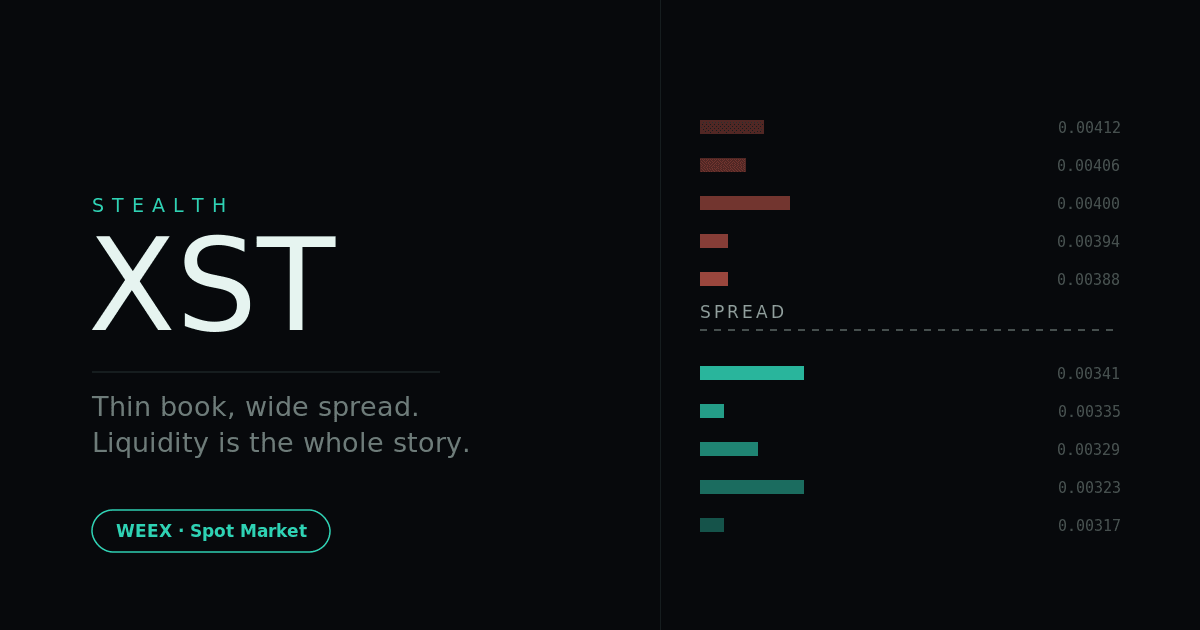
Stealth XST Coin: The $1,806 Daily Volume Behind a $2.3M Cap
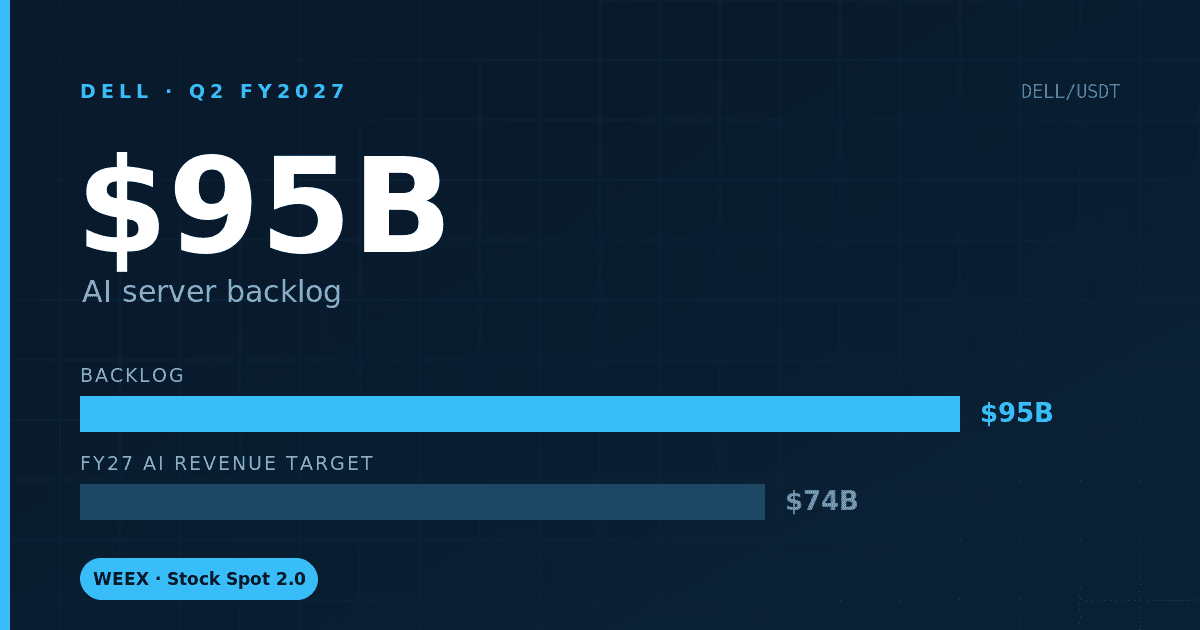
Dell Earnings: $95B AI Backlog Now Dwarfs Its Own Guidance

Fable 5.1: What Anthropic's New Model Means for AI Tokens
Dell Stock Surges 9.4% After Smashing Earnings Estimates: What Drove the AI Server Beat
XST ETF vs XST Coin (XSolut): Don't Confuse These Two Completely Different Assets
What Is PONS? Inside the "100x Coin" Taking Over Robinhood Chain

Stock Spot vs Perpetuals vs Real Stocks: Key Differences
WEEX Stock Spot 2.0 Rewards Guide: Trade & Share $100K
ARK Invest Crypto Stocks vs ARKB: How Cathie Wood Gets Crypto Exposure
Which ARK ETFs Hold Coinbase Stock? COIN Exposure in ARKK, ARKW and ARKF

How Much Coinbase Stock Does Cathie Wood Own? ARK’s COIN Position Explained
Why Is Cathie Wood’s ARK Invest Buying Coinbase, Circle, BitMine and Bullish?
Cathie Wood’s $50 Million Crypto Stock Bet Explained: What Did ARK Invest Buy?
AIINU: How a "100x Coin" on Robinhood Chain Turned NVDA Stock Into a Memecoin
"We're Back": Why Strategy's Return to Bitcoin Buying Is Moving More Than Just MSTR Stock
Does Robinhood Chain Have Its Own Token? What CASHCAT, PONS, and Stock Tokens Actually Are
Anthropic Tokenized Stock: What ANTHROPIC Actually Gives You
CSOPSAMSUNG2L Explained: 2x Samsung Leverage, Two Wrappers
SQQQ Explained: Why the 3x Inverse Nasdaq ETF Bleeds Value
KSTR ETF Explained: Inside China's STAR 50 Chip Index Bet
When Can You Trade U.S. Stock Tokens? Trading Hours Explained
Can You Trade U.S. Stocks With 5 USDT? Here's the Real Math
SPCX Stock Price Q2 Earnings Revealed: What Starlink Revenue and the $14 Billion AI Contract Surge Actually Mean
WEEX Proof of Reserves: Building Unshakable Trust in a Volatile Crypto World
MetaMask Seed Phrase & Private Key Security Guide
How to Install and Set Up MetaMask (2026 Updated Guide)
What Is MetaMask? A Complete Beginner's Guide
What Is Arbitrum (ARB) and How Does This Ethereum Layer 2 Work?


