
XST ETF vs XST Coin (XSolut): Don't Confuse These Two Completely Different Assets

 Prefer us on Google


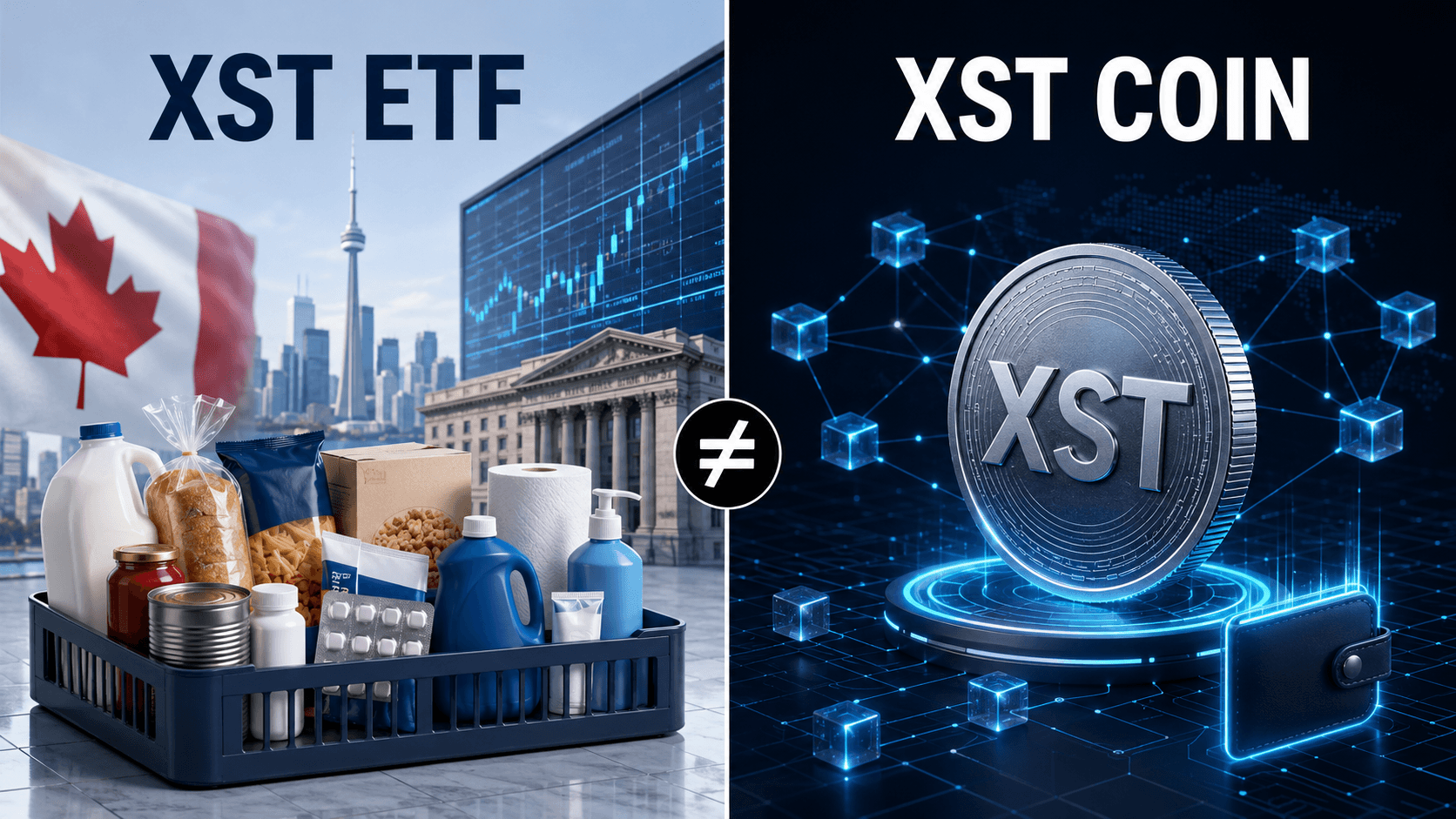
Two completely unrelated financial products share the exact same three letter ticker: XST. One is a Canadian consumer staples ETF that's been quietly trading on the Toronto Stock Exchange since 2011. The other is a small cap cryptocurrency on Solana that has spent the past few weeks swinging wildly near its all-time low. A search for "XST" can land you on either one, and confusing them isn't just a minor mix-up. It's the difference between researching a diversified basket of grocery store stocks and researching a highly speculative, largely undeveloped crypto project.
This mix up happens for a straightforward reason: ticker symbols aren't globally unique. The same three letters get reused across different exchanges, different asset classes, and different countries, with no central authority preventing overlap. XST is a clean example of exactly how that collision plays out in practice.
What the XST ETF Actually Is
On the Toronto Stock Exchange, XST refers to the iShares S&P/TSX Capped Consumer Staples Index ETF, a fund managed by BlackRock Asset Management Canada. This ETF tracks the S&P/TSX Capped Consumer Staples Index, giving investors exposure to a basket of Canadian consumer-staples companies, weighted by market capitalization with a cap of 25% on any single holding, and rebalanced quarterly.
The fund has been around since April 2011, meaning it has more than a decade of trading history behind it, and it currently manages several hundred million Canadian dollars in assets. Its top holdings include well-known Canadian retail and food names such as Alimentation Couche-Tard, Loblaw Companies, Metro, George Weston, and Saputo, spanning grocery chains, convenience stores, and packaged food producers. This is about as far from a speculative crypto asset as a financial product can get: a regulated, exchange-listed fund holding shares in established, dividend-paying companies that sell groceries and household staples.
What XST Coin (XSolut) Actually Is
On Solana, XST refers to XSolut, a token positioned around AI infrastructure tokenization, a project still in early development with no whitepaper, no publicly disclosed team, and no operational marketplace, according to CryptoRank and CoinCodex. The token has traded through a dramatic price cycle since its debut, climbing to an all time high above $0.07 before falling more than 90% to trade near its all-time low, with ongoing questions about its supply concentration, a since debunked viral misinformation campaign tying it to a fabricated $500 billion investment claim, and unresolved confusion over a possible ticker change to "X2O" that the project has never officially explained.
These are two entirely different risk profiles wearing the same three letters. One is a diversified equity fund built around some of Canada's most stable consumer businesses. The other is a single, early-stage, highly volatile crypto token with several unresolved transparency questions still hanging over it.
Why the Same Ticker Ended Up on Two Unrelated Assets
Ticker symbols are assigned independently by each exchange or, in crypto's case, by whoever deploys a token's smart contract. The Toronto Stock Exchange assigned XST to this ETF back in 2011, long before XSolut existed. When XSolut launched on Solana, there was no mechanism requiring its creators to check whether "XST" was already in use somewhere else, because crypto ticker symbols aren't centrally registered or reserved the way exchange listed stock and ETF tickers are within a single market.
This is a structural feature of how tickers work across different markets and asset classes, not a coincidence specific to XST, and it's worth remembering any time a ticker search returns results that don't match what you expected to find.
-- Price
Other Tickers That Collide the Same Way XST Does
XST isn't an isolated case, and recognizing that this is a recurring pattern, rather than a one off coincidence, makes it easier to stay alert the next time a ticker search returns unexpected results. Traditional finance is full of overlapping tickers across different exchanges: "AI" refers to C3.ai on the New York Stock Exchange, but it's also become shorthand for an entirely unrelated meme token paired against tokenized Nvidia stock on Robinhood Chain, a token this series has covered separately. The letters carry no inherent meaning; they're simply short, memorable labels that get reassigned constantly across markets that don't communicate with each other.
Crypto adds an extra layer to this problem beyond what traditional markets deal with. A stock ticker collision usually means two different exchanges each assigned the same three letters to one listed company apiece, a mix-up that's confusing but at least involves two legitimate, regulated entities. In crypto, the same ticker can be deployed by dozens of unrelated projects simultaneously, since anyone can launch a token with any name or symbol they choose, with no registration requirement and no central body checking for duplicates first. That's part of why XST specifically carries an added layer of risk on the crypto side: it's not just competing with a Canadian ETF for search visibility, it's also been used by multiple unrelated or copycat crypto projects, on top of the ETF collision covered here.
The practical lesson extends beyond XST. Any time a ticker search turns up results that don't match the asset type you expected, whether that's an ETF appearing when you searched for a crypto token or vice versa, treating that mismatch as a signal to verify rather than an error to dismiss is the habit that actually prevents costly mistakes.
How to Tell Which XST You're Actually Looking At
The fastest way to confirm which XST a piece of information is actually describing is to check the exchange and asset type before reading further. If a result references the Toronto Stock Exchange, BlackRock, iShares, net asset value, or expense ratio, it's describing the ETF. If a result references Solana, a contract address, market capitalization in the low millions of dollars, or DEX trading pairs, it's describing the crypto token.
For the crypto side specifically, the only reliable way to confirm you're looking at the genuine XSolut token, rather than one of several unrelated lookalike projects that have also used the XST or XSolut name, is to match the exact Solana contract address rather than trusting the ticker or project name alone, a verification step worth taking seriously given how much confusion already surrounds this specific ticker.
Conclusion
XST ETF and XST Coin share nothing beyond three letters. One is a decade old, BlackRock managed Canadian equity fund holding grocery and consumer staples stocks. The other is an early stage, highly speculative Solana token with an unresolved history of ticker confusion, supply concentration concerns, and viral misinformation. Before acting on anything labeled "XST," confirming the exchange and asset type takes only a moment and prevents a genuinely costly mix up between a stable, diversified fund and a volatile, unproven crypto project.
FAQ
1. Is XST ETF connected to XSolut or any cryptocurrency?
No. XST ETF is the iShares S&P/TSX Capped Consumer Staples Index ETF, a Canadian equity fund managed by BlackRock. It has no relationship to XSolut or any crypto project.
2. Why do the ETF and the crypto token share the same ticker?
Ticker symbols aren't globally unique. Exchanges and crypto projects assign them independently, and nothing prevents the same three letters from being used for unrelated products across different markets.
3. What does the XST ETF actually invest in?
It holds a basket of Canadian consumer staples companies, including Alimentation Couche-Tard, Loblaw, Metro, George Weston, and Saputo, weighted by market cap with a 25% single holding cap.
4. How can I quickly tell which XST a search result is referring to?
Check for exchange and asset specific terms. References to the Toronto Stock Exchange, BlackRock, or net asset value point to the ETF. References to Solana, contract addresses, or DEX trading point to the crypto token.
5. How do I make sure I'm looking at the genuine XSolut token and not a copycat?
Match the exact Solana contract address rather than relying on the ticker or project name, since multiple unrelated tokens have used similar names amid ongoing confusion around this specific ticker.
This content is provided for general informational purposes only and doesn't constitute financial, investment, legal, or tax advice. Any events, rewards, online promotions, or related information mentioned herein should not be considered a recommendation, solicitation, or invitation to purchase, sell, trade, or otherwise deal in any crypto assets. Crypto assets are highly volatile and may result in loss. The availability of WEEX services, products, and related events may vary by region. You are responsible for ensuring that your participation is in accordance with applicable local laws and regulations.
You may also like

MetaMask Seed Phrase & Private Key Security Guide

What Is MetaMask? A Complete Beginner's Guide
Is Arbitrum (ARB) Worth Buying After Its 30% Rally? An Analysis About Utility, Supply and Risks
Stealth XST Coin: The $1,806 Daily Volume Behind a $2.3M Cap
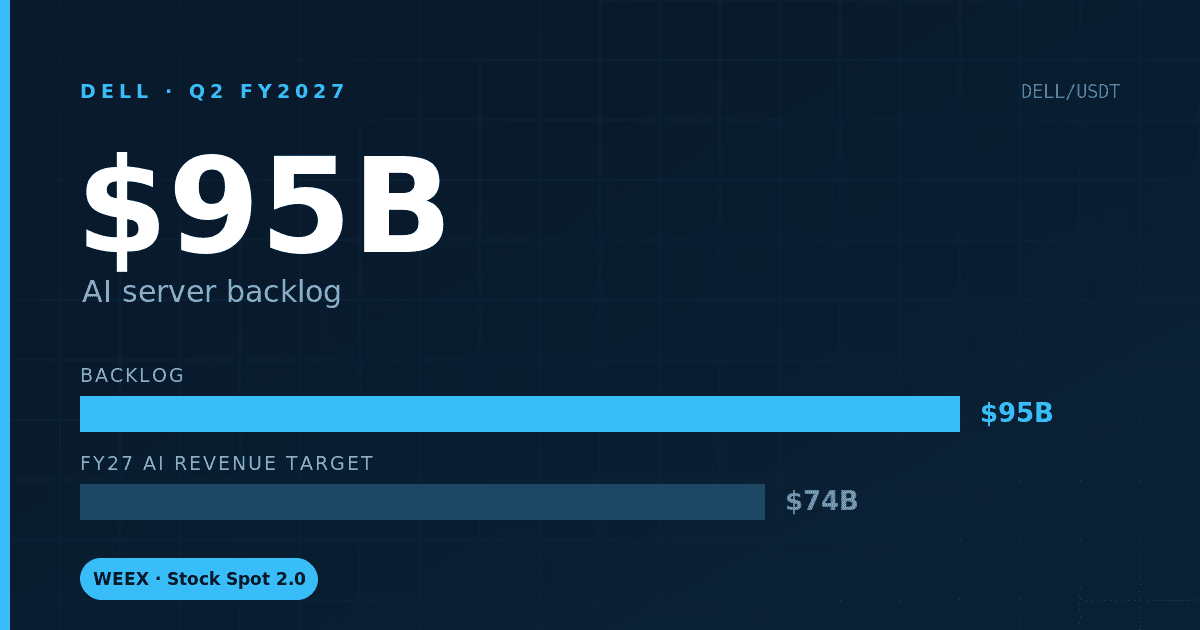
Dell Earnings: $95B AI Backlog Now Dwarfs Its Own Guidance

Dell Stock Surges 9.4% After Smashing Earnings Estimates: What Drove the AI Server Beat

What Is PONS? Inside the "100x Coin" Taking Over Robinhood Chain
ARK Invest Crypto Stocks vs ARKB: How Cathie Wood Gets Crypto Exposure
Which ARK ETFs Hold Coinbase Stock? COIN Exposure in ARKK, ARKW and ARKF

How Much Coinbase Stock Does Cathie Wood Own? ARK’s COIN Position Explained

Why Is Cathie Wood’s ARK Invest Buying Coinbase, Circle, BitMine and Bullish?

Cathie Wood’s $50 Million Crypto Stock Bet Explained: What Did ARK Invest Buy?
AIINU: How a "100x Coin" on Robinhood Chain Turned NVDA Stock Into a Memecoin
"We're Back": Why Strategy's Return to Bitcoin Buying Is Moving More Than Just MSTR Stock
When Can You Trade U.S. Stock Tokens? Trading Hours Explained
Robinhood Built a Chain for Tokenized Stocks: Did It Just Become a Meme Coin Casino?
Should You Buy RST (Raini Studios Token)? What Low Liquidity and No Migration Plan Actually Mean
What Are Spot Stock Tokens? How Synthetic Stock Trading Works
Cathie Wood Nvidia Stock Purchase: What ARK's August Buys Show
PEP Stock Analysis: Why PEPon Trades Above PepsiCo Shares
SpaceX Stock Price Holds Near $141: Why Isn't a $100 Billion Spaceport Plan Moving It?
"我的女友景甜" Days Later: What Happened to the Viral Meme Coin
XST Coin Price Bounced 19% Off a New Low in Hours: Is This the Bottom or Just Noise?
Is NVDA Stock Overvalued After Record Q2 Earnings?
NVDA Stock Pulls Back After Earnings: Is $250 Still Next?
Salesforce Stock Price Targets Are Rising Fast: What Wall Street Actually Sees
MRVL Stock Price Target: Why Options Traders Bet on $300 Before Earnings
Marvell Stock (MRVL) Beat Earnings and Raised Guidance: Why Did It Fall Anyway?
What Is the WEEX Mini App? A Lightweight Way to Trade Inside Telegram
What Is CLAN? Is a Dump Coming After Its 100% Surge?
MetaMask Seed Phrase & Private Key Security Guide
What Is MetaMask? A Complete Beginner's Guide
Is Arbitrum (ARB) Worth Buying After Its 30% Rally? An Analysis About Utility, Supply and Risks
Stealth XST Coin: The $1,806 Daily Volume Behind a $2.3M Cap
Dell Earnings: $95B AI Backlog Now Dwarfs Its Own Guidance
Dell Stock Surges 9.4% After Smashing Earnings Estimates: What Drove the AI Server Beat




